A 22-year-old in Brooklyn recently posted a video explaining why she traded her iPhone for a Nokia brick with a cracked plastic antenna. The video has nothing flashy in it. No app demo, no unboxing music. Just her explaining that she wanted to feel bored again. That single clip pulled in millions of views, and the comment section filled with people asking where to buy one.
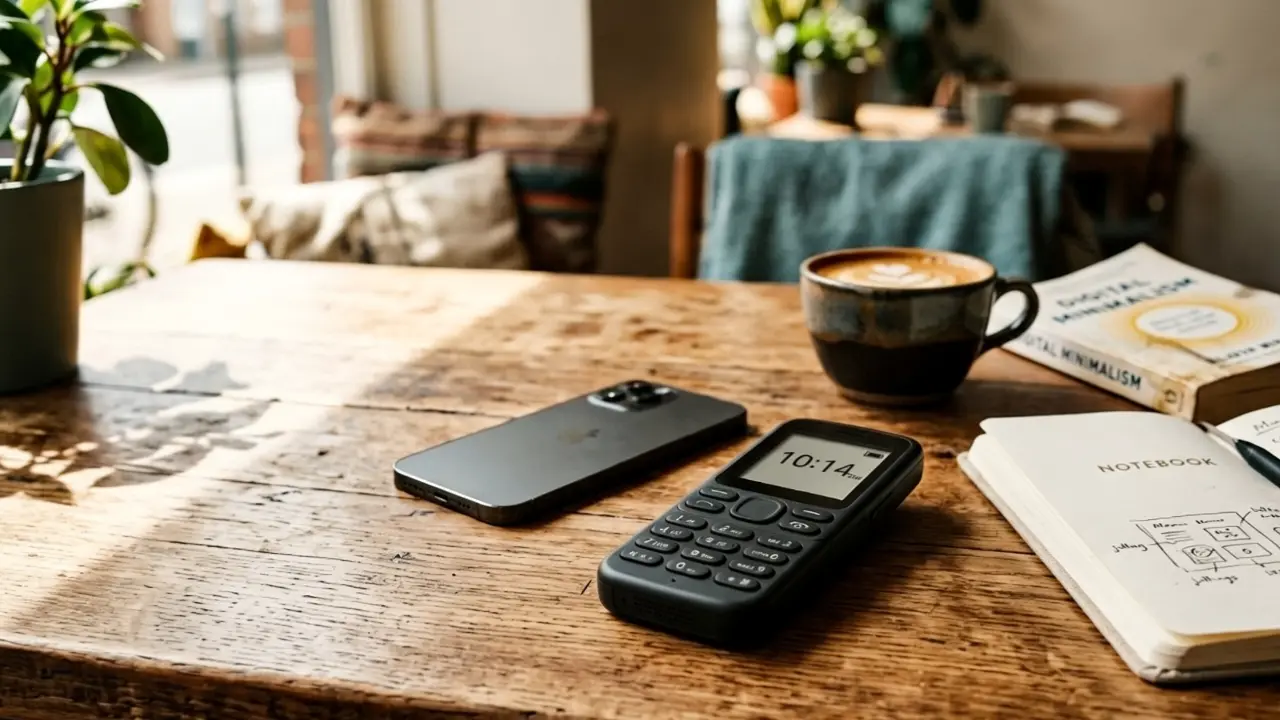
AI Generated Illustration
That reaction is the clearest sign yet that the dumb phone movement has stopped being a fringe habit and turned into something closer to a consumer trend. A generation that grew up with a smartphone practically fused to its palm is now paying money, sometimes a premium, for devices that do less. Not devices that do less because the manufacturer ran out of budget. Devices that do less on purpose.
Why Young People Are Turning Away From Smartphones
The dumb phone movement is largely a Gen Z story, and that is what makes it strange. These are people who never lived through dial-up or flip phones as a daily default. Smartphones were simply the water they swam in. So when a chunk of that generation starts opting out, it is worth asking what they are opting out of.
Part of the answer is exhaustion. Screen fatigue, endless notifications, and the low hum of anxiety that comes from a phone buzzing every few minutes have pushed a segment of young users toward Gen Z digital detox habits that look almost monastic by comparison. Surveys from mental health researchers have repeatedly linked heavy smartphone use to disrupted sleep and shortened attention spans, and plenty of young people do not need a study to tell them that. They can feel it in how hard it is to sit through a movie without checking a phone.
There is something almost funny about the whole thing, if you step back far enough. The most digitally fluent generation in history is the one leading the charge back to plastic keypads and pixelated screens. It is not nostalgia for a past they lived through. It is a deliberate reach for a past they missed, because that past looks like relief.
The Return of Feature Phones in a Smartphone World
Basic phones used to be what you carried while saving up for something better. That framing has flipped. Companies like Nokia, Punkt, and the Light Phone have turned old-school hardware into a lifestyle statement, selling devices with names and packaging that would not look out of place next to a boutique candle brand.
These phones share a formula: physical buttons, a battery that lasts days instead of hours, and just enough functionality to make calls, send texts, and maybe check a map. Compared to a modern flagship smartphone, the specs are almost laughable. No high-resolution camera stack, no facial recognition, sometimes not even a real app store. And yet people are choosing them anyway, which says something about what buyers are actually shopping for.
What used to read as a limitation now reads as the entire pitch. A phone that cannot pull you into a social feed at 1 a.m. is not broken. For a growing number of buyers, that is precisely the feature they are paying for.
How Dumb Phones Change the Way People Use Technology
The technical gap between a smartphone and a feature phone is significant. Smartphones run full operating systems like iOS or Android, built to support millions of apps, constant background processing, and always-on internet connectivity. Feature phones typically run stripped-down firmware with a fraction of the processing power, built for one job: basic communication.
Strip away the apps, and something changes in how people move through a day. Without an endless feed to check, attention starts settling somewhere else, on a conversation, a walk, a task that would otherwise get interrupted every ninety seconds by a glowing screen. Users switching to minimalist phone benefits report checking their device a handful of times a day instead of dozens, not because they are disciplined, but because there is nothing there pulling them back.
That is the quiet trick of the dumb phone movement. It reframes limitation as structure. A smartphone hands you infinite options and expects you to manage yourself. A feature phone just removes most of the options, and suddenly self-control is not required nearly as much.
The Bigger Digital Culture Shift Behind Retro Tech
None of this is happening in isolation. Film cameras are selling again. Vinyl outsold CDs years ago and has not looked back. Retro gaming consoles keep getting rereleased because people want the chunky controller and the loading screen, not just the game. The dumb phone movement fits into that same analog tech revival, and it is worth asking why physical, limited, slower technology keeps clawing its way back into fashion.
Some of it is identity. Carrying a flip phone in 2026 says something about a person, the same way a film camera slung over a shoulder does. Some of it is privacy, since a device with no app ecosystem cannot quietly harvest location data or browsing habits the way a smartphone can. And some of it is a mild rebellion against a tech industry that keeps asking people to buy the newest, fastest, most capable thing whether they need it or not.
Put together, these threads point to a cultural mood that treats constant connection less like a convenience and more like a cost. Y2K phone nostalgia is part of the aesthetic, sure, but the deeper current is people trying to opt out of a system that was built to hold their attention for as long as possible.
What the Smartphone Industry Risks Losing
For two decades, the smartphone industry has run on one assumption: consumers want more. More cameras, more processing power, more screen, more integration. The dumb phone movement quietly challenges that premise, and quietly is the operative word, because no manufacturer is going to announce that its own product might be the problem.
If even a modest share of users start prioritizing non-smartphone alternatives or hybrid setups, the ripple effects reach further than device sales. App developers who rely on daily engagement, ad networks built around attention capture, and social platforms whose entire business model depends on scroll time all have something to lose if fewer people are staring at a feed for six hours a day.
The uncomfortable question sitting underneath all of this is whether the smartphone industry's next real innovation might not be another camera lens or another AI feature, but the willingness to build something that asks less of its user, not more.
The Limits of the Dumb Phone Revolution
None of this means smartphones are going away, and anyone claiming otherwise is overselling the trend. Mobile banking apps, GPS navigation, two-factor authentication, and workplace tools like Slack or email all assume a smartphone is in your pocket. Try running a modern job search, a rideshare, or even a doctor's office check-in without one, and the limits of a feature phone become obvious fast.
That is why most people drawn into this movement do not fully abandon their smartphone. They adopt a hybrid setup: a dumb phone for daily carry and a smartphone left at home or in a drawer for the tasks that genuinely require it. It is less a rejection of smartphones and more an attempt to put boundaries around when and how they get used.
Whether that hybrid pattern becomes a lasting behavior or fades once the novelty wears off is genuinely unclear. Trend cycles in tech move fast, and it is entirely possible that in three years the flip phone sits in a drawer next to the film camera that was trendy in 2023. What remains unclear is whether this reflects a real shift in mindful technology use or simply another aesthetic wave that burns out once it stops being novel on social media.
The Future of Technology May Be Less Digital
If the dumb phone movement sticks around in any form, it will likely push mainstream device makers toward something they have mostly avoided: designing for less, not more. Digital wellbeing dashboards, grayscale modes, and app limits already exist on most smartphones, but they are buried in settings menus rather than built into the core experience. A market that rewards restraint might finally force that to change.
There is a broader question tangled up in all of this, one that goes beyond phones entirely. As devices get more capable every year, will the next wave of meaningful innovation come from giving people more control by simply doing less on their behalf?
Maybe the real measure of a good piece of technology was never just what it can do for you. Maybe it is also what it is willing to leave alone.