For decades, the power station at the center of this story burned peat, one of the dirtiest fuels in Ireland's energy mix, to keep the lights on. Now the same site is being converted into a 200 MWh liquid CO2 energy storage facility, and the shift says something bigger than one country's energy policy. A plant built to burn carbon is being rebuilt to store it instead.
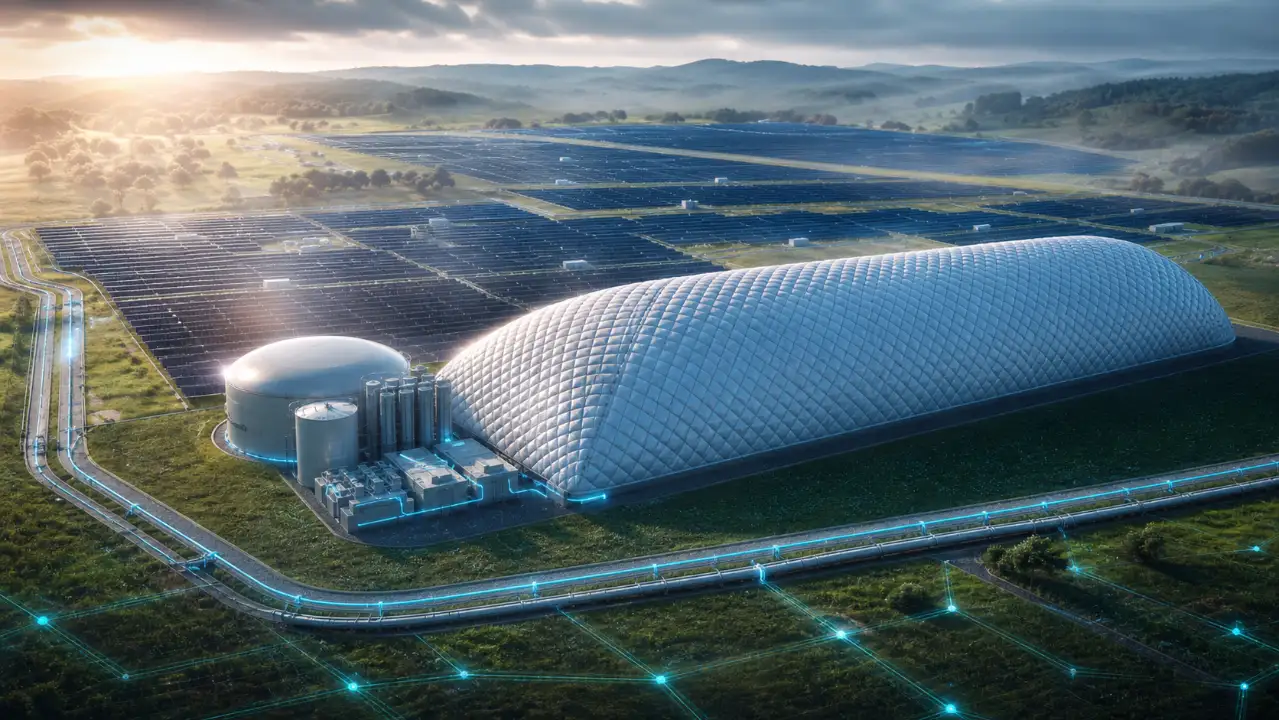
AI Generated Illustration
That reversal is why the project has drawn attention well past Ireland's borders. Retired fossil fuel sites usually get demolished, fenced off, or left to rust. This one is getting a second career, and the grid connections, land permits, and heavy equipment already on site are exactly what a large storage project needs to get built faster and cheaper. Reuse, not replacement, is quietly becoming part of the plan for decarbonizing old industrial ground.
What makes it stranger, in a good way, is the choice of working material. Most of the public conversation about grid storage still centers on lithium batteries. This project runs on carbon dioxide, the same gas the world is trying to pull out of the atmosphere. So how does a greenhouse gas end up doing productive work inside a power plant instead of just floating overhead as a problem to be solved?
How Liquid CO2 Energy Storage Actually Works
The basic idea is simpler than it sounds. When there is more wind or solar power on the grid than anyone needs at that moment, the system uses that surplus electricity to compress carbon dioxide gas until it turns into a liquid. Liquid CO2 takes up far less space than the same gas would, so a huge amount of energy gets packed into a comparatively small storage tank. Later, when demand rises and the grid needs power, the liquid is allowed to expand back into gas, and that expansion drives a turbine that generates electricity.
Here is the part that trips people up: none of that carbon dioxide ever leaves the system. It cycles between liquid and gas inside sealed tanks, over and over, the same molecules doing the same job thousands of times. That is a very different picture from a coal or gas plant, where fuel is burned once and the resulting CO2 goes straight into the atmosphere. This system does not burn anything. It just squeezes and releases the same batch of gas like a mechanical lung.
The honest caveat is that nobody has a fully settled answer on how efficient this is at commercial scale yet. Round trip efficiency, meaning how much of the electricity you put in comes back out later, is the number that will decide whether this technology is a genuine grid workhorse or a niche curiosity. Energy Dome, the company behind the design, has published figures from pilot projects, but a 200 MWh commercial build in an Irish climate is still an open test. Engineers seem confident anyway, and that confidence is worth examining rather than just repeating.
Why Engineers Are Looking Beyond Lithium Batteries
Lithium ion batteries are excellent at what they do, which is deliver and absorb power quickly over a few hours. What they are not built for is storing large amounts of energy for long stretches, and they depend on lithium, cobalt, and nickel, minerals that come with their own mining footprint, price swings, and geopolitical baggage. They also carry a small but real fire risk at grid scale, which is why battery installations often need extensive fire suppression systems.
Carbon dioxide has none of that mineral dependency. It is abundant, cheap, and chemically boring in the sense that it does not combust. Long duration storage, the kind that can hold power for many hours or even a full day, matters more every year as wind and solar make up a bigger share of electricity generation. Those sources do not produce power on demand, and the grid needs something to smooth out the gaps between a windy Tuesday and a still Thursday.
Here is the reframe worth sitting with: this is not really a giant battery. It is an industrial process, built from compressors, tanks, and turbines that any heavy manufacturing engineer would recognize, repurposed to store electricity using pressure and heat instead of chemistry. That distinction matters because it means the technology can lean on decades of existing industrial know-how rather than inventing a new chemistry from scratch.
Why Google and Energy Dome See Commercial Potential
Google's interest in this project is not charity. Data centers running AI workloads pull enormous, steady amounts of electricity, and that demand does not pause when the wind stops blowing. Long duration storage is one of the few tools that can keep a renewable heavy grid stable enough to support that kind of always on computing load, which is why a technology company, not just a utility, has skin in this game.
Energy Dome built its reputation on smaller pilot installations in Italy and Sardinia before scaling up. The Irish site represents the jump from proof of concept to genuine commercial infrastructure, and that jump is where most energy technologies either mature or quietly disappear. According to public statements from Energy Dome, similar projects are now being planned elsewhere in Europe and the United States, which suggests the company itself is betting the model works past the demonstration stage.
For Europe specifically, there is a strategic layer underneath the engineering one. Reducing dependence on both imported fuel and imported battery minerals is now a stated policy goal across the continent, and a storage technology built from steel, CO2, and standard industrial parts sidesteps both dependencies at once.
The Questions That Still Need Answers
Cost is the uncomfortable variable nobody has fully nailed down in public. Building a 200 MWh facility is one thing. Proving it can compete on price per megawatt hour against lithium batteries and pumped hydro, year after year, in real electricity markets, is a different and much longer test. Maintenance on industrial compressors and turbines running thousands of cycles is not free, and those costs will only become clear after the plant has been operating for a while.
What remains unclear is how performance holds up outside controlled pilot conditions. Ireland's climate, grid regulations, and electricity pricing are specific to Ireland. A system that performs well there does not automatically perform the same way in a hotter, drier, or more volatile grid elsewhere. Critics of long duration storage in general point out that commercial success depends as much on policy support and financing terms as it does on the underlying physics.
None of that makes this a bad bet. It makes it an unproven one, which is a very different thing than a failed one. A single successful commercial plant is a promising data point, not evidence that the entire energy storage market has been settled.
Could Carbon Dioxide Become Part of the Future Power Grid?
If this project performs the way its backers expect, it becomes a template rather than a one off. There are retired coal and peat plants scattered across Europe and beyond, each one sitting on land with grid connections that took years to permit the first time around. Converting even a fraction of them into storage sites instead of demolition projects would save both money and time.
Liquid CO2 storage is unlikely to replace lithium batteries or pumped hydro outright, and it does not need to. The more realistic outcome is a grid that runs on a mix of technologies, each covering the gaps the others cannot, batteries for fast short bursts, pumped hydro where geography allows it, and carbon dioxide systems for the long, slow storage that renewable heavy grids increasingly require.
The strangest part of this story might be the quietest one. A gas the world spent thirty years trying to eliminate from the atmosphere may end up as one of the more boring, reliable working fluids keeping that same atmosphere's climate math on track. Whether that becomes a footnote or a genuine shift in how grids are built depends entirely on what happens once the compressors at that old peat plant start running for real.