In 1987, workers drilling a water well for a charity project in Bourakebougou, Mali, hit something unexpected. Gas shot up from the ground. A worker's cigarette ignited it. The flame burned. The well was capped and the whole incident was quietly forgotten for the next 25 years.
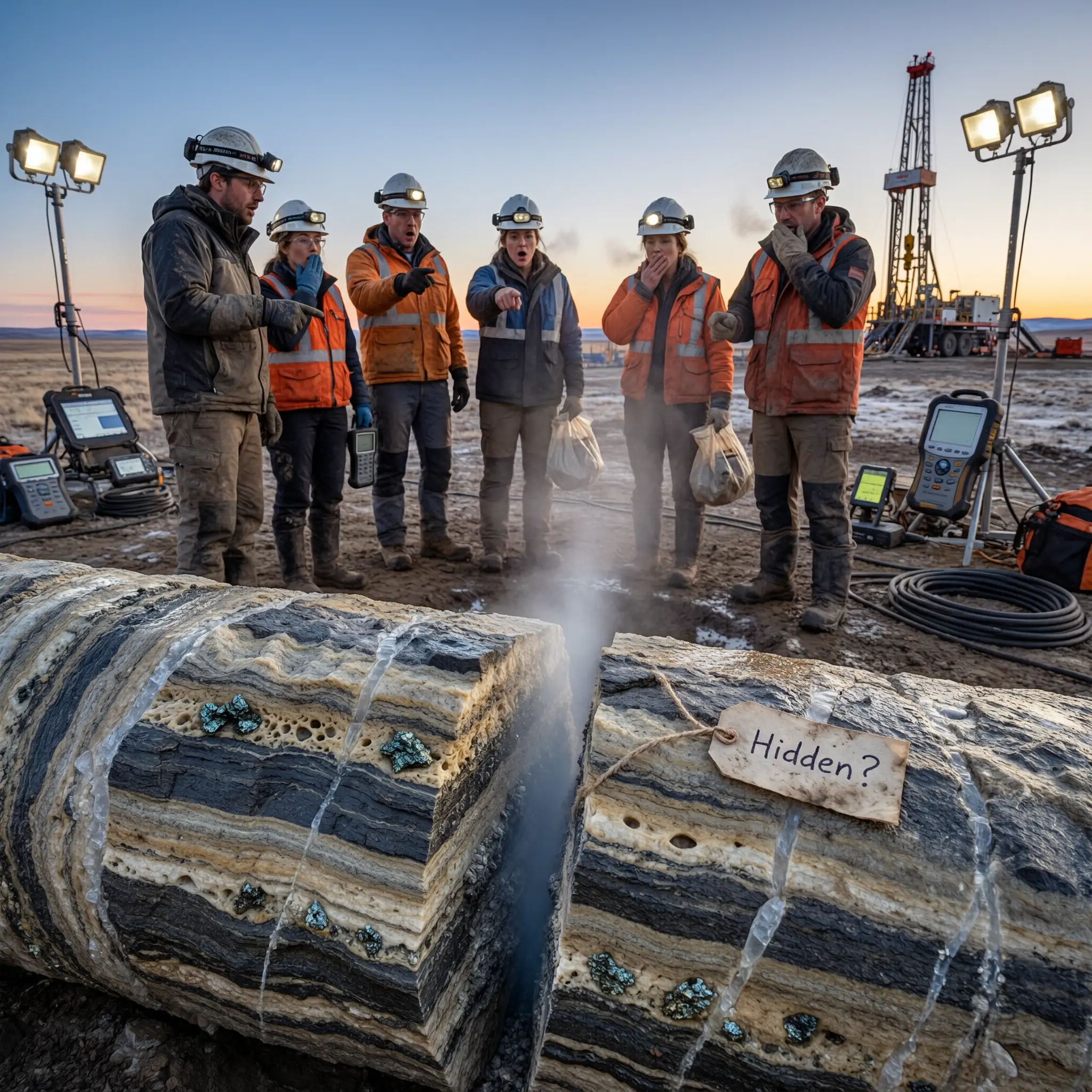
Key Insights You Should Never Miss
-
Earth Produces Continuous Natural HydrogenGeological processes like serpentinization continuously generate pure hydrogen deep underground. This remarkable discovery transforms hydrogen from a finite resource into a potentially renewable energy source that naturally refills itself over mere decades.
-
Massive Cost And Geopolitical AdvantagesExtracting natural hydrogen could cost under one dollar per kilogram, making it drastically cheaper than green hydrogen. It offers nations unprecedented energy independence without relying on complex foreign supply chains.
-
Engineering Trapping And Extraction ChallengesHydrogen molecules easily escape standard containment, requiring entirely new engineering solutions. Researchers are exploring stimulated hydrogen production to intentionally generate and capture fuel where natural geological traps do not exist.
That forgotten accident may turn out to be one of the more consequential energy discoveries of the 20th century. When researchers went back to re-examine the Mali site in 2012, they found the well was releasing gas that was nearly 98% pure hydrogen. Not a trace amount. Not an anomaly. A genuine natural hydrogen seep sitting under a small African village, producing clean fuel from the earth with no human input.
Today, that single well still powers the village of Bourakebougou. It remains the only place on Earth commercially using naturally occurring hydrogen. Meanwhile, in 2023, geologists reported a find near Lorraine, France, containing somewhere between 34 and 46 million tons, with regional estimates climbing toward 250 million. In 2026, measurements from the Canadian Shield showed ancient Precambrian rocks actively releasing hydrogen today.
So here is the question that should be keeping energy analysts up at night: if Earth is continuously manufacturing this much zero-carbon fuel, why does only one village know how to use it? A USGS assessment puts the global total at a figure that reads like a typo: 5 trillion tons.
Why Geologists Swore This Could Never Exist
For most of the last century, the idea of natural hydrogen accumulating underground in useful quantities was considered geologically impossible by most of the scientific community. The reasoning was sound on its face. Hydrogen is the smallest molecule in existence, lighter than anything else in the periodic table, chemically reactive with everything it touches.
The prevailing assumption was that any hydrogen generated underground would either seep through rock like water through a paper bag, dissolve into groundwater, or get consumed by subsurface microbes before it could ever collect in one place. The Mali discovery, and subsequent research on the geological processes behind it, forced a serious rethinking of that assumption.
The real revolution in this field is not the discovery of ancient underground pools waiting to be tapped. It is the realization that Earth itself is a continuous hydrogen factory. The engineering challenge is not simply a matter of drilling and pumping. It is figuring out how to intercept a molecule that nature never designed to stay still.
The Science of Earth-Made Fuel
The primary driver behind natural hydrogen production is a process called serpentinization. When water percolates deep underground and comes into contact with iron-rich ultramafic rock under heat and pressure, the iron in the rock oxidizes. The chemical reaction releases hydrogen gas as a byproduct. Think of it as the earth rusting from the inside, and the rust producing fuel.
Two other mechanisms add to the production. Radiolysis occurs when radiation from uranium-bearing minerals splits water molecules apart, releasing hydrogen. Deep mantle degassing pushes hydrogen up from far below the crust. What makes these processes different from oil or gas formation is timing. Fossil fuels took hundreds of millions of years to accumulate.
That is where the real 'aha' moment sits for anyone paying attention. Hydrogen is not a fossil fuel. If the production rate is high enough and the right geological conditions hold, some natural hydrogen deposits could behave less like a finite mineral resource and more like a renewable one, comparable in concept to a geothermal spring that refills itself.
In Simple Terms — Serpentinization
Serpentinization is a natural geological process where water reacts with iron-rich rocks deep underground. This reaction essentially causes the rocks to rust from the inside, releasing pure hydrogen gas as a continuous byproduct.
The Gold Rush No One Saw Coming
The global race for natural hydrogen is now genuinely underway, even if it has not yet broken into mainstream energy coverage. France has moved furthest into formal exploration, amending its Mining Code in 2022 to allow permitting for hydrogen specifically, and funding active drilling programs through partnerships between academic institutions and startups.
The economic logic behind the rush becomes obvious once the numbers are compared. Green hydrogen produced via electrolysis currently costs in the range of $5 per kilogram or more, depending on electricity prices. Estimates for naturally occurring hydrogen, if it can be extracted at scale, put the production cost below $1 per kilogram. The Inflation Reduction Act's clean hydrogen production credit adds up to $3 per kilogram for qualifying low-carbon sources.
The geopolitical implications are harder to ignore than the economics. Europe in particular has spent the last several years scrambling to reduce its dependence on imported Russian gas, while simultaneously building out infrastructure for hydrogen imports from North Africa and the Middle East. If commercially viable natural hydrogen deposits exist under European bedrock, that changes the energy-independence calculation entirely.
The Trap That Engineering Has Not Solved
The skepticism deserves to be taken seriously, not footnoted away. Despite the scale of the global resource estimate, no confirmed 'reservoir-trap-seal' play for hydrogen has been proven anywhere on Earth. That phrase refers to the specific geological arrangement, a porous reservoir rock, an impermeable cap rock, and a structural trap, that makes oil and gas fields economically viable.
The physical properties of hydrogen itself create engineering problems that do not apply to other fuels. Hydrogen molecules are small enough to pass through steel pipelines and cement well casings that would contain methane without issue. When hydrogen leaks into the atmosphere, it does not act as a direct greenhouse gas but indirectly extends the atmospheric lifetime of methane.
Most naturally discovered accumulations also contain mixtures of nitrogen, methane, and helium that require costly separation before the hydrogen is usable. And current resource classification standards, the frameworks regulators and investors use to assess reserves, were built for oil and gas. Natural hydrogen sits in a measurement and regulatory gray zone that makes financing and permitting harder than the geology alone would justify.
The Industry Caught Between Two Futures
The timing creates an uncomfortable tension for a lot of existing investment. Billions of dollars have already been committed to electrolysis-based green hydrogen infrastructure, and large carbon-capture projects have been designed around the assumption that manufactured hydrogen would remain the primary clean option for decades. If natural hydrogen scales faster and at lower cost, some of that infrastructure faces stranded-asset risk.
Institutional science has been trying to keep pace. The USGS launched its Geo H2 consortium to map and assess geological hydrogen resources in the United States. The International Energy Agency's Hydrogen TCP Task 49 is working to standardize measurement approaches globally. Researchers have been consistent in one warning: the evidence must stay at the center.
The global hydrogen transition is not a technology battle between colors on a chart. It is, at its core, a geological question: whether Earth will let us keep what it manufactures. The history of energy transitions is full of resource estimates that did not survive contact with actual drilling programs.
Farming Rocks Instead of Hunting for Pools
The most promising frontier in this space is also the least reported. A research approach sometimes called 'orange' or stimulated hydrogen involves pumping water and carbon dioxide into iron-rich underground formations deliberately, triggering serpentinization on purpose, and capturing the hydrogen that results. Rather than hoping to find a natural trap that held gas intact over geological time, engineers would create the reaction chamber themselves.
ARPA-E and several academic groups are actively exploring this approach. The appeal is significant: it converts the trapping problem from a geological lottery into an engineering design problem. Reaction rates, flow volumes, and extraction timelines become controllable variables rather than unknowns. The carbon dioxide pumped into the rock does not escape. It mineralizes in place, permanently.
This may ultimately prove more viable than the pure exploration model, because it does not require Earth to have accidentally preserved a reservoir. It requires only that the right rock types exist at accessible depths, which they do across enormous swaths of continental crust worldwide. The process is net carbon-negative by design, not just carbon-neutral.
Think of It Like This — Stimulated Hydrogen
Instead of searching for natural gas pockets, engineers pump water and carbon dioxide into iron-rich rocks to artificially trigger hydrogen production. This turns a geological guessing game into a controlled, carbon-negative engineering process.
What Happens If This Actually Works
The cascade effects would reach well beyond the energy sector. Industrial hydrogen consumption is already close to 100 million tons per year globally, almost all of it produced from natural gas, a process that emits significant carbon dioxide. Steel manufacturing, ammonia and fertilizer production, and large portions of the chemical industry all run on hydrogen.
The downsides are real and should not be minimized. A rapid scaling of natural hydrogen could strand investment in electrolyzer manufacturing, a sector that multiple countries have made central to their industrial policy. Subsurface rights for geological hydrogen are legally undefined in most jurisdictions, which will generate conflict as commercially interesting deposits are identified.
Civilization is not at the starting line or the finish line here. It is at a frontier where the chemistry is understood, the geology is partially mapped, and the engineering remains unproven at scale. The next five years of test drilling will determine whether the hydrogen economy gets to skip its most expensive phase, or whether the geology turns out to be more complicated than the surface readings suggested.