A glioblastoma patient can finish surgery, radiation, and chemotherapy, get a clean scan, and still watch the tumor come back within a year. That pattern has held for decades, through immunotherapy, targeted drugs, and a long list of trials that looked promising in the lab and then quietly failed in people. Glioblastoma treatment has a habit of making researchers feel close before pulling the floor out from under them.
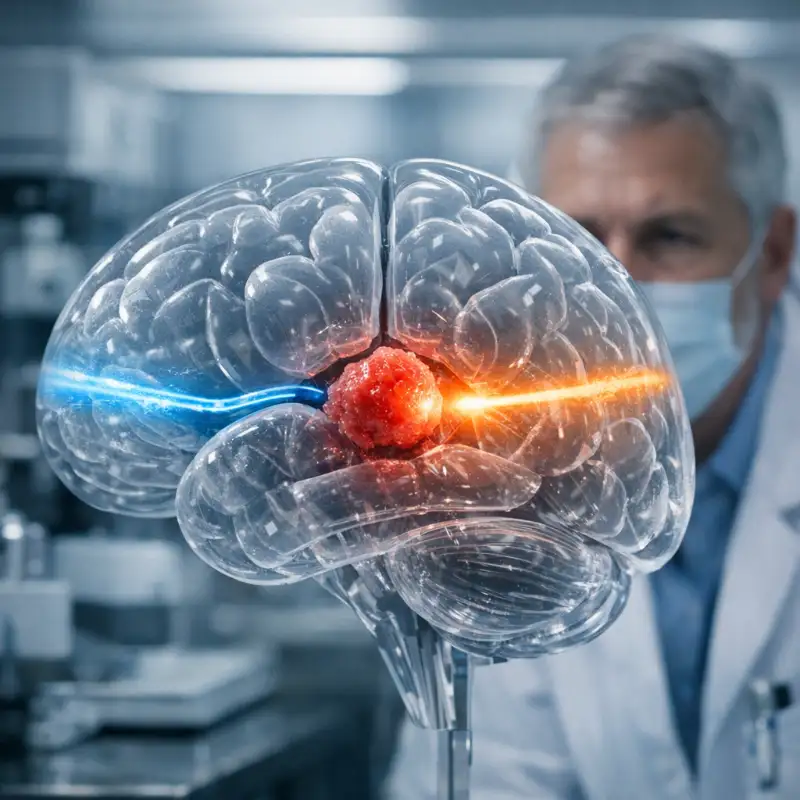
AI Generated Illustration
Now a new strategy is drawing attention for taking a different shape entirely. Instead of aiming one strong therapy at one cancer target, researchers have built an approach that attacks glioblastoma from two biological directions at once. It is not a more potent drug chasing the same weak spot. It is a change in how the tumor gets pressured in the first place.
That distinction matters more than it might sound. If a single-target therapy is like plugging one leak in a boat, this dual approach is closer to realizing the boat has two leaks that open in sequence, so you plug both before it has time to adapt. Why might hitting two systems at once succeed where hitting one system harder kept failing? The answer starts with what makes this tumor so hard to corner.
Why Glioblastoma Has Been So Difficult to Treat
Glioblastoma grows fast and spreads through healthy brain tissue in thin, irregular tendrils rather than a single contained mass. Surgeons can remove the visible tumor and still leave behind cells that have already migrated past the margins. The tumor is also genetically inconsistent within itself, meaning one region can respond to a drug while a neighboring region of the same tumor does not.
The brain adds another layer of difficulty. The blood-brain barrier exists to keep foreign substances out of neural tissue, and it does its job well enough that most cancer drugs never reach a therapeutic concentration where the tumor actually lives. Cells that survive initial treatment often shift their behavior afterward, activating different survival pathways than the ones that were originally targeted.
Put those pieces together and you get a rough explanation for why glioblastoma trials have piled up disappointments for so long. It is not that researchers have been careless. It is that the tumor keeps finding a side door whenever the front one gets locked.
How the Dual Targeting Strategy Works
The new approach works by interfering with two separate pathways that glioblastoma cells depend on to survive, spread, and resist treatment. Rather than pressuring the tumor along a single line of attack, it forces cancer cells to defend against two threats that arrive at the same time.
That matters because blocking one pathway alone tends to leave a backup route open. Cancer cells are opportunistic, and when their preferred survival mechanism gets shut down, they frequently reroute through a secondary one that the original therapy never touched. A dual approach is designed to close both routes before the tumor gets the chance to pick one.
Here is the part worth sitting with. Cancer does not behave like a single faulty switch that a drug flips off. It behaves more like a network that reroutes around damage, the way traffic finds a new path when a highway closes. Disabling two of those routes at once may do more than a stronger version of a single-target drug ever could, because it removes the option to simply reroute.
What the Early Research Actually Shows
The reported findings so far come from laboratory and preclinical research rather than human trials, and that distinction matters for how much weight to put on them right now. Within that setting, researchers observed stronger suppression of tumor growth and increased death of cancer cells compared with single-target approaches tested under the same conditions.
Specific percentages and long-term survival figures have not been broadly disclosed, so the honest read is that the direction of the data looks encouraging while the actual magnitude of benefit in patients remains an open question. Preclinical improvement does not automatically translate into a comparable improvement once a therapy meets human biology and the practical mess of a clinical trial.
Even with that caveat, researchers are treating the results as meaningful because of how rarely glioblastoma treatment produces any encouraging signal at all. A field that has absorbed disappointment after disappointment tends to notice when something moves the needle even a little, and that context is part of why this result is getting attention before a single patient has been treated.
Why Researchers Believe This Could Change Future Brain Cancer Therapy
Combination strategies are gaining ground across oncology for a straightforward reason: complex diseases rarely run on one broken part. Cancer, and glioblastoma especially, tends to rely on multiple interacting systems, so a therapy built around a single target is fighting a disease that was never structured around a single vulnerability.
This dual approach is not being framed as a replacement for surgery, radiation, chemotherapy, or existing targeted drugs. Researchers describe it as something that could eventually sit alongside those tools, layered into a treatment plan that gets built around a specific patient's tumor biology rather than a standardized protocol applied to everyone.
That framing extends past glioblastoma. Other aggressive cancers evolve resistance through the same rerouting behavior, and whatever gets learned here about disabling multiple survival pathways at once has an obvious audience in oncologists working on other tumor types that share the same stubborn pattern.
The Remaining Challenges Before Patients Benefit
Laboratory success and clinical success are not the same category of evidence, and glioblastoma research in particular has a long history of promising preclinical work that did not survive contact with actual patients. Human biology introduces variables that a controlled experiment simply cannot replicate, from immune variation to how a tumor has already adapted after prior treatment.
Several practical questions remain unresolved. Long-term safety has not been established. Side effects from disabling two biological pathways simultaneously could be more complex than side effects from a single-target drug. Getting any therapy across the blood-brain barrier in sufficient concentration is its own unsolved engineering problem, and manufacturing complexity or patient selection criteria could limit how broadly this approach ends up being usable even if it works.
None of that erases the promise in the early data. It just means no realistic timeline exists for widespread use until human trials confirm both safety and a meaningful benefit that holds up outside a lab setting.
What Happens Next and Why This Research Matters Beyond One Disease
The next steps follow a familiar sequence: further preclinical validation, phased human trials, refinement of how the two targets get combined, and work to figure out which patients are most likely to respond. None of that happens quickly, and glioblastoma research has taught its own field to expect setbacks along the way.
Zoom out and this fits a larger shift already underway in oncology, where the search for a single miracle drug is giving way to strategies built around attacking several vulnerabilities in a tumor at once. That shift is less dramatic than a cure announcement, but it may be the more durable one.
The real significance of this work is not that glioblastoma has been solved. It is that a disease known for outsmarting single-target therapies is now being approached as the network it actually is, and that reframing could end up mattering for more than one kind of cancer.