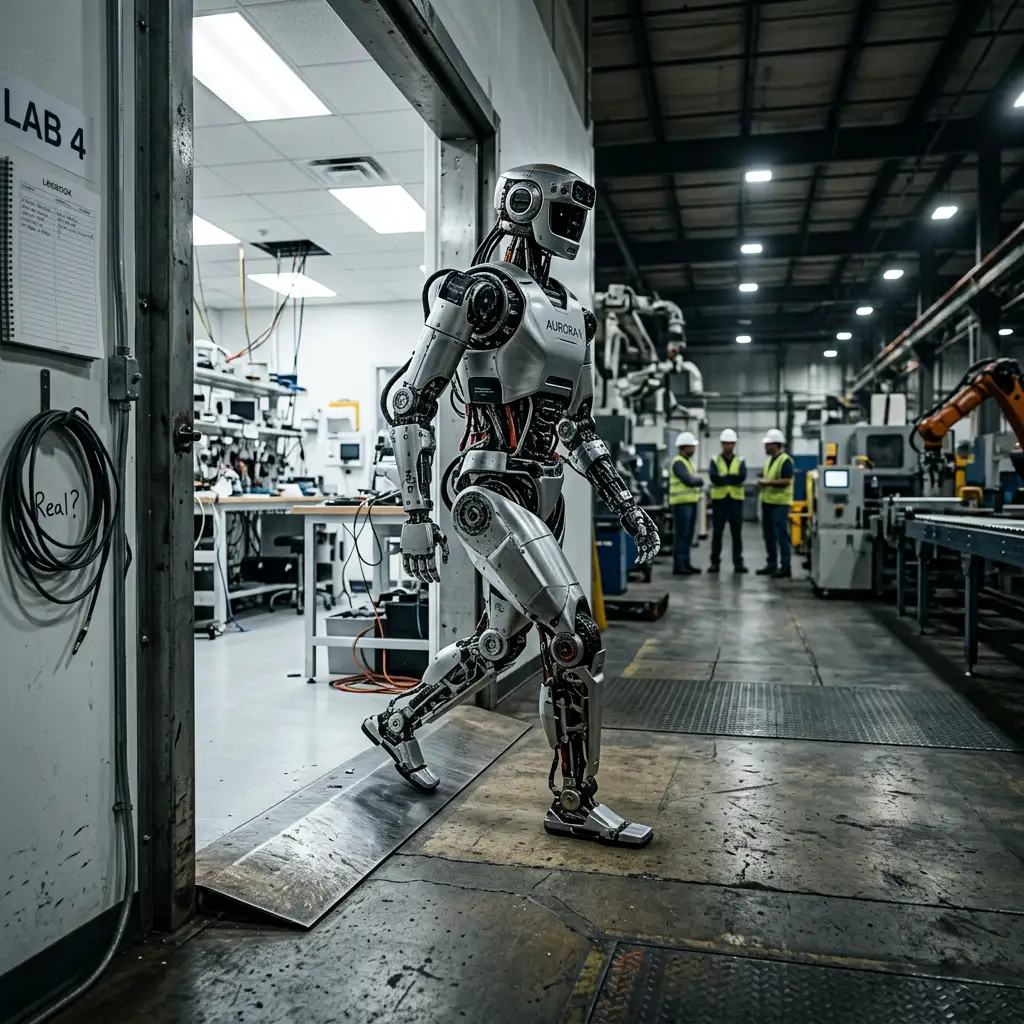
A logistics company in Ohio replaced its overnight packing crew with robotic arms last year. Productivity went up. Payroll went down. And the diner across the street, the one that used to fill up with workers grabbing breakfast after their shift, closed six months later. Nobody ate there anymore because nobody was getting paid to eat there anymore.
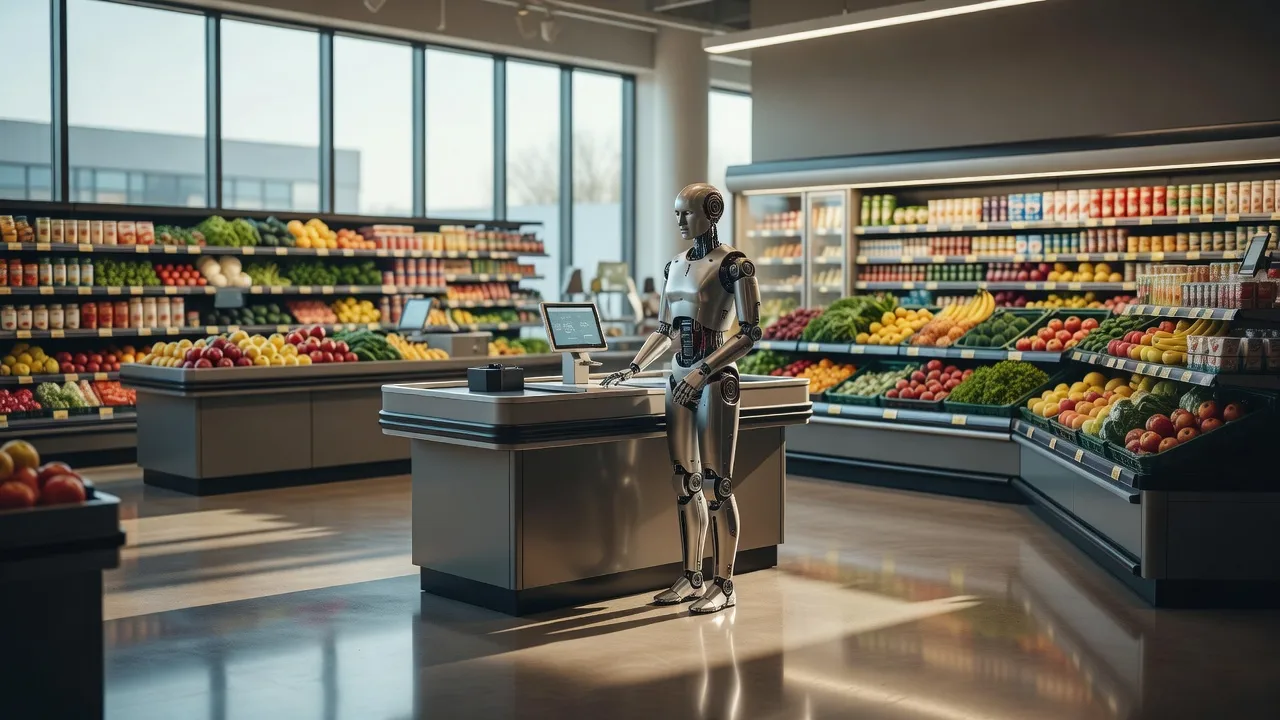
AI Generated Illustration
That small, local collapse points to something bigger than any single warehouse. The fear about AI job displacement usually gets framed as a technology problem: can AI eventually do every job a human can do. That question misses something more basic about how economies actually function. An economy is not just a machine that produces goods. It is a loop, and workers are not only the labor inside that loop, they are also the customers on the other end of it.
If artificial intelligence quietly removes the paychecks, it starts choking off the demand that keeps businesses growing in the first place. So the real question worth asking is not whether AI can do almost everything. It is who still has money to buy what gets produced once it does.
How Markets Depend on Human Income, Not Just AI Productivity
Wages are not just a cost on a company's balance sheet. They are also the fuel that keeps that same company's revenue flowing. A worker earns a salary, spends most of it on rent, food, and services, and that spending becomes someone else's income. Multiply that by millions of households and you get consumer demand, the thing every business ultimately depends on to grow.
This creates an odd tension for full automation. A company that replaces its entire workforce with AI can, in theory, produce more at a lower cost. But if every company does the same thing, the pool of people who can afford to buy anything shrinks along with it. Higher output means nothing if the customer base cannot pay for it. It is the industrial equivalent of a company selling to itself.
Why Automation Has Always Created New Work Instead of Ending It
Mechanized farming pushed most of the population off the land, and for a while that looked like mass unemployment in the making. Instead it freed up labor for factory work that did not exist yet. Industrial machinery displaced skilled craftsmen, then created entirely new trades around maintaining, operating, and building that machinery. Personal computers were supposed to erase office jobs. They created software, IT support, and eventually the internet economy, which employs more people today than the typewriter industry it replaced ever did.
The pattern underneath all of this is fairly consistent. Automation lowers the cost of doing something, and lower costs expand what people can afford. Cheaper production means cheaper goods, which means more demand, which means new businesses form to meet that demand. Nobody in 1995 could have predicted app developers, social media managers, or cloud infrastructure engineers, yet the personal computer made all three inevitable.
What Makes AI Different From Earlier Technological Revolutions
Earlier waves of automation mostly replaced physical labor. AI is different because it goes after cognitive work too, the kind of tasks that used to be considered automation-proof. It can draft code, summarize research, generate design mockups, handle customer support conversations, and assist with the kind of business analysis that used to require a junior analyst and a few days.
According to the World Economic Forum's Future of Jobs Report 2025, which surveyed more than a thousand employers representing over 14 million workers worldwide, technological change is now the single biggest force reshaping the global labor market through 2030. But capability alone does not tell you whether a job disappears. What matters more is a mix of inference cost, accuracy, reasoning quality at scale, and how well a given task tolerates error, and that mix varies enormously depending on what the job actually involves.
That distinction between a task and an occupation ends up being the whole story. AI can be extremely good at writing a paragraph and still be a poor substitute for the person who decides what that paragraph needs to say, who takes responsibility for it, and who deals with the consequences if it is wrong.
Why Most Jobs Will Change Before They Disappear
Almost no job is really one task repeated all day. A nurse takes vitals, but also reads a patient's fear and decides how to talk them through a scary diagnosis. A lawyer drafts contracts, but also negotiates, persuades, and takes on legal liability that no software can absorb. Break any occupation down and you find a bundle of tasks, some of which AI handles well right now and others it barely touches.
That is why AI tends to show up first as a coworker rather than a replacement. In healthcare, AI already flags anomalies in scans faster than a radiologist scanning alone, while the radiologist still makes the call and signs off on it. In engineering, AI speeds up simulations that used to take days, freeing engineers to spend more time on judgment calls the software cannot make. Manufacturing floors increasingly pair robotic precision with human oversight of quality and safety. Even in creative industries, AI generates drafts and variations while a human editor decides which ones actually work.
Here is the part worth sitting with: AI replaces tasks a lot faster than it replaces careers, because real jobs run on judgment, accountability, trust, and the kind of human interaction that a client, patient, or customer still wants from another person and not a system.
The Biggest Risks If AI Adoption Moves Faster Than Labor Markets
None of that adaptation happens automatically or painlessly. The honest risks are real and worth taking seriously rather than waving away. Rapid AI adoption can outpace how fast workers can retrain, which widens inequality between people who can shift into AI-adjacent roles and people who cannot. Wages in exposed occupations can flatten or fall even before jobs disappear outright, because employers gain leverage the moment a task can be automated even partially. Entire regions built around one industry, a manufacturing town or a call center hub, can face concentrated shocks that a national unemployment number completely hides.
What remains unclear is how quickly new industries can absorb the workers those older industries shed, and whether the timeline works out in practice rather than in theory. Economists and policymakers tend to focus less on whether markets will eventually adjust, since history suggests they usually do, and more on retraining programs, education reform, and social safety nets, because the pain of a transition can land hard on specific people even when the aggregate numbers look fine years later.
If businesses adopt AI faster than workers can reskill, and faster than new industries can form to absorb them, the short-term damage could be severe even if the long-term outcome resembles every previous wave of automation.
What the AI Economy Could Look Like Over the Next Decade
A few realistic futures start to take shape from here. AI likely keeps absorbing routine, repetitive, and rules-based work, while humans shift toward oversight, creativity, entrepreneurship, interpersonal care, and the kind of complex judgment calls that resist automation because they depend on context, trust, and accountability. None of that happens on its own. It depends on policy choices around retraining and safety nets, on how businesses decide to deploy AI, and on whether consumer demand holds up well enough to keep funding the next round of innovation.
The limit on AI job displacement was never really about what the technology can do. It is about the economic system underneath it, one that only keeps functioning as long as enough people are still earning enough money to keep buying what gets made. That is the quiet contradiction sitting under every bold prediction about a fully automated economy, and it is the one question that determines which version of the next decade actually shows up.