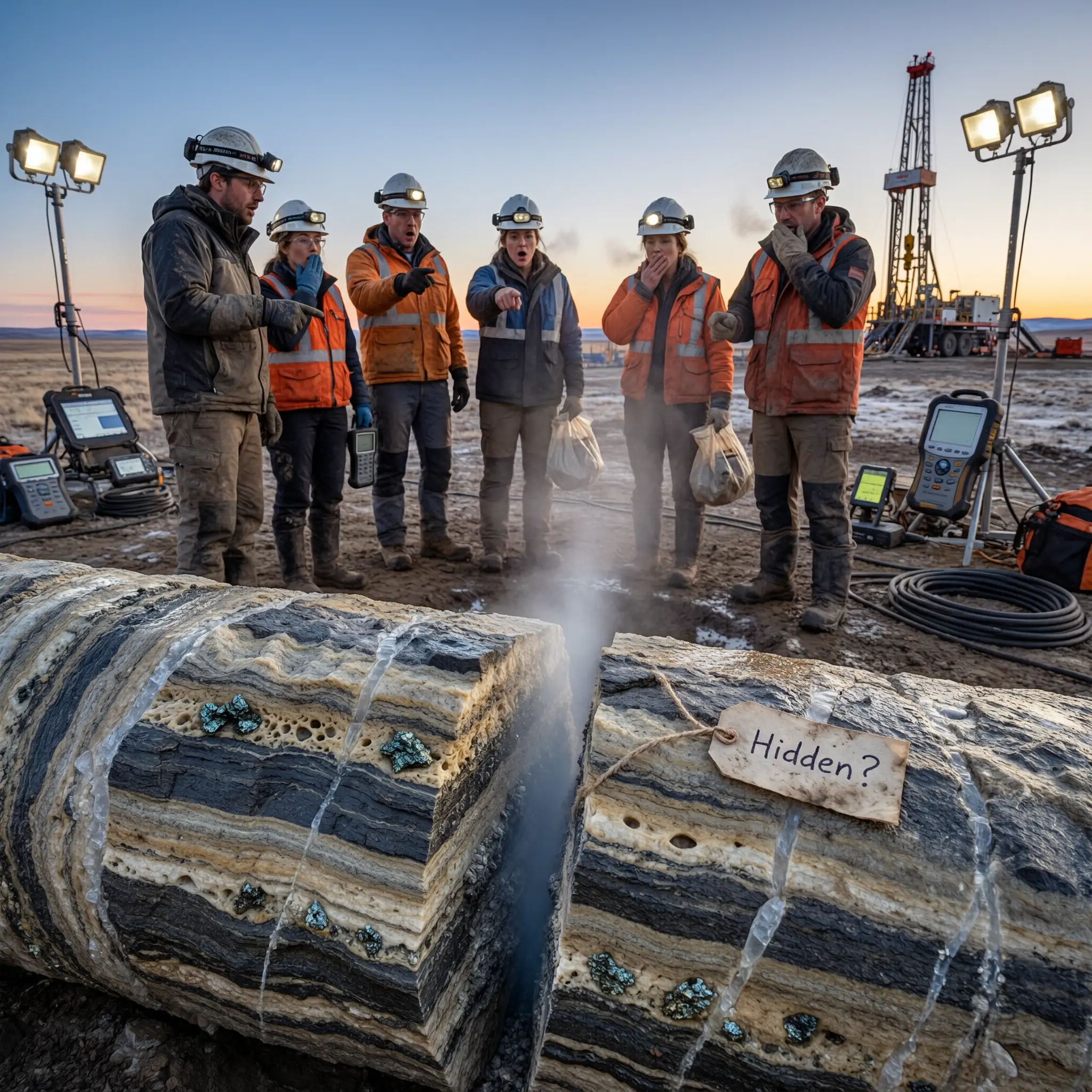
In the 1970s, roughly 1,400 people walked out of hospitals with plutonium-238 batteries beating inside their chests. These were not experimental devices. They were fully functional pacemakers that worked for decades without a single recharge, eliminating the repeated surgeries that conventional battery-powered devices required. The patients lived longer, more comfortably, with fewer complications. The technology was real, and by every clinical measure, it worked.
Key Insights You Should Never Miss
-
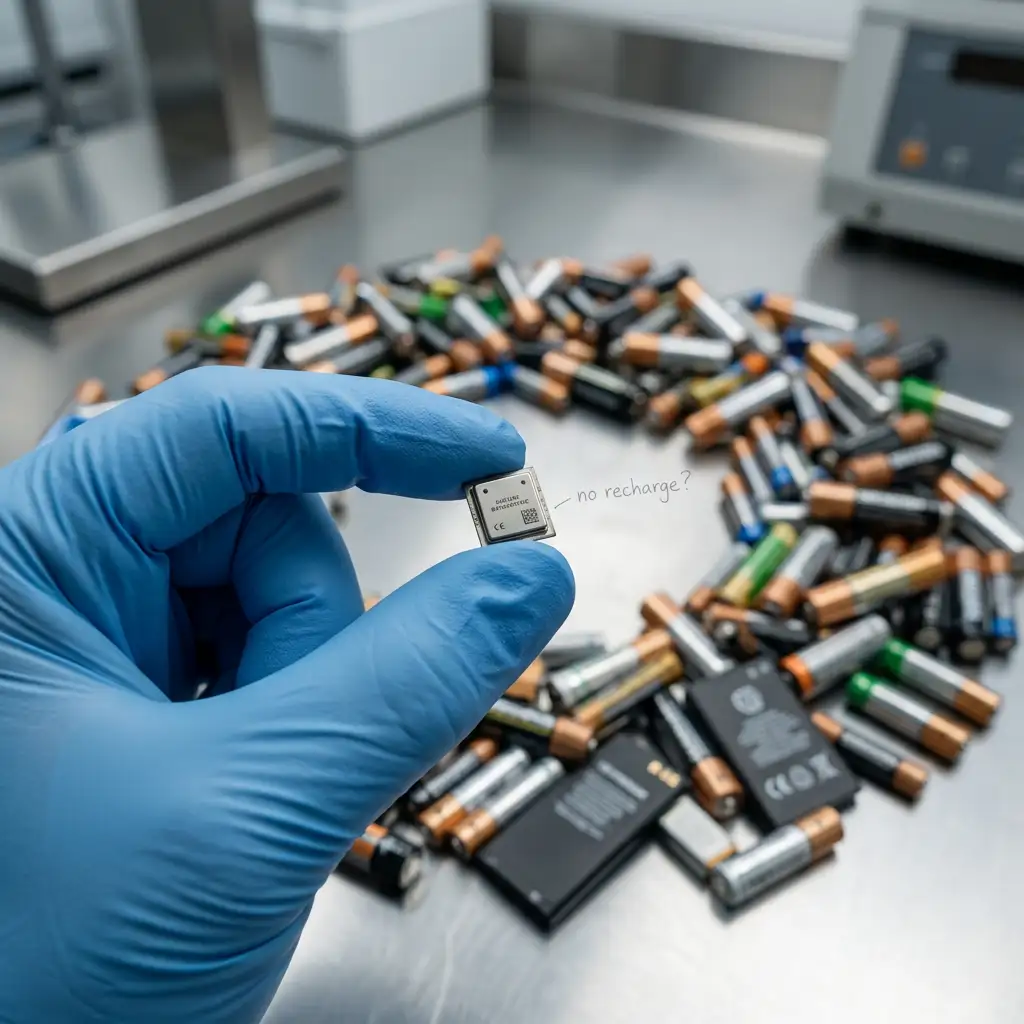
Decades Of Power Without Recharging Needed.Nuclear batteries use radioactive decay to generate steady electricity for decades, eliminating the need for frequent recharging or replacement surgeries in critical medical devices.
-
Betavoltaic Cells Use Safe Radioactive Isotopes.Modern designs use isotopes like carbon-14 and nickel-63, which emit low-energy particles safely contained by thin shielding, posing minimal external exposure risks to users.
-
Logistics And Trust Remain Major Adoption Barriers.While physics is solved, tracking radioactive waste from millions of consumer devices requires new infrastructure for recycling and disposal that currently does not exist globally.
Then regulators effectively killed it. Not because the batteries failed. Because hospitals lost track of them.
Patients died with radioactive devices still implanted. Some were cremated. Others buried. Plutonium-238 quietly disappeared into cemeteries and crematoriums, unaccounted for, untraceable. The pacemaker program was phased out. The science worked fine. The human systems around it fell apart.
That distinction matters now, because the same underlying technology is being rebuilt from scratch. With safer isotopes, modern semiconductors, and a sharper understanding of what went wrong the first time, researchers worldwide are racing to develop nuclear batteries that last decades without charging. The barrier has never been physics. It has always been trust.
Why Lithium Has Hit A Wall Now
Lithium-ion batteries have gotten better every year for three decades. But the improvement curve is flattening. A modern smartphone battery degrades noticeably within two years, losing capacity through the same electrochemical wear that affects every rechargeable system. Mining the lithium and cobalt required for these batteries causes documented environmental damage. Disposal contaminates groundwater. The supply chain runs through geopolitically fragile regions.
More practically, lithium reaches a wall in situations where charging is impossible. Drones operating over remote terrain, environmental sensors buried in arctic permafrost, cardiac pacemakers that require risky surgery just to swap a battery. These aren't niche inconveniences. They're real engineering constraints with no clean lithium-based solution.
What those applications need is something different. A power source that delivers steady, low-level electricity for years or decades, with no charging, no maintenance, no replacement. That description fits nuclear batteries exactly. The physics was solved fifty years ago.
How Nuclear Batteries Actually Work
The term 'nuclear battery' sounds alarming, but the mechanism is almost gentle by comparison. These are not reactors. There is no fission, no chain reaction, no containment risk. The correct term is betavoltaic device, and the principle is closer to a solar cell than a nuclear power plant.
Here is how it works: a radioactive isotope naturally emits particles as it decays. Those particles, moving fast, strike a semiconductor material. The collision knocks electrons loose, creating what physicists call electron-hole pairs. An internal electric field separates them, and current flows through an external circuit. The isotope is the sun. The semiconductor is the solar panel. Except this 'sun' keeps shining for decades without any input.
Carbon-14 has emerged as one of the most promising fuel candidates. It has a half-life of 5,730 years. Its decay particles carry low enough energy that a thin sheet of aluminum stops them completely. It exists in large quantities as a byproduct of nuclear reactor graphite, meaning the fuel source is already available as industrial waste. A battery powered by the same isotope archaeologists use to date ancient bones, potentially lasting millennia. That is the quietly mind-bending part of this story.
The 2025 Breakthrough That Changed Math
In March 2025, researchers at South Korea's Daegu Gyeongbuk Institute of Science and Technology published results from a betavoltaic cell that achieved 2.86% energy conversion efficiency, using radiocarbon in both the anode and cathode. Previous designs had managed roughly 0.48%. The improvement was roughly six-fold.
In Simple Terms — Betavoltaic Device
A betavoltaic battery works like a solar panel but uses radioactive decay instead of sunlight. It captures particles emitted by isotopes to create a steady, long-lasting electrical current without moving parts.
The mechanism behind the jump involved a titanium dioxide semiconductor sensitized with a ruthenium-based dye and treated with citric acid to strengthen the material bonds. The dual-site design created what the team described as an electron avalanche effect, collecting far more energy from each decay event than earlier architectures managed.
The honest framing here matters. 2.86% efficiency sounds almost embarrassingly small compared to Li-ion systems. Power output is measured in nanowatts. No one is running a laptop on this. What changes is the calculation for applications where charging is simply not an option, where even a nanowatt sustained for fifty years is worth more than a kilowatt that lasts two. The tradeoff only looks bad until you actually need what these batteries offer.
Who Is Racing To Build Them
The development landscape is scattered and competitive. Betavolt Technology in China announced a coin-sized nuclear battery using nickel-63 that they claim can run for fifty years at low output. The UK Atomic Energy Authority partnered with the University of Bristol to harvest carbon-14 from British reactor graphite specifically for betavoltaic applications. In the US, City Labs has been producing commercial tritium batteries for specialized military and sensor applications for years. Lawrence Livermore researchers have been exploring silicon carbide pillar designs that increase surface area for better energy capture.
These teams are not all working on the same thing. Some use semiconductor betavoltaics. Others rely on thermoelectric conversion from decay heat. The diversity of approaches is actually a good sign. It suggests the field is genuinely alive rather than clustered around a single speculative concept.
Compared to the 1970s, the isotopes are safer. Tritium, nickel-63, and carbon-14 pose far lower external exposure risks than plutonium-238. Modern shielding is more precise. But the commercial path remains genuinely unclear, and the reasons are not technical.
The Unsolved Problem Nobody Talks
If hospitals in the 1970s couldn't keep track of 1,400 pacemakers, the question worth sitting with is what happens when nuclear batteries appear in millions of consumer devices.
Every product containing radioactive material requires regulatory licensing in the US and most developed countries. That licensing includes tracking from manufacture through disposal. Crematoriums are not equipped to detect or handle radioactive implants. Landfills and e-waste streams have no infrastructure for radioisotope recovery. The scenario where a nuclear battery phone ends up in a recycling bin in a facility not rated for radioactive materials is not theoretical. It is the predictable default outcome without deliberate infrastructure built around it.
Think of It Like This — Logistics Gap
While the battery technology works, we lack the systems to track and dispose of radioactive waste from consumer electronics. Without new infrastructure, discarded devices could contaminate recycling streams and landfills.
The technical limitations reinforce the commercial case for caution. Current nuclear batteries produce output in the microwatt to nanowatt range. That makes them useful for medical implants, remote sensors, and deep space probes. It does not make them useful for smartphones, laptops, or electric vehicles. The realistic application window is narrower than the popular coverage suggests, and the isotope supply for even that narrower window is limited and expensive to produce.
Where Nuclear Batteries Will Matter
The applications where nuclear batteries make unconditional sense are the ones where the alternatives fail completely. Pacemakers are the obvious case. A person receiving a pacemaker at fifty could theoretically carry the same device for the rest of their life, with no replacement surgeries, no anesthesia risks, no recovery periods. For neural stimulators and cochlear implants, the same calculus applies.
Remote sensing is the second clear category. Environmental monitors in deep ocean locations, seismic sensors on uninhabited volcanic islands, infrastructure sensors in Arctic pipelines. These devices currently require either battery replacement expeditions or power tethering. Neither is practical at scale.
Space is the unambiguous frontier. Past Jupiter, solar irradiance drops to below 4% of what Earth receives. Solar panels become progressively useless. NASA's Voyager probes have been transmitting data for over forty-eight years on radioisotope thermoelectric generators built in the 1970s. Any serious mission to the outer planets, the Kuiper Belt, or interstellar space has no realistic power alternative. That reality is not changing.
Centuries Of Power If We Manage
Research continues toward better beta-ray emitter geometries, more efficient semiconductor absorbers, and materials like gallium nitride and synthetic diamond that can handle high radiation doses without degrading. The physics keeps improving. Laboratory efficiency records keep falling.
The unresolved tension is social, not scientific. We already know how to build batteries that outlast their users. The question is whether we can build the licensing frameworks, the material tracking systems, the crematorium protocols, and the public trust necessary to deploy them at any meaningful scale.
There is something unusual about a technology where the hardest problem is not the engineering. Nuclear batteries force a specific question that most consumer technology never has to ask: are we prepared to track this device not just for years, but for generations? The answer will determine whether this revival becomes something real, or whether it follows the 1970s pacemaker program into a drawer labeled 'technically correct, practically abandoned.'