For most patients with a serious genetic disease, treatment means a lifelong routine: pills every morning, infusions every few weeks, clinic visits that never end. The disease itself does not progress to a cure. It is simply managed, indefinitely, at considerable cost and effort. That model has been the foundation of modern medicine for decades. A new class of in vivo gene editing medicine is now asking whether it has to stay that way.
Key Insights You Should Never Miss
-
One-Time Curative Treatments EmergeIn vivo gene editing permanently corrects faulty DNA inside living cells, replacing lifelong medication routines with potential biological cures for serious inherited genetic diseases across multiple human body systems globally today and tomorrow.
-
Platform Delivery Systems AdvanceLipid nanoparticle delivery vehicles safely transport editing tools directly to targeted organs like the liver, enabling researchers to rapidly adapt one proven system for treating numerous distinct genetic conditions efficiently and affordably worldwide.
-
Long Term Safety Remains CriticalScientists carefully monitor potential off-target edits and immune reactions over decades to ensure lasting genetic modifications remain safe and effective while addressing complex healthcare pricing models and equitable access challenges successfully.
The idea is not subtle. Rather than giving a patient something that compensates for a broken gene, you give the body tools to fix the gene itself. The editing happens inside living tissue, within cells that never leave the patient. If it works, the correction persists. The disease loses its biological ground.
Why Gene Therapy Faced a Major Barrier
That shift is what attracted attention well beyond biotech circles when this approach began producing clinical results. This is not a better drug in the usual sense. It is a different category of intervention entirely. The question most coverage has not fully answered is what happens once this kind of editing becomes routine.
Scientists have understood the genetic basis of many diseases for decades. Sickle cell disease, cystic fibrosis, Huntington's, certain forms of blindness: the mutations responsible for each have been mapped in detail. The knowledge was there. The ability to act on it safely was not.
Conventional medicines work by introducing a molecule that interacts with the body's biology, typically to block a process, replace a missing substance, or stimulate a response. They do not change the instructions. Gene therapy, from its earliest attempts in the 1990s, aimed to do something more fundamental: alter the DNA itself so the body would produce the right proteins on its own.
The barrier was delivery. Editing genes in a lab dish is one thing. Doing it inside a living person, in the specific cells that matter, without causing harm to others, is a much harder engineering problem. Early trials produced serious immune reactions. Progress stalled. The field spent years rebuilding trust and developing safer tools.
The Breakthrough That Changed the Conversation
What distinguishes in vivo CRISPR therapy from those earlier efforts is precision and control. The editing machinery, typically a guide molecule paired with a protein that cuts DNA at a specific location, travels directly into the body and performs its work inside targeted cells. Nothing is removed, edited externally, and reinfused. The patient receives a treatment; the treatment does the editing in place.
That distinction matters for practicality. Ex vivo approaches, where cells are extracted and modified outside the body before being returned, are expensive, technically demanding, and not available for every tissue type. In vivo approaches open the door to diseases where the relevant cells cannot easily be removed and replaced.
The first approved CRISPR drug represented a significant step, but the deeper story is not what that treatment cured. It is that a platform now exists. A delivery mechanism that works for one genetic target can, in principle, be adapted for others. That is what makes this a new way of thinking about medicine, not just a new drug.
How In Vivo Gene Editing Actually Works
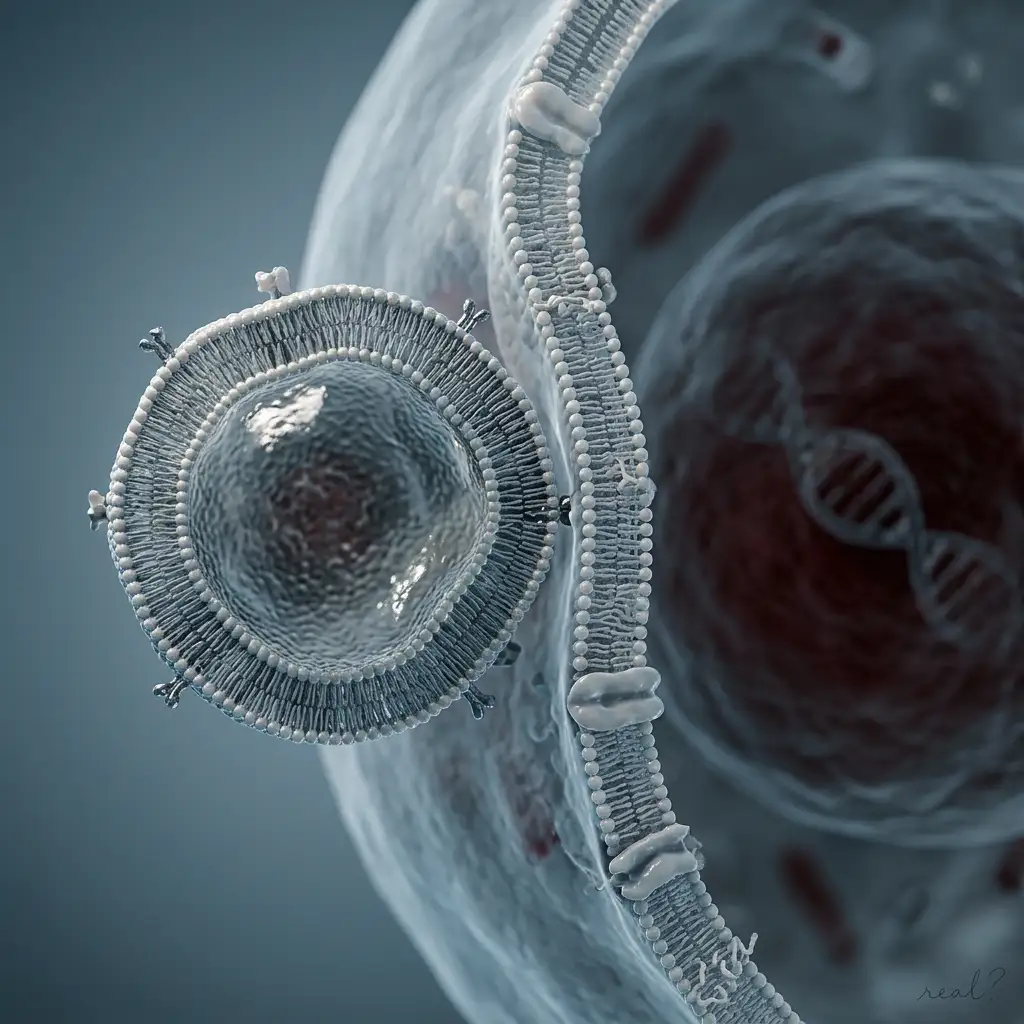
The process begins with a delivery vehicle, most often lipid nanoparticles, tiny fat-based spheres that carry the editing components into the bloodstream and help them reach specific cells. Think of them as address-labeled envelopes designed to reach one particular office in a city of trillions. Once inside the target cell, the CRISPR system uses a guide RNA to locate the right DNA sequence and a cutting protein to make a precise change at that site.
Precision is everything here. Off-target edits, changes that occur at unintended locations in the genome, are the central safety concern. The body has roughly three billion base pairs of DNA, and an edit in the wrong place carries consequences that may not appear for years. Researchers spend significant effort designing guides that are highly specific to their intended sequence and minimizing any chance the cutting tool wanders.
Long-term data is still accumulating. According to researchers working in this space, the durability of edits, whether they persist as cells divide and renew over time, and the full profile of potential off-target effects remain active areas of study. These are not hypothetical concerns. They are the metrics that will determine whether in vivo gene therapy for rare disease becomes a broad clinical tool or remains narrowly applied.
In Simple Terms - In Vivo Gene Editing
Think of it as mailing a tiny, highly specialized repair crew directly into your bloodstream. Instead of swapping out a broken part, the crew finds the exact damaged instruction inside your living cells and rewrites it permanently, all while you remain awake and completely unharmed.
Why a One-Time Treatment Changes the Economics of Healthcare
Modern medicine runs largely on recurring revenue. A patient with a chronic condition is, from a business perspective, a long-term customer. Monthly prescriptions, quarterly infusions, annual monitoring: the financial model of pharmaceutical development assumes ongoing need.
A treatment designed to work once disrupts that model completely. For patients with rare genetic disorders currently requiring continuous management, a single successful intervention would eliminate years of treatment costs, clinical burden, and quality-of-life compromise. For healthcare systems, the calculation is complicated: a large one-time payment may be harder to budget than predictable annual costs, even if the lifetime total is lower.
There is a more interesting framing here. Medicine has traditionally been purchased in doses. Gene editing introduces the possibility of purchasing a biological change itself. That is not an incremental improvement on existing treatment models. It requires healthcare systems, insurers, and regulators to develop entirely new frameworks for evaluating cost, access, and value.
The Diseases Most Likely to Be Transformed First
Early targets in gene editing follow a pattern. They tend to be diseases with a single, well-characterized mutation, where the relevant cells are reachable through current delivery methods, and where benefit can be measured clearly within a clinical trial timeline. Liver-targeting therapies have been particularly active because the liver is well-served by lipid nanoparticle delivery systems and processes many proteins whose defects cause serious disease.
A study published in the New England Journal of Medicine on CRISPR-based treatments for transthyretin amyloidosis showed that a single infusion could dramatically reduce the disease-causing protein in patients' blood. That result mattered not just for that disease but for what it demonstrated about the platform.
Success in one disease accelerates the next. The delivery system gets better. Manufacturing improves. Safety data accumulates. Each approved treatment adds knowledge that shortens the path to the following one. This is the platform effect, and it is why researchers who work on a single rare disease often spend as much time thinking about the broader pipeline as about the specific condition in front of them.
Think of It Like This - Off-Target Edits
Imagine trying to rewrite one specific word in a massive library of books. An off-target edit happens when the molecular tool accidentally changes the wrong word on a nearby page. Scientists use highly precise guide sequences to prevent these accidental mistakes and ensure lasting patient safety.
The Risks Scientists Are Still Watching Closely
The honest version of this story includes real uncertainty that cannot be resolved with optimism.
Off-target edits are the most discussed risk, but immune responses deserve equal attention. The body may recognize CRISPR components, particularly the bacterial-derived cutting protein, as foreign and mount a reaction that reduces efficacy or causes harm. Some patients already carry antibodies that could interfere with treatment before it ever reaches a target cell.
Then there is the question of what cannot yet be measured. Altering DNA is, by its nature, a change that persists. The standard for evaluating a drug that leaves the body after a few days is different from the standard for evaluating one whose effects are meant to last a lifetime. Regulators and researchers both acknowledge that follow-up periods of five, ten, or twenty years will be necessary before the safety profile of these treatments is fully understood. That is not a reason to stop development. It is a reason to approach the expansion of these therapies carefully rather than on the basis of early enthusiasm alone.
Scalability is also unresolved. Manufacturing precision gene editing treatments at the cost and volume that broad patient access would require remains an engineering challenge. The treatments that exist today are expensive in part because the process of making them is complex and difficult to scale.
Why the Biotechnology Industry Sees a Platform Revolution
What the pharmaceutical and biotech sectors are paying attention to is not just the first approved treatments. It is the infrastructure being built around them: delivery systems that can be adapted to new targets, manufacturing techniques that can be improved and standardized, regulatory frameworks that are being shaped in real time.
A useful historical parallel is the development of monoclonal antibodies in the 1980s. The first applications were narrow and technically difficult. Over decades, the underlying platform became one of the most productive in pharmaceutical history, enabling treatments across oncology, autoimmune disease, and infectious disease. The question being asked now is whether gene editing platforms follow a similar trajectory.
Delivery technology, in particular, is attracting serious investment. A lipid nanoparticle system that reliably targets liver cells could, with modification, be redirected toward muscle, lung, or brain tissue. Each new tissue type opens a new set of potential disease targets. This is why companies in this space often describe their work in terms of platforms rather than products.
What Happens When Gene Editing Becomes Routine?
If the engineering problems are solvable, and the evidence suggests many of them are, the next decade could produce treatments for diseases that have never had a curative option. Certain hereditary conditions that affect the nervous system, the heart, or the lungs may eventually become targets as delivery systems improve and editing tools become more refined.
The societal questions that follow are not comfortable ones. Who gets access to treatments that cost hundreds of thousands of dollars per patient? How do health systems in countries without substantial pharmaceutical infrastructure obtain these therapies? What standards should govern which conditions are appropriate targets for genetic intervention? These are not hypothetical policy debates. They are already beginning, and the answers will shape how equitably the benefits of this technology are distributed.
What remains genuinely unresolved is the outer boundary of what this platform makes possible. The first in vivo gene editing medicine may ultimately be remembered less for the disease it treated and more for proving that human DNA can be edited from within the body at medical scale. Where that capability ends, and who gets to decide, is a question medicine has never had to answer before.