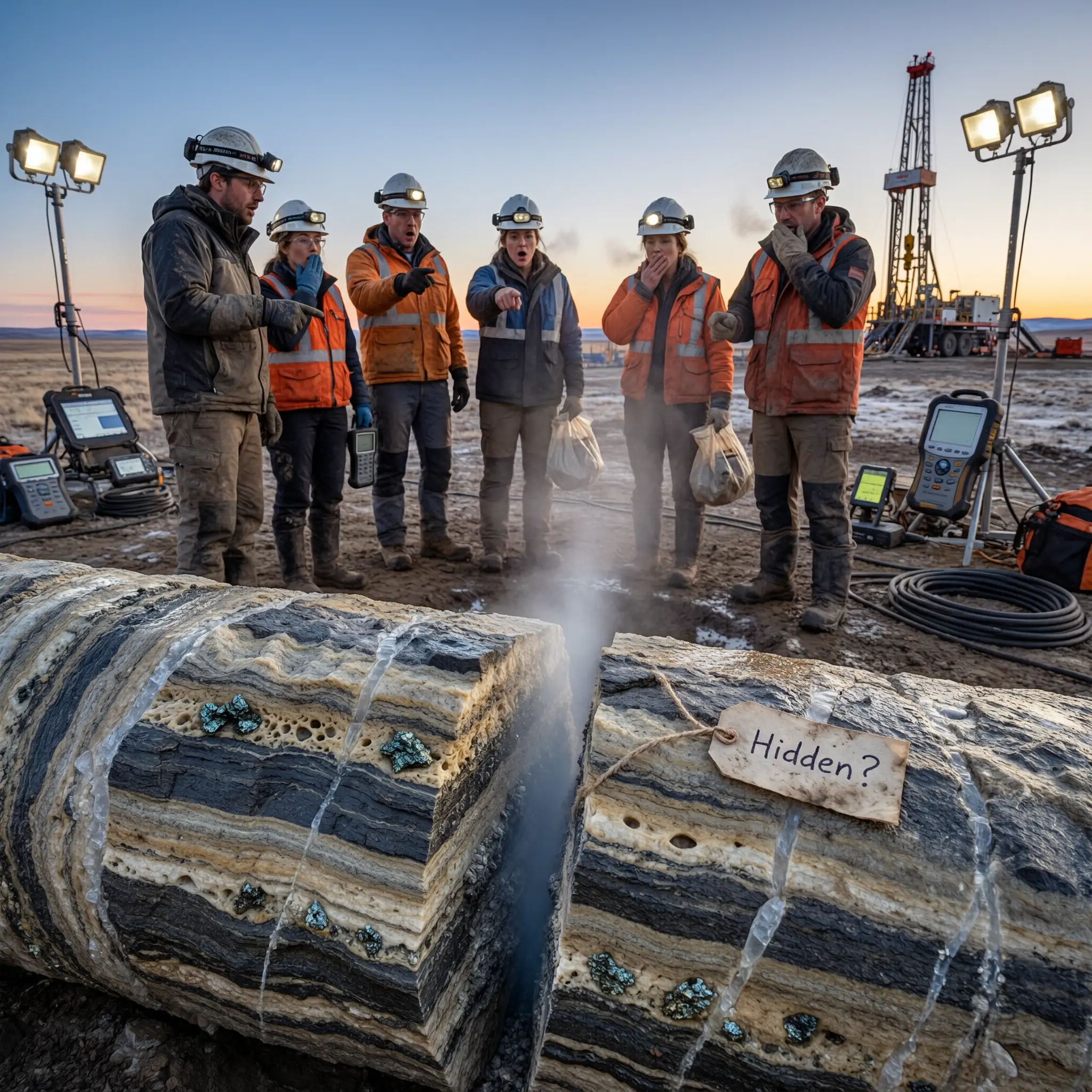
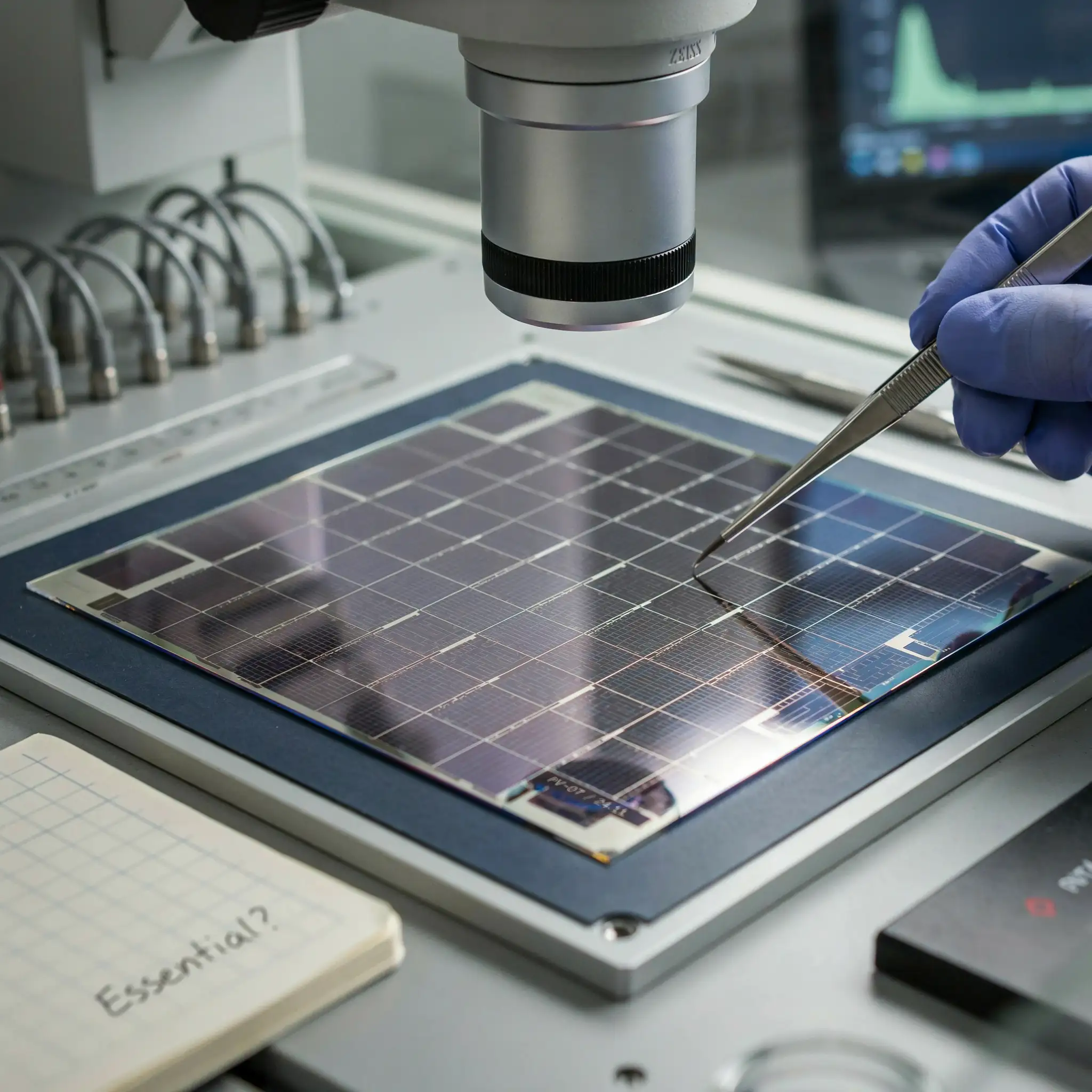
Somewhere in a lab freezer right now sits a sliver of solar cell that does something most of its predecessors cannot. It converts sunlight into electricity without relying on one of the materials engineers have spent a decade insisting was non negotiable. That single substitution is the kind of detail that rarely makes headlines, yet it might matter more than the next efficiency record.
Key Insights You Should Never Miss
-
Replacing Silver With CopperResearchers successfully replaced expensive silver electrodes with copper in high performance solar cells. This breakthrough maintains efficiency while removing a major supply chain bottleneck for the industry.
-
Solving Copper Migration IssuesThe key innovation is a protective interface layer that stops copper ions from degrading sensitive perovskite materials. This solves the historical failure mode that previously prevented copper from being viable.
-
Scaling Clean Energy SupplyUsing abundant copper instead of scarce silver reduces geopolitical risks and cost volatility. This shift enables smoother manufacturing scaling essential for meeting global decarbonization targets effectively.
For years, the most promising advanced photovoltaic designs, especially perovskite and tandem solar cells, have leaned on silver to move electrical current efficiently through the device. Silver is excellent at this job. It is also expensive, geographically concentrated in supply, and increasingly competed over by electronics, medical devices, and jewelry manufacturers who have no interest in losing market share to clean energy. A solar cell breakthrough that removes this dependency does not just tweak a spec sheet. It removes a ceiling that nobody likes to talk about out loud.
That raises an uncomfortable question the industry has mostly avoided. If a clean energy future depends on a metal that is neither abundant nor cheap, how clean is that future really? And if researchers found a way around it without losing performance, what would that unlock?
The Breakthrough That Challenges a Long-Standing Assumption
The core development is straightforward to state and harder to pull off. Researchers replaced the silver electrode layer in a high performance solar cell with a copper based alternative, paired with a protective interface designed to stop the copper from degrading the device over time. Copper conducts electricity almost as well as silver and costs a fraction as much, but it has a habit of reacting badly with the sensitive materials inside a perovskite cell, which is why nobody had made it work cleanly before.
What makes this attempt different is what it did not sacrifice. Earlier efforts to swap out silver tended to trade efficiency for affordability, like replacing a sports car engine with a lawnmower motor and hoping nobody notices the difference on the highway. This approach reportedly held onto power conversion efficiency in the same range as silver based cells, which is the detail that separates an interesting lab curiosity from something worth paying attention to.
The more useful way to read this story is not as the invention of a new solar cell, but as the removal of a bottleneck nobody had managed to clear. Solar technology has rarely failed in the lab. It has failed at the warehouse door, when someone tries to order enough material to build a million units and discovers the supply chain was never built for that scale.
Why Material Availability Matters as Much as Efficiency
Solar progress gets measured in headlines about record efficiency percentages, and those numbers matter. What they obscure is a quieter question: can this thing actually be built by the millions. A cell that hits 30 percent efficiency in a lab using a rare element is, for manufacturing purposes, closer to a proof of concept than a product.
History is not kind to technologies that depend on scarce inputs. Indium tin oxide, used in touchscreens and some solar coatings, has faced repeated supply tightness as indium reserves are concentrated in a handful of countries. Rare earth magnets in wind turbines and electric motors carry the same vulnerability, tied almost entirely to mining and refining capacity in one part of the world. Solar's reliance on silver fits the same pattern, just with less public attention.
This is where the aha moment lives. A material that is slightly cheaper, far more abundant, and easier to source can do more for an industry's growth trajectory than a one or two percentage point efficiency gain ever could. Efficiency wins headlines. Availability wins decades.
How the New Photovoltaic Formula Works
A solar cell turns sunlight into electricity by knocking electrons loose inside a semiconductor material and then herding those electrons toward a circuit. Silver has traditionally served as the collection point, the metal contact that gathers up loosened electrons and sends them where they need to go, basically acting as the loading dock for a factory full of freed up workers.
In Simple Terms - Copper Ion Migration
Copper ions naturally want to move into surrounding materials when electricity flows, which damages the solar cell's performance. The new design adds a special buffer layer that acts like a fence, keeping the copper contained and preventing it from poisoning the sensitive perovskite layers.
The new formula keeps that same job description but hands it to copper instead, with an added buffer layer that prevents copper ions from migrating into the perovskite material and poisoning its performance, which is the failure mode that sank earlier copper experiments. Solving that migration problem at the material level is the actual technical achievement here, more so than the choice of copper itself.
What remains less clear from public information is long-term durability data. Efficiency numbers reported in early stage testing tend to come from freshly built cells tested under controlled conditions, not units that have spent five years on a rooftop in Arizona heat or Minnesota winters. That gap between lab numbers and real world aging is worth keeping in view.
The Potential Impact on Solar Costs and Manufacturing
Removing a scarce material from the bill of materials does something subtle but important for manufacturers: it takes a volatile cost line and makes it boring. Silver prices swing with global demand from electronics and investment markets that have nothing to do with solar. A copper based alternative ties production costs to a metal traded in vastly larger volumes with far steadier pricing.
That stability compounds as deployment scales. Global solar installation continues to climb year over year as countries chase decarbonization targets, and every gigawatt added multiplies the pressure on whatever materials sit inside the panels. A supply chain built around an abundant input scales more gracefully than one that has to compete with other industries for the same limited pool of raw material.
The next solar revolution may depend less on capturing more sunlight and more on using materials the world can actually scale.
Could This Reshape the Global Solar Supply Chain?
Concentrated material dependency creates more than cost risk. It creates leverage. Whoever controls the mines, refineries, or processing capacity for a critical input effectively controls a chokepoint in an industry that countries increasingly treat as a matter of energy security, not just commerce.
Diversifying away from a single scarce metal spreads that leverage out. Copper is mined across far more countries and refined through a much wider set of facilities than silver, which means a copper based solar supply chain is structurally harder for any one nation or company to corner. That kind of redundancy rarely makes for an exciting press release, but it is the sort of thing that determines whether a technology survives a geopolitical shock or gets stranded by one.
If the underlying science holds up, the obvious next question is what stands between a working lab cell and a factory floor producing them by the million.
Think of It Like This - Supply Chain Leverage
Relying on scarce metals creates geopolitical chokepoints where few nations control the supply. Switching to widely mined copper spreads this risk globally, making the solar industry more resilient to political shocks and ensuring steady production regardless of regional conflicts.
The Challenges Researchers Still Need to Overcome
Laboratory success and commercial viability are different achievements, and the distance between them has stalled plenty of promising materials before. A cell that performs well on a bench in a controlled environment still has to prove it can survive the chemistry, temperature swings, and mechanical stress of an actual manufacturing line running continuously.
The honest open questions here involve long-term stability, since copper's tendency to migrate under electrical stress over years of operation is exactly the failure mode this design is trying to suppress, and suppression is not the same as elimination. There are also unresolved questions about how this approach holds up at industrial scale, where coating uniformity and defect rates behave very differently than they do on a small test wafer, and about how the cells perform after a decade of thermal cycling rather than a few weeks of accelerated aging tests.
Efficiency without durability rarely survives contact with a procurement department. A panel that degrades faster than expected erases its cost advantage within a few years, which is precisely the kind of tension that separates genuine breakthroughs from ones that quietly disappear after the initial announcement.
What This Means for the Future of Solar Technology
This development sits inside a broader push to make photovoltaic materials cheaper, more abundant, and less geopolitically fragile, a push that includes work on lead-free perovskites, recyclable panel designs, and alternative transparent conductors. None of these efforts alone solves solar's material problem, but together they describe an industry trying to design its way out of dependency rather than simply hoping supply keeps up with demand.
The realistic next steps involve independent labs reproducing these results, pilot scale production runs that test the process outside a controlled lab environment, and integration trials with existing manufacturing equipment that was not originally built around copper electrodes. None of that happens overnight, and any one of those steps could reveal a problem that was invisible at small scale.
It raises a fair question about where solar innovation goes from here: does the next decade of progress get defined by record efficiency numbers, or by how many of these record setting designs can actually be built without running into a material bottleneck.
A New Measure of Solar Progress Is Emerging
The most consequential advances in energy technology are rarely the ones that make the biggest splash. A point of efficiency gained in a lab is satisfying to report. A bottleneck quietly removed from a global supply chain is the kind of change that shows up years later, in lower costs and steadier production, long after anyone remembers the original headline.
Energy technologies tend to succeed when efficiency, affordability, manufacturability, and material availability move together rather than competing against each other. Solar has spent a long time optimizing the first variable while treating the last one as someone else's problem to solve eventually.
If researchers keep finding ways to design critical materials out of clean energy technologies rather than just working around their scarcity, the next decade of innovation might end up being remembered less for what it achieved and more for what it stopped depending on.