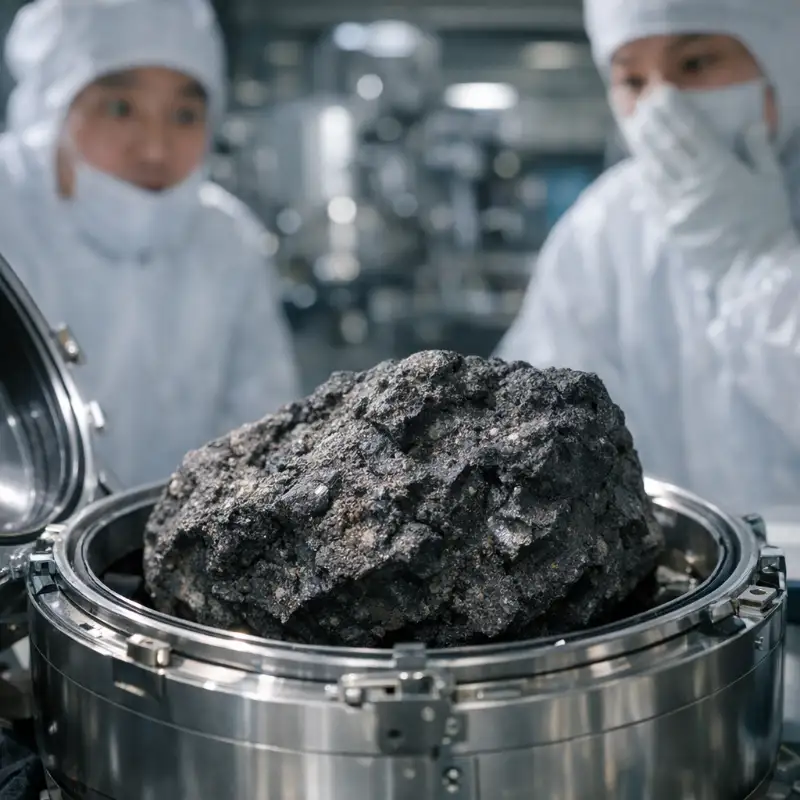
A cloud of gas and dust 26,000 light years from Earth, sitting near the center of the Milky Way, is not the kind of place anyone expected to find sugar. Yet that is exactly where astronomers say they have identified it, floating in one of the galaxy's largest known star-forming regions long before any planet exists to eat it.
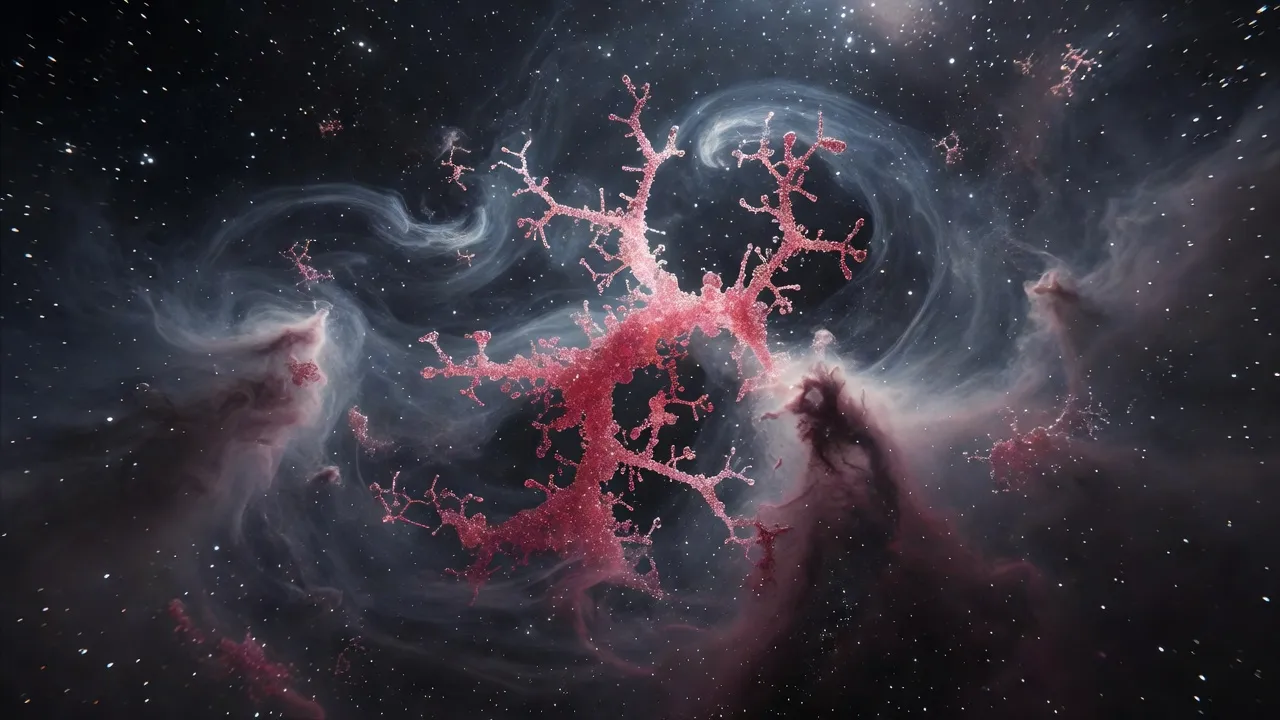
AI Generated Illustration
The molecule is erythrulose, a four-carbon sugar related to the same chemical family that gives raspberries part of their flavor. Its discovery marks the first confirmed detection of a true sugar molecule in interstellar space, and it matters for reasons that go well beyond a curious chemistry footnote. Sugars like this one are part of the molecular scaffolding behind DNA and RNA, which means researchers studying the sugar discovered in interstellar space are really asking a much bigger question: how far back does the chemistry of life actually begin.
The mystery is not really about the sugar itself. It is about timing. If molecules this complex can assemble in a cloud of gas before a single planet has formed, then the ingredients for life may have been sitting around the universe far earlier than most origin-of-life theories assumed. What the discovery reveals is less about where the sugar was found and more about what its existence says about chemistry that was already underway long before Earth, or any planet, was ever born.
How Scientists Found Sugar Between the Stars
Nobody photographed this molecule. Radio telescopes cannot take pictures of individual molecules floating in space, so astronomers rely on something closer to a fingerprint scan. Every molecule rotates and vibrates in specific ways, and each of those motions releases radio waves at frequencies unique to that molecule, like a barcode only a spectrometer can read.
Instruments such as the Atacama Large Millimeter/submillimeter Array, known as ALMA, scan dense star-forming clouds and pick up thousands of these signals layered on top of each other. Matching a single molecule's signature against enormous astrochemical databases is slow, careful work, closer to untangling one voice in a stadium of overlapping conversations than to snapping a photo. That is how researchers isolated erythrulose's signal inside the crowded chemistry of the galactic center.
Why Complex Sugar Can Form Before Planets Exist
The environment where this sugar formed is brutally cold, often close to absolute zero, which sounds like the last place complex chemistry should happen. But cold dust grains act like tiny reaction chambers. Frozen water, simple carbon compounds, and other basic gases stick to the surface of these grains, where ultraviolet radiation and cosmic rays supply just enough energy to knock molecules apart and let the pieces recombine into something new.
Over time, and there is a lot of time available in these clouds, simple molecules link up into increasingly complex ones. It is less like a chemistry set and more like slow, accidental construction happening one grain of dust at a time, repeated across a region larger than most solar systems.
This reshuffles a basic assumption in origin-of-life research. Many models of early Earth treat the planet's surface as the laboratory where life's raw materials first came together. Erythrulose suggests that some of that inventory may have already existed in the cloud that eventually collapsed to form a star and its planets, meaning the chemistry did not wait for a planet to show up before getting started.
That is the real turn in this story. Life's molecular toolkit may begin assembling in interstellar clouds, not on planetary surfaces, which pushes the starting line for prebiotic chemistry back by millions of years and relocates part of it to somewhere far stranger than a young ocean.
What This Means for the Search for Life Across the Galaxy
If one giant molecular cloud near the galactic center can produce a sugar this complex, there is no obvious reason the same chemistry could not happen in countless other star-forming regions scattered across the Milky Way. Interstellar organic molecules found in one location tend to raise the question of how many similar locations are quietly doing the same thing.
None of this means erythrulose is evidence of life. It is evidence that one category of biologically relevant molecule can form naturally, with no living organism involved anywhere in the process. That distinction matters. It suggests the raw materials for biology might be a fairly standard output of star formation rather than a rare accident that happened to favor Earth.
The next test is whether these molecules survive the journey. Future missions studying comets, asteroids, and planetary systems are aimed partly at tracing whether sugars and related organic compounds can ride along inside icy bodies from a molecular cloud all the way to a young, forming planet, arriving intact enough to matter.
What Scientists Still Do Not Know
The honest answer is that a lot remains unresolved. Researchers do not know how often sugars like erythrulose form, how long they survive the radiation and temperature swings of interstellar space, or how efficiently, if at all, they get delivered to newly forming planets rather than destroyed along the way.
There is also the question of concentration. A trace amount of sugar spread across a cloud larger than the solar system is very different from enough material pooling in one place to meaningfully influence how biology gets started somewhere. The abundance and formation efficiency of these molecules, the single number that would tell researchers whether this process is common or exceptional, is still largely unknown. That is not a minor detail. It is the difference between a scientific curiosity and a genuine clue about how often life gets a head start.
That gap in the data is precisely what keeps this discovery in the realm of open science rather than settled fact. It is exciting because it raises the right questions, not because it answers them.
How This Discovery Could Reshape Future Astrobiology
What erythrulose really supports is the idea that chemistry leading toward life might be a natural, almost routine consequence of star formation, rather than a rare event that happened to work out once. That is a meaningfully different starting point for astrobiology than the assumption that planets have to do all the chemical heavy lifting themselves.
Upcoming observatories, more sensitive spectroscopy, and laboratory simulations that recreate the conditions inside molecular clouds will be the tools that test whether this kind of chemistry shows up elsewhere in the galaxy or stays confined to a handful of unusual regions. Space missions built to sample comets and asteroids directly will help answer whether these molecules actually make the trip from cloud to planet.
The search for life is quietly shifting its central question. It used to be about whether the ingredients for life exist anywhere out in space at all. Now it is about how often nature assembles them before a planet has even finished forming, and whether Earth's own chemistry started earlier, and further from home, than anyone assumed.