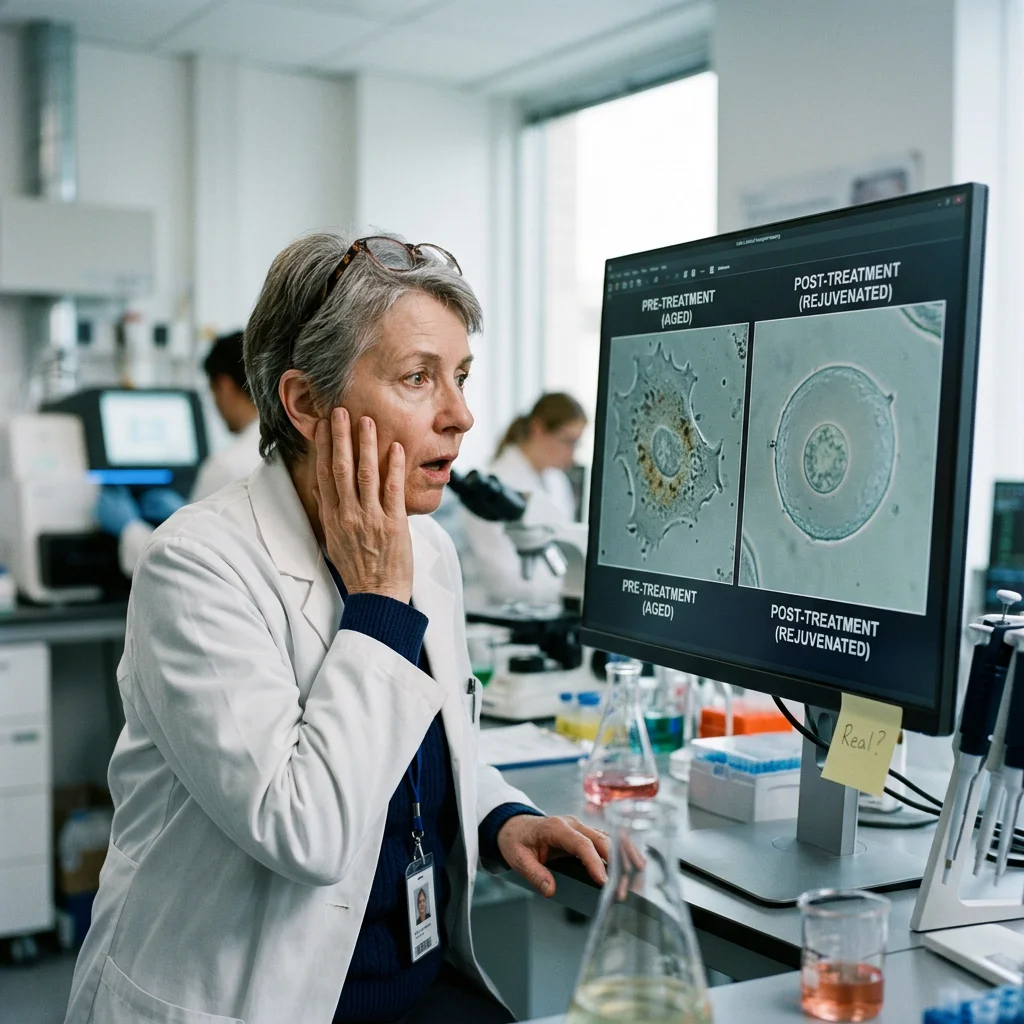
A cell built entirely from non-living parts just did something only living things were supposed to do. No donor organism. No borrowed genome from an existing species. Just membranes, molecules, and instructions assembled from scratch, then switched on. This synthetic cell breakthrough is not a modification of something that was already alive. It is closer to construction than editing, and that distinction is why biologists are paying such close attention.
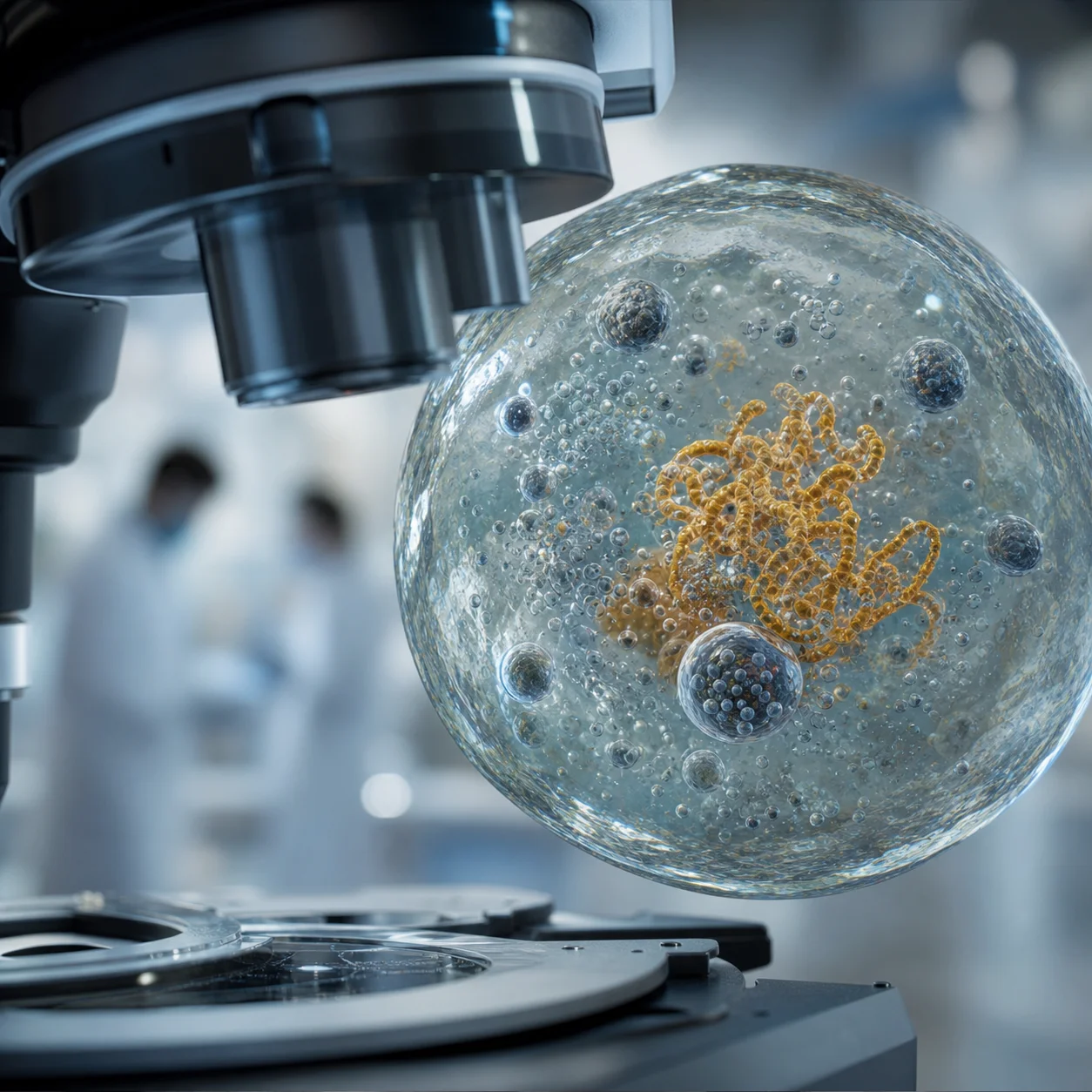
AI Generated Illustration
The baseline facts are less dramatic than the framing might suggest. Researchers did not stumble onto this overnight. It is the product of two decades of slow, deliberate progress in synthetic biology, going back to early attempts at minimal genomes and lab-made cell membranes that could barely hold themselves together. What changed is that the individual pieces, once studied in isolation, now work together as one functioning system. That is why people keep reaching for comparisons to the sequencing of the human genome or the arrival of CRISPR. Each of those moments did not finish biology. They reopened it.
Which raises the question most headlines skip past entirely. If a research team can assemble something that behaves like a cell, grows like a cell, and processes genetic instructions like a cell, what exactly separates that from being alive?
What Scientists Actually Built and How It Works
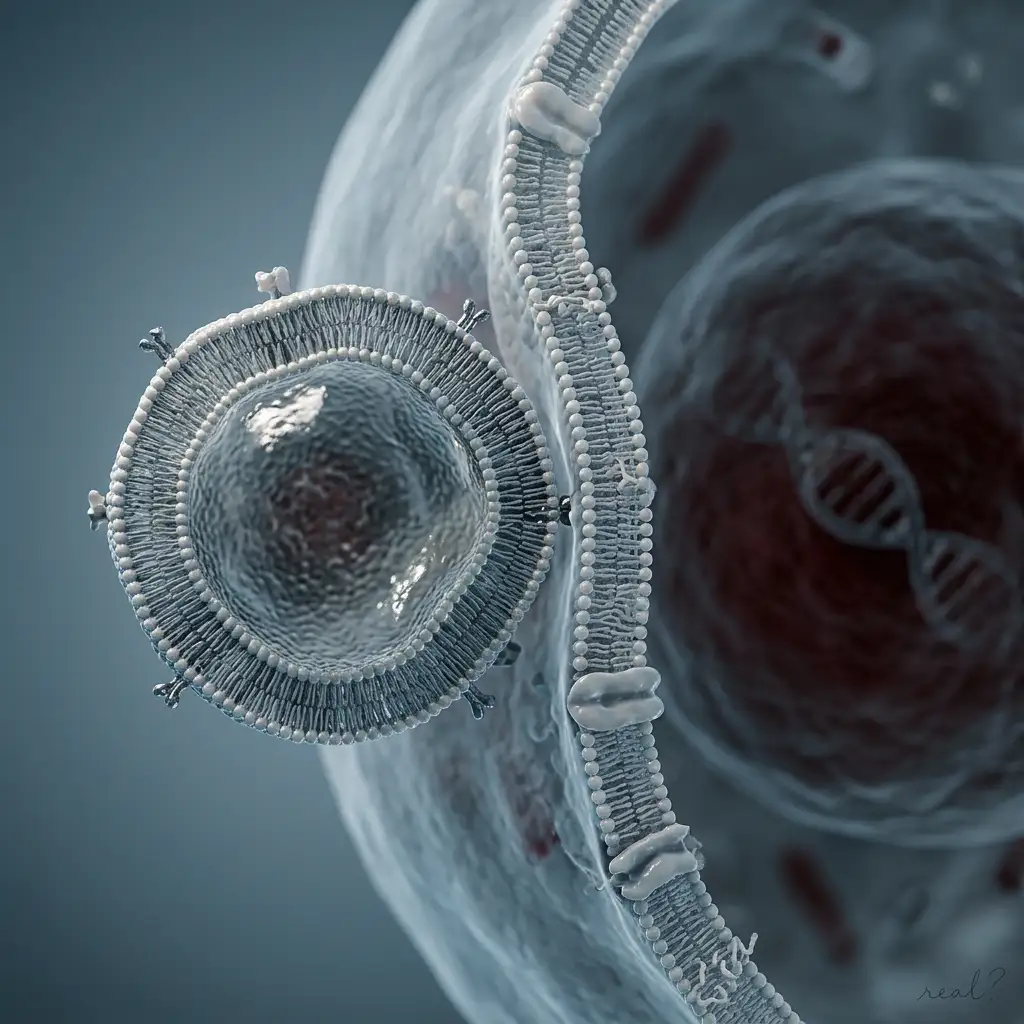
A synthetic cell is not a genetically modified organism with a few edited genes, and it is not a cloned cell copied from an existing one. It starts with nothing biological at all. Researchers build a membrane from fatty molecules, load it with a designed set of genetic instructions, and add the molecular machinery needed to read those instructions and act on them. Think of it less like editing a book and more like manufacturing the paper, the ink, and the printing press before writing a single word.
The assembled system was able to carry out some core functions of a living cell. It could read its own genetic code and produce proteins from it. It could maintain a working metabolism, converting raw materials into the energy needed to keep itself going. What it could not reliably do, at least not yet, is the harder test: dividing on its own, over and over, without human intervention resetting the process each time.
That gap matters. Long-term stability, autonomous cell division, and the ability to adapt to a changing environment are the benchmarks that actually separate a working cell prototype from a self-replicating cell that could sustain itself the way natural life does. Right now, those numbers are either missing from public reporting or only partially demonstrated. Anyone tracking this story should watch that gap closely, because it is where the real claim gets tested.
The Untold Story: Building a Cell Is Easier Than Building Life
Here is the part most coverage glosses over. Assembling the hardware of a cell does not automatically recreate the full complexity of a system that took roughly four billion years of trial and error to arrive at its current form. Natural cells are not just functioning machinery. They are the survivors of an almost incomprehensible number of failed variations, refined by pressures no lab experiment can fully replicate in a few years.
This is a familiar pattern in biology. Genome sequencing let researchers read the code of life, but reading it did not mean understanding what most of it does. CRISPR gave scientists precise control over editing that code, but editing is not the same as authorship. Synthetic genomes proved that DNA could be written and inserted into a living host. Each milestone solved one layer of the problem and, in doing so, exposed the next one underneath it.
Scientists may now be learning how to engineer life's hardware. Life's complete operating system, the part that handles adaptation, resilience, and self-correction across generations, is still only partially understood. That gap between hardware and operating system is where the real research is headed next, and it is also where the biggest opportunities sit.
Why Researchers Believe Designer Cells Could Transform Medicine
The appeal of a programmable cell is that it does not have to behave like a natural one. It can be designed to manufacture a specific medicine, detect a specific disease marker, or deliver a therapy directly to damaged tissue instead of circulating through the entire body. According to researchers working in synthetic biology, most of these applications remain experimental rather than something a patient could receive today, but the theoretical path is clear enough that funding has followed it.
The potential reaches beyond hospitals. Industrial biotechnology, environmental cleanup, sustainable chemical production, and agriculture are all areas where a custom-built biological system could replace processes that currently depend on fossil-fuel-derived chemistry or slow natural cycles. That is a large part of why governments and biotechnology companies are treating this field as a long-term bet rather than a side project. A cell that can be programmed the way software is programmed would not just be a scientific curiosity. It would be a manufacturing platform that happens to be alive.
The Challenges, Risks, and Scientific Debate Ahead
None of this comes without real friction. Synthetic cells built in a lab are not automatically reliable outside of tightly controlled conditions. Mutation control, reproducibility, energy efficiency, and the sheer cost of manufacturing these systems at any meaningful scale remain unresolved technical hurdles. A system that behaves predictably in a sealed dish does not necessarily behave the same way once variables multiply.
The ethical and regulatory questions are just as unresolved. Releasing engineered biological material into open environments raises biosafety and biosecurity concerns that regulators have not fully worked through. Who owns a designed genome, who is liable if something goes wrong, and how tightly this technology should be governed are debates that will only intensify as the underlying biological engineering gets more capable. What remains unclear is whether oversight can move as fast as the science.
It is worth holding two things at once here. The achievement is real, and the excitement around it is reasonable. It is also true that most laboratory breakthroughs of this magnitude take years, sometimes decades, before they turn into anything a person outside a research institution ever encounters directly.
What Happens Next Could Matter More Than the Breakthrough Itself
The next phase of this research is less about proving the concept and more about making it durable. That means improving cellular complexity, achieving controlled self-replication instead of a single successful run, building in programmable behavior that responds to its environment, and figuring out how a synthetic system might interact safely with natural cells rather than simply existing beside them.
There is a reasonable parallel to early computing here. The first working transistors and processors did not immediately produce smartphones. They produced decades of incremental engineering that eventually made entirely new industries possible. Synthetic biology looks like it is somewhere near that same starting point, where the foundational pieces work but the applications built on top of them are still mostly theoretical.
So maybe the more useful question is not whether scientists have created life in a laboratory. It is whether biology has quietly entered an era where life, or something functionally close to it, can increasingly be designed, programmed, and engineered on purpose. That question does not have a clean answer yet, and it may not for a long time.