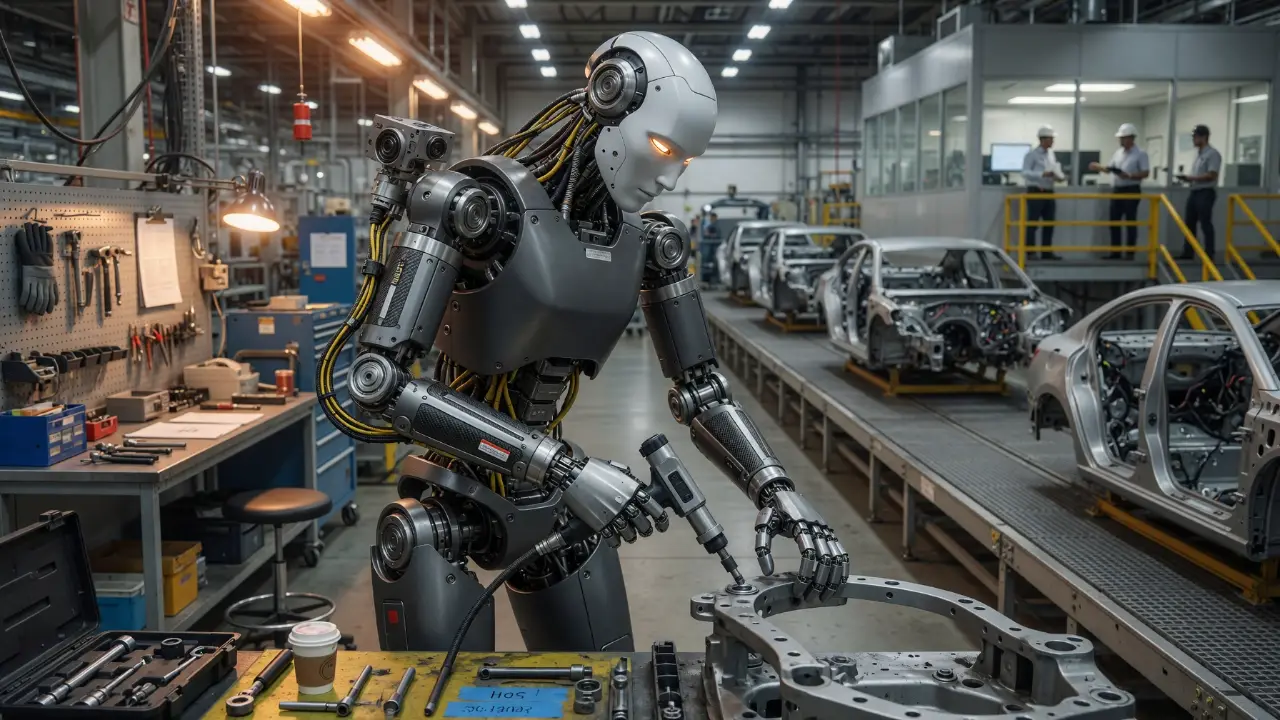
Four-legged robot stomps down a warehouse aisle, while simultaneously streaming video back to a server on the other side of the world and mapping every shelf it passes. This is the image regulators in Washington keep foisting on the public and it is why the suggested Federal Communications Commission ban China robotics policy has become something more than an economic dispute.
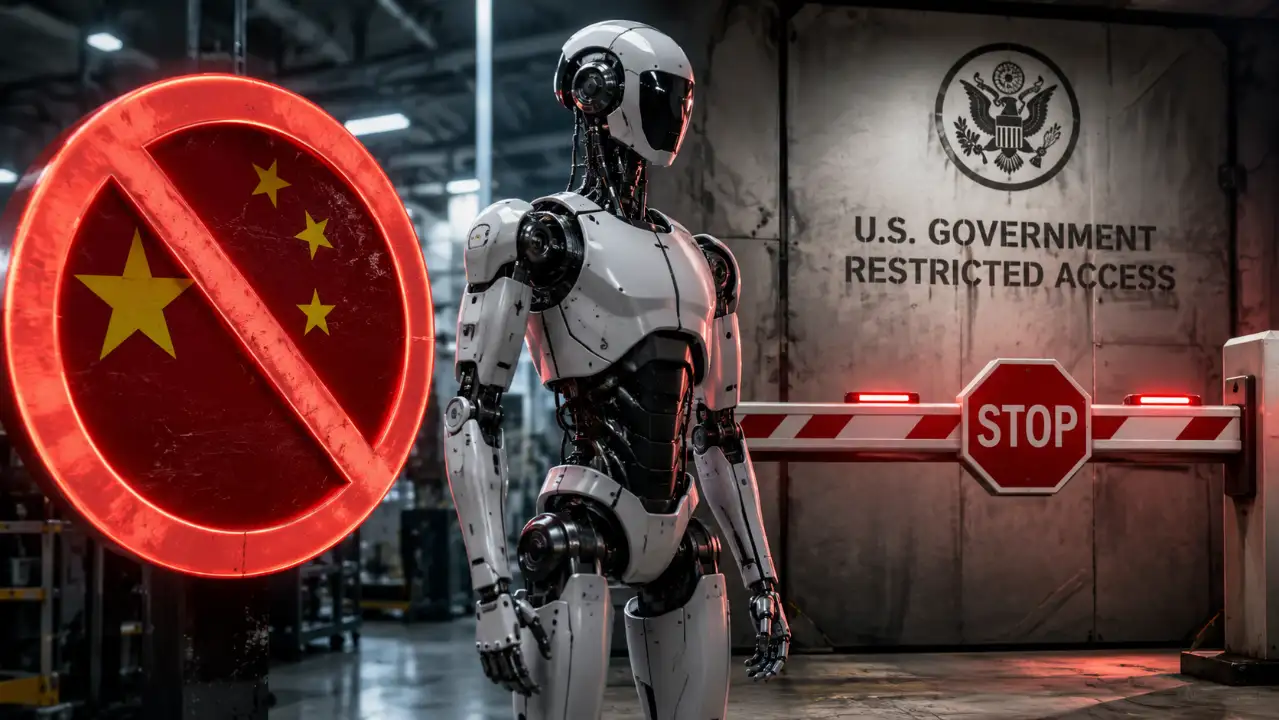
AI Generated Illustration
This is not merely about blocking foreign technology from entering United States locations; it is a discussion about how much freedom a machine should be given within the environments it is designed to work. The strain is which is at the heart of almost every conversation on robotics today.Regulators hope to safeguard key installations from devices that might not-so-subtly send information back to a foreign country. Engineers and startup entrepreneurs try to continue innovating on the most affordable, most powerful hardware, much of it produced from Chinese brands. Both seem fair.
That's why advanced robots are under this kind of scrutiny: they stopped being a simple machine a long time ago. Nowadays, an humanoid or quadruped robot is usually based on an AI system, is loaded with cameras and microphones, is always connected to the net, and is often streaming off data onto cloud servers for processing. Take away the legs and arms and you could easily end up with a mobile sensor station with a link to the world's computer networks, which is precisely the kind of thing that distresses is actors of state security.
So the real question isn't what headline-grabbing restrictions on foreign robotics might be introduced. It is whether the policy will bolster American dominance in robotics or hamper the industry it purports to shield. That is where the FCC proposal starts.
What triggered the FCC proposal and why Unitree became the center of debate
The main idea of the FCC proposal is a plan to add a few Chinese companies producing robotic technology to its 'Covered List, ' which is basically a list of companies that the government believes pose significant national security risks and from which, Because of this, goods are to be restricted. The move to include robots in that list indicates the level of fear held by federal agencies over autonomous devices roaming the inside of factories, research labs, hospitals, and general public infrastructure. A camera hung on a wall, no matter if the view is perfect or not, is not the same as a moving one, a camera that is on the prowl in your building, that could give away every secret in your building.
Unitree has, perhaps unwittingly, become the main figure in the debate surrounding it. They have some of the largest numbers of sales of humanoids and quadrupeds globally, partly because their price point is such that many universities and hobbyists who otherwise wouldn't be able to participate in or afford such tech can get it very easily. An American robotics equipment would cost about that many hundreds and the Chinese one about that many tens of dollars, making this particular fact about Unitree the reason they appear so frequently in robotics laboratories and YouTube demo videos, just to name a few examples.
After the Unitree issue was brought into the discussion, the idea of this proposal gradually shifted its focus from a single supplier to a much wider question of whether and how a country can be the leader of technological development while at the same time not letting the market entirely be taken away by other players, in this case China. That is the argument which got all those startups so quickly involved in the fight.
Why robotics startups say losing cheap robots could slow innovation
Mostly, startup companies don't build robotics companies from scratch. Rather, a considerable majority of them purchase a base platform and dedicate their time and money to the development of the software, the part that actually creates the real difference in their products. Cheaper hardware such as Unitree's enables a small team to be working on navigation algorithms, computer vision systems, and manipulation software. They can run their work without needing to use up the entire amount of seed funding solely on purchasing robots. Domestic alternatives, assuming there are any, are more expensive or simply not equipped for that type of experimentation.
Hardware costs that come down are significant because they reduce the entry barrier that stands for the actually people who are driving the field further, which comprises many of the researchers and students who are not expected to be employed in a real robotics team. Much of the innovation that occurs in the robotic sector is driven by people who are software experimenting as contrasted to those that actually construct robots from the ground up, That's why in many situations, having access to a solid platform is more important than having one's own hardware.
That is the aspect of this policy that makes people frowny. The two aims - ensuring the security of our country, and maintaining the flow of robotics talent in the US can conflict, at least within the short run. Withdraw the cheaper option and you not only stop a foreign product, but you also throw away the tool with which so many people had been learning the field. One can hardly imagine how the robot manufacturers could become part of the learning process at first, but that is exactly how it happened.
Why affordable humanoid robots have changed AI development
Traditional industrial robots have long performed the same motions time after time on the shopfloor enclosed by a rigid barrier. The new age humanoid and quadruped (legged) robots, in contrast, do things a little differently: through combining a range of learning-based approaches like reinforcement learning, embodied intelligence, and multimodal models, they can perform tasks that are not pre-programmed, a technical description of their capability to improvise when the environment doesn't turn out as expected.
These bots are not straightforward to compare because of several factors like mobility, precise handling, battery life, the power of the onboard computer, sensor quality, and the overall cost of deployment. Besides, the companies hardly ever release all kinds of information that a buyer needs to evaluate them fairly. One thing we know Yet is that even a robot with excellent looks that has been presented very convincingly during a demo can still end up with poor battery duration and only perform the choreographed routine that it showed in the demo.
Most of the articles on robots ignore one essential fact. In case there is abundant cheap access to hardware, it often turns out to be the biggest reason for the acceleration of the field, instead of any single breakthrough in the hardware. The availability of hardware allows millions of researchers to tackle the real core of the problem - they are actually the software issues - and through collaborative effort, the best solutions become known. Such is the case right now of the technology behind AI and autonomous robots and how this is now at the center of a massive geoeconomic competition.
The new robotics cold war is expanding beyond chips
This story doesn't stand alone. It's part of the same rivalry that already led to controls on semiconductor exports, limits on AI models, and a continuous expansion of supply chain policy designed to slow China down in tech. Robotics is only the newest phase, and arguably the most nuanced, because a robot isn't one tech but a bunch of interdependent, integrated component parts.
An intelligent robot, in one product, integrating semiconductors, AI models sensors batteries, wireless networking and cloud infrastructure makes robotics a strategic sector by itself not a downstream consumer category and that's why the FCC is treating it right the way it has been telecom hardware. The real policy questions underneath them all are not about robots but rather, are we willing to endure slower, costlier innovation if it means we become less dependent on a geopolitical enemy and for how long?
No one in Washington or Silicon Valley has an easy answer to that question.
Could the ban strengthen US robotics or create new challenges?
It is entirely reasonable to argue that the restrictions may Yes have some positive side effects. By restricting low-cost foreign competition, we can direct more investment capital to domestic robotics manufacturers, and at the same time, the change in supplier dynamics could even be a source of pressure for American suppliers to be more competitive when it comes to their pricing and performance. If there still is the issue of protection that will not be a reason for a market to become stagnant, then surely some more investment will follow the policy.
In addition, the counterargument is just as realistic. During the period that will follow the change in rules, start-ups, university labs, and independent developers currently using low-cost imported hardware might be faced with a A lot higher cost for hardware as well as fewer options for doing research. Such a risk is very real and not a distant danger. It is exactly the kind of risk that comes out of In reality the cheapest offerings are taken off a market just when there are not yet enough replacements available at scale.
Different people would be able to interpret the issue one way or the other and So the final result would entirely rely on the execution of the policy. Domestic manufacturers are the main parties who need to bridge their price and capability difference from others to an extent that a transition period will not become a period of lost experimentation. At present, only those companies know to what extent they are getting there, whereas others are still in the dark.
What happens next for America's AI and robotics industry
There's also still uncertainty of how things would be implemented in practice. The specifics of what products would be affected by the law plus those existing hardware exceptions will be determined in the same way as other rules. It also remains to be seen how the requirement will be enforced in cases of supply chaining involving two different countries.
Over the next few months several key indicators may help to reveal the trend. Regulatory words as the law gradually becomes more concrete, response patterns of robotics companies like Unitree and others from China towards the new regulation; whether the investments will be redirected more clearly towards local hardware, or countries beyond China will start copying the idea and drafting restrictions of their own.
There is one huge question that everyone in the sector is thinking, even if they are not saying it directly. It is no longer about which company develops the smartest AI system but rather which nation manages the actual machines that implement AI within manufacturing plants hospitals warehouses, and homes.