A single AI training run can pull as much electricity as a small city, and that number keeps climbing every year. Chips get faster, but the power to run them and the water to cool them are not multiplying at the same pace. That gap, not some breakthrough algorithm, is starting to decide what AI companies can actually build next.
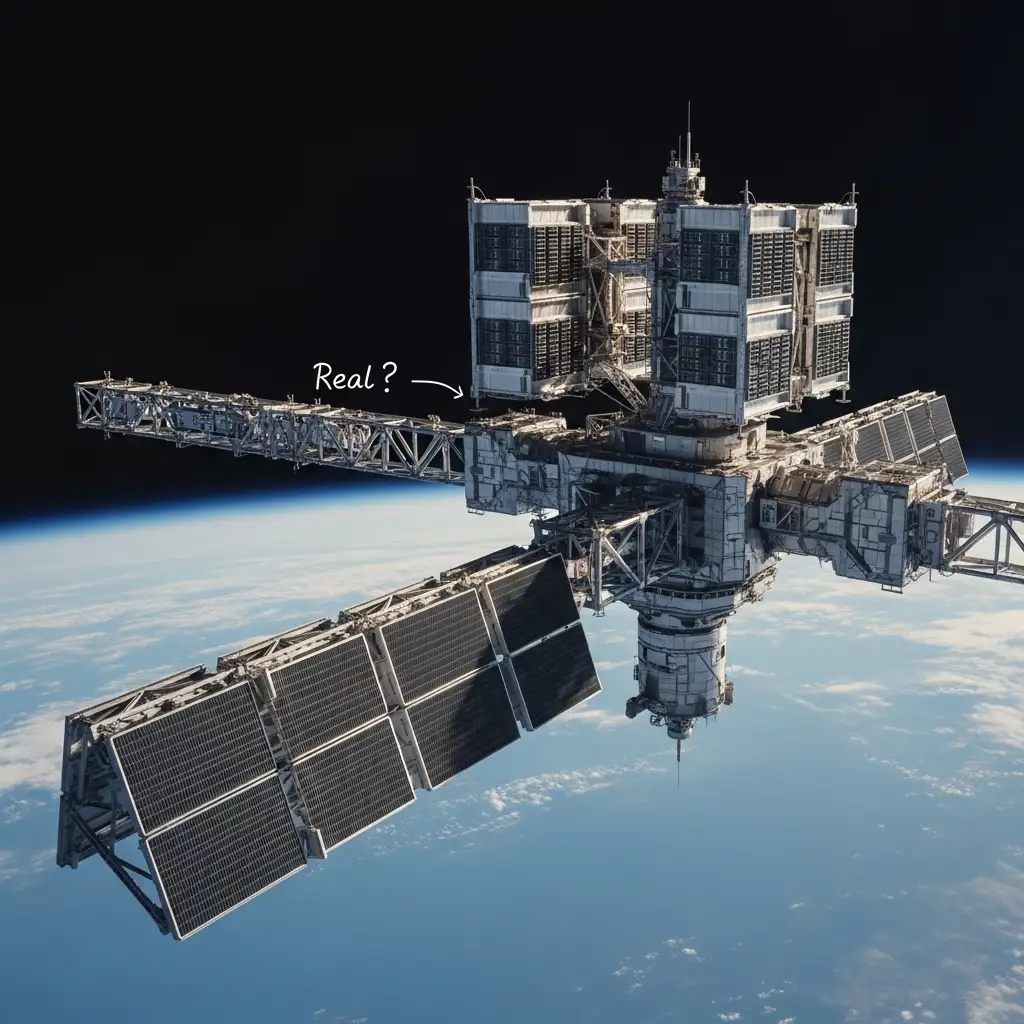
AI Generated Illustration
That gap is also the real story behind the recent interest in orbital AI data centers. Aerospace firms, cloud providers, and a few national space agencies have floated the idea of moving computing hardware into orbit, where sunlight never stops and land is not a constraint. Nobody is suggesting Earth's server farms shut down. The idea is narrower: build a second kind of facility where no data center has ever existed, free of any regional power grid.
So why accept the cost of launching racks of GPUs into space when another warehouse outside Phoenix is cheaper? The answer has less to do with rockets and more to do with a limit nobody can engineer around.
The Hidden Bottleneck Driving the Shift
AI's biggest constraint is no longer just how fast a chip can compute. It is whether you can feed that chip enough continuous power and pull the heat back out before it cooks itself. Energy supply and cooling capacity have quietly become the real performance specs of modern computing, ahead of raw processing speed.
The largest data centers being built right now draw electricity on a scale that strains regional grids, and use water for cooling at volumes that have drawn complaints from nearby towns. Nobody can say exactly how much power AI will need in five years, because demand keeps outrunning every projection about it.
Put those pressures together and orbit stops sounding like a stunt. It starts looking like a long-term infrastructure bet, the kind companies make decades before anyone knows if it paid off.
How an AI Data Center Could Actually Work in Orbit
Strip away the science fiction and a space-based data center looks like a satellite carrying a server rack instead of a camera: computing hardware, solar arrays, a link back to Earth, and a thermal system to manage the heat chips throw off when running flat out.
The appeal starts with sunlight. Above the atmosphere, solar panels collect power around the clock, with no clouds, no nightfall, none of the seasonal dips that hurt ground-based solar farms. Cooling is the part people get backwards: space is not a giant refrigerator. There is no air up there to carry heat away through convection, so heat has to be radiated off through panels facing away from the sun, a different engineering problem, not an easier one.
The real race is no longer just building smarter AI, but building somewhere AI can keep growing.
Why the Industry Is Taking the Idea Seriously
A decade ago this would have stayed a thought experiment. Reusable rockets have cut launch costs enough that putting heavy equipment into orbit is no longer reserved for governments with bottomless budgets, and satellite manufacturing has gotten cheaper too, on a curve that looks like what happened to cloud computing once nobody needed their own server room.
Cloud providers, aerospace manufacturers, AI labs, and governments are converging on this from different directions, but their motives overlap. Everyone wants infrastructure that survives disruption and a hedge against energy markets they cannot fully control. Strategic independence and computing capacity have started to mean almost the same thing.
What Orbital Computing Could Change
The appeal of orbital infrastructure is not limited to training bigger chatbots. Climate modeling, large physics simulations, autonomous systems, defense applications, and global communications could all draw on capacity that does not compete with a city's power supply.
There is an economic angle too. Every workload that moves off a regional grid is one less spike in local electricity demand, which matters where towns already fight over new data centers. It also opens a commercial space sector built around servicing orbital computing, and a new kind of competition between nations over who controls that capacity. Succeed, and this changes not just where AI runs but who decides that.
The Challenges That Could Keep AI on Earth
None of this is settled. Launch costs remain high even with reusable rockets, and a server rack in orbit cannot be walked over to and rebooted when something fails. Radiation degrades electronics faster than on the ground, and bandwidth limits make it harder to move data at the speeds AI training demands. Add orbital debris, no clear international rules on who owns what up there, and the security exposure of a facility nobody can physically patrol, and the list gets long fast.
What remains unclear is whether any of this scales economically past a handful of demonstration satellites. Most of what has been proposed publicly is still conceptual, and the companies pursuing it have shared little about real costs. Critics point out that an industry already struggling to justify the power bill for ground-based AI may simply be trading one unsolved cost problem for a pricier one.
The more honest framing is cooperation, not replacement. Earth-based hyperscale facilities are not going anywhere, and orbital platforms will likely handle a narrow slice of workloads where the tradeoffs make sense.
What Happens Next for AI Infrastructure
The most realistic path forward is hybrid: terrestrial centers doing the bulk of the work, with specialized orbital systems carved out for tasks that benefit most from constant solar power or distance from a strained grid. A sudden migration to space was never the plan.
What this trend really exposes is a shift in how the industry thinks about its own limits. For years the conversation around AI was almost entirely about algorithms and chips. Increasingly, it is about energy, land, water, and the infrastructure required to keep all of it running.
Space is not the solution to that problem. It is what happens when an industry runs out of room to solve the problem on the ground.