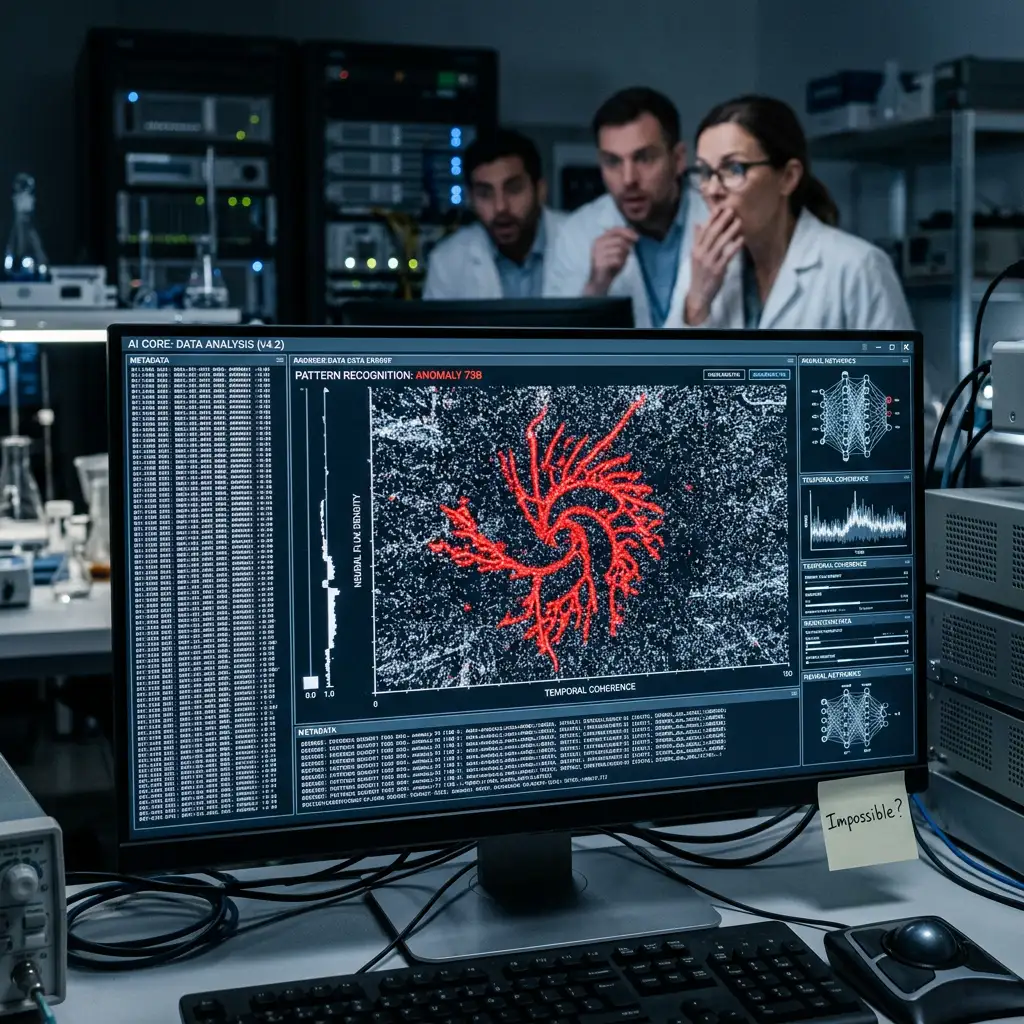
A radiologist reviews a chest scan in under ten seconds because the AI flagged the suspicious region before she even opened the file. A junior developer ships a feature in an afternoon because an AI assistant wrote most of the logic. Both moments look like progress. Neither one tells you what happens the day the AI is wrong and nobody in the room knows enough to catch it.

Key Insights You Should Never Miss
-
Hidden Cost Of SpeedFaster task completion with AI leads to thinner verification habits and reduced retention of reasoning processes behind the answers.
-
Loss Of Cognitive FrictionAI interrupts the struggle required for learning, preventing the formation of durable mental models and deep expertise in critical fields.
- Critical Supervision SkillsExperts must now master auditing AI outputs, as true value lies in catching errors when automation fails unexpectedly during complex tasks.
That gap is at the center of a growing debate about AI deskilling doctors coders, one that has moved past speculation and into actual research. Medicine and software development have become two of the fastest-adopting fields for generative AI, and the productivity gains are real and measurable. What is less settled is whether the humans doing the work are quietly losing the skills that made them valuable in the first place.
The conversation usually focuses on AI making mistakes. The more uncomfortable possibility is that the bigger risk is humans never getting the chance to build expertise at all, because the AI keeps answering before the struggle that creates real understanding even begins.
What the Latest Research Is Revealing
Several recent studies on AI overreliance among doctors and coders point to a consistent shape. People working with AI assistance finish tasks faster, sometimes dramatically so. The trouble shows up when the assistance disappears. Researchers studying colonoscopy screening found that endoscopists who regularly used AI-assisted detection tools became measurably worse at spotting polyps on their own once the AI was switched off, a pattern that echoes findings on coders who lean on generated code and then struggle to debug similar logic from scratch.
The pattern repeats across knowledge work more broadly. Faster task completion pairs with thinner verification habits. People accept an answer rather than checking it, and they retain less of the reasoning behind it. A doctor who reads an AI's diagnostic suggestion and agrees with it has not necessarily diagnosed anything. A developer who merges AI-generated code that passes the tests has not necessarily understood why it works.
This is why the findings have started rattling fields that have spent decades building training pipelines around the assumption that expertise gets earned through friction. If that friction is disappearing, the pipeline itself may no longer produce the experts it was designed to.
How AI May Be Changing the Way Humans Learn
Expertise has traditionally been built the hard way. You make a wrong call, you get corrected, and the correction sticks because you felt the cost of being wrong. Medical residents learn to read scans by misreading plenty of them first. Programmers learn system design by watching their own architecture buckle under load they did not anticipate. The discomfort is not incidental to learning. It is the mechanism.
AI assistance interrupts that mechanism by arriving before the struggle does. Instead of wrestling with a diagnosis or a bug for twenty minutes and forming a durable mental model, a person gets an answer in two seconds. The mental workload drops, and so does the depth of the memory formed. Cognitive scientists have a name for this trade: the easier a task feels in the moment, the less the brain encodes about how it was solved.
That difference is why this wave of automation worries people who shrugged off earlier ones. Factory robots replaced repetitive physical motion. AI assistants are replacing the repetitive cognitive motion, the reps, that used to produce judgment.
Why Doctors and Coders Face Unique Risks
AI now drafts clinical notes, flags abnormalities in imaging, suggests differential diagnoses, and writes, refactors, and reviews code at a pace no human team could match unassisted. The productivity case for all of this is not in dispute. Hospitals move patients through faster. Engineering teams ship more.
The risk sits one layer down. Automation bias, the tendency to trust an automated recommendation simply because a machine produced it, has been documented in radiology, anesthesiology, and primary care for years, and AI's growing confidence in its own outputs makes the bias easier to fall into, not harder. Developers face a quieter version of the same problem: shipping code generated by a model they could not have written themselves, with no real grasp of its edge cases or failure modes.
The sharpest way to put it is this: expertise is not what you demonstrate when the AI is right. It is what you demonstrate the moment the AI is wrong and you are the only one positioned to notice.
In Simple Terms - Automation Bias
The tendency to trust an automated recommendation simply because a machine produced it, leading to reduced vigilance and increased risk of error when the AI is wrong.
The risk sits one layer down. Automation bias, the tendency to trust an automated recommendation simply because a machine produced it, has been documented in radiology, anesthesiology, and primary care for years, and AI's growing confidence in its own outputs makes the bias easier to fall into, not harder. Developers face a quieter version of the same problem: shipping code generated by a model they could not have written themselves, with no real grasp of its edge cases or failure modes.
The sharpest way to put it is this: expertise is not what you demonstrate when the AI is right. It is what you demonstrate the moment the AI is wrong and you are the only one positioned to notice.
Productivity Up, Judgment Down? The Core Debate
Efficiency and expertise are not the same thing, even though they get conflated constantly. A doctor who closes more patient visits per day is being efficient. Whether she is getting better at medicine is a separate question entirely, and a much harder one to answer.
Part of the difficulty is that productivity is easy to measure and judgment is not. Lines of code shipped, patients seen, tickets closed: these numbers show up in a quarterly report. Reasoning ability, diagnostic intuition, and the capacity to catch a subtle error show up only when something goes wrong, often years later.
Not everyone agrees AI is the root cause. Some researchers argue it is exposing cracks that already existed in how doctors and coders are trained, rather than creating new ones. Medical education has leaned on rote memorization for decades. Software bootcamps have produced developers fluent in frameworks but shaky on fundamentals. AI deskilling coders and physicians may be less a new disease than a stress test revealing how thin some foundations already were.
What This Means for the Future of Human Expertise
The response so far has been uneven but visible. Some hospital systems now require clinicians to form an independent impression before viewing an AI's suggestion, reversing the order to protect the reasoning step. Engineering teams have started running code reviews that explicitly ask why a piece of generated code works, not just whether it passes.
Think of It Like This - Dual Skill Set
Combining deep domain expertise with the separate, less natural skill of supervising and challenging a machine that is right often enough to be trusted but wrong often enough to be dangerous.
A more durable shift may be the emergence of a dual skill set: deep competence in the underlying field, paired with the separate, less natural skill of supervising and challenging a machine that is right often enough to be trusted and wrong often enough to be dangerous. Knowing your specialty and knowing how to audit an AI's version of your specialty are turning out to be two different jobs.
Nobody has a clean answer for where the line sits. As AI keeps getting more capable and more embedded in daily practice, the open question is not whether it helps. It clearly does. The question is how much thinking a person can hand off, year after year, before the expertise underneath it quietly stops growing back.
What This Means for the Future of Human Expertise
The response so far has been uneven but visible. Some hospital systems now require clinicians to form an independent impression before viewing an AI's suggestion, reversing the order to protect the reasoning step. Engineering teams have started running code reviews that explicitly ask why a piece of generated code works, not just whether it passes.
A more durable shift may be the emergence of a dual skill set: deep competence in the underlying field, paired with the separate, less natural skill of supervising and challenging a machine that is right often enough to be trusted and wrong often enough to be dangerous. Knowing your specialty and knowing how to audit an AI's version of your specialty are turning out to be two different jobs.
What This Means for the Future of Human Expertise
Nobody has a clean answer for where the line sits. As AI keeps getting more capable and more embedded in daily practice, the open question is not whether it helps. It clearly does.
The question is how much thinking a person can hand off, year after year, before the expertise underneath it quietly stops growing back.