On her 69th birthday, Wynd Kaufmyn picked up coffee and doughnuts, said goodbye to friends over dinner in Oakland, then walked into San Francisco's Hall of Justice to begin serving a jail sentence. Her crime was chaining shut the front doors of OpenAI's headquarters.
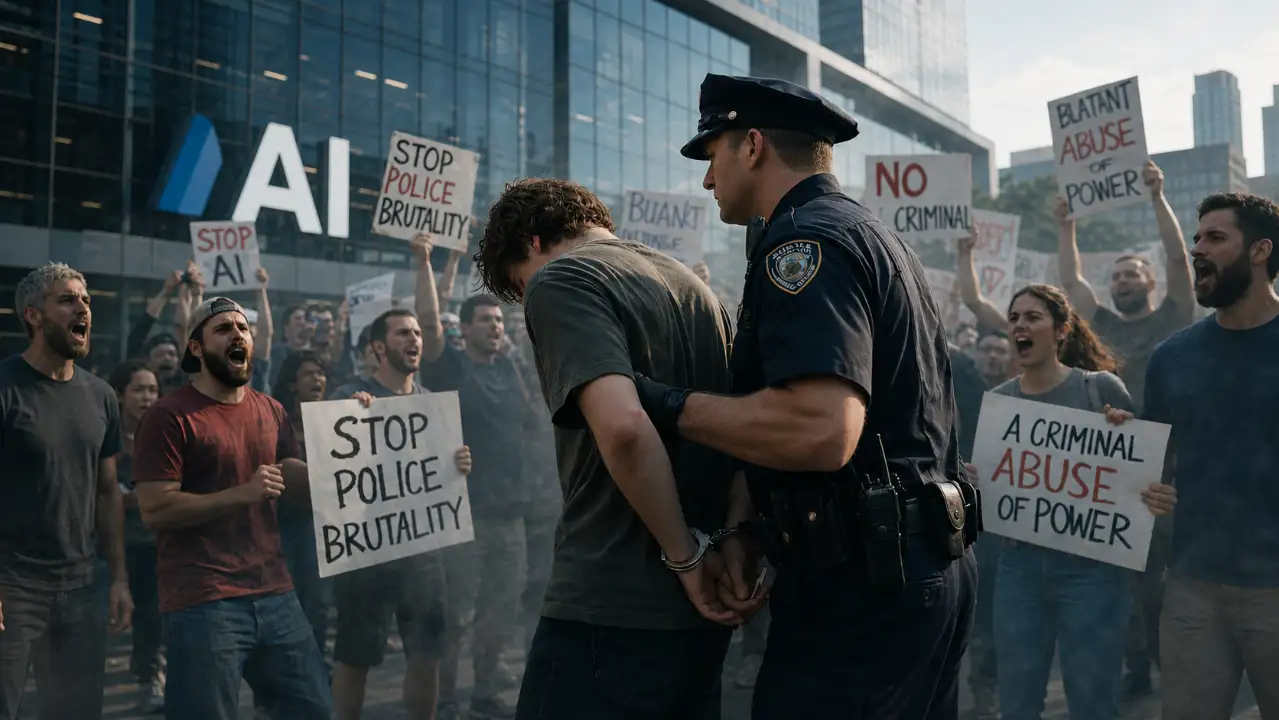
AI Generated Illustration
Kaufmyn is believed to be the first person in the United States jailed specifically for protesting artificial intelligence. Her case is one data point inside a much larger anti AI movement, one that has grown from scattered warnings on message boards into blockades, office occupations, and direct run ins with police departments across several states. What started as online grumbling about chatbots and job losses is now showing up in courtrooms, police intelligence files, and jail intake logs.
stranger part of this story is not that people are angry about AI. It is that opposing its physical footprint is turning into a policing matter. Governments and AI companies keep expanding their footprint while the people who live near it, or simply fear where it is heading, keep pushing back and increasingly paying for it.
Most of the public conversation about AI still centers on chatbots and job losses. But the sharpest confrontations right now are happening somewhere more physical: the data centers.
Why Data Centers Became the Flashpoint
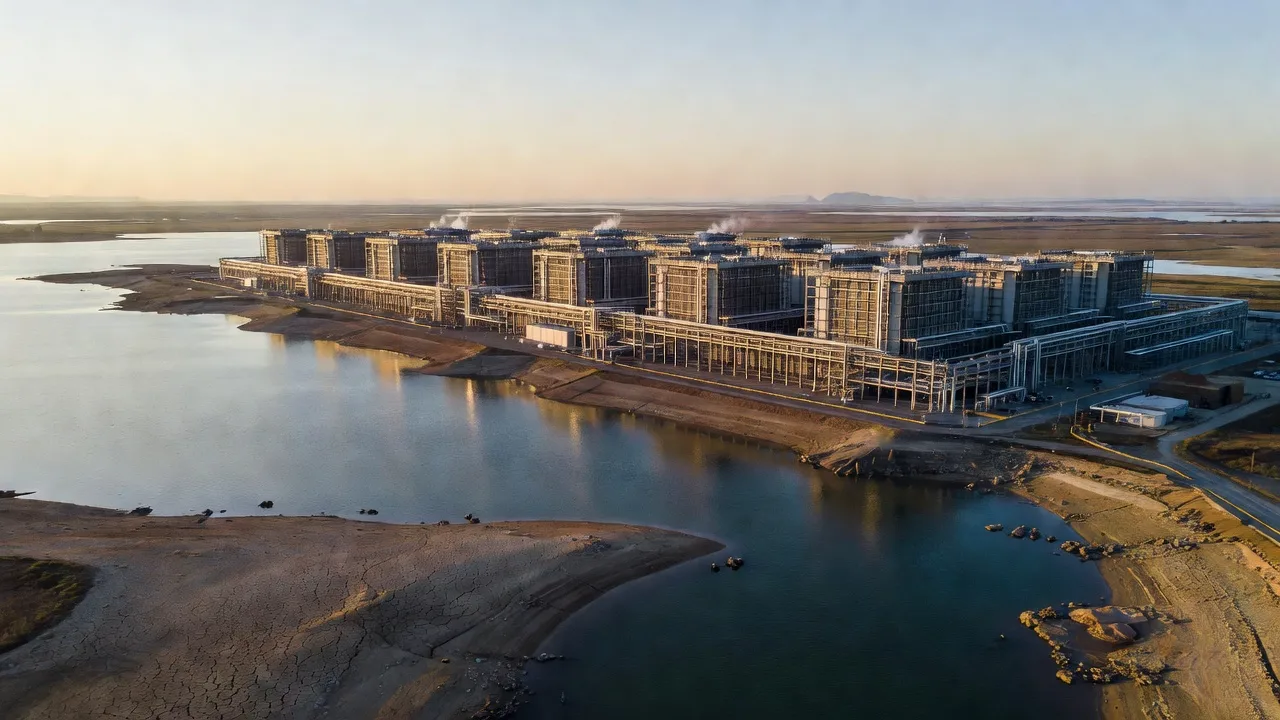
An algorithm is hard to picket. You cannot stand outside a neural network with a sign. A data center is different. It is a fenced compound with a permit application sitting at the county courthouse, a place with an address, neighbors, and a utility hookup, which makes it the one part of the AI boom that ordinary people can actually show up to and fight.
That is exactly what is happening. Residents near proposed sites have packed town halls over higher electricity bills, strained water supplies, land disputes, generator noise, and tax breaks for companies that bring in relatively few local jobs. Many say they learned about a project only after officials had already signed non disclosure agreements with developers.
The scale of that frustration became hard to ignore on July 18, 2026, when opponents of data center expansion coordinated what Reuters described as the first nationwide day of protest on the issue, with more than 140 demonstrations reported across 42 states. Similar fights over land, water, and power have started surfacing outside the US as AI infrastructure spreads globally.
Once a movement gets that large, it stops being background noise. Law enforcement starts paying closer attention too, and lately that attention has stretched past the protests themselves into the conversations happening before them.
When Police Started Watching Anti-AI Activity
In Philadelphia, that attention took the form of an internal police bulletin. Officials at the Delaware Valley Intelligence Center, a regional fusion center tied to the police department, circulated a report warning that domestic violent extremists were likely interested in targeting AI data centers with physical or cyber attacks. The bulletin cited social media posts, including one from an anonymous user who talked about wanting to burn down a facility.
What the bulletin did not do is separate ordinary criticism from an actual plot. It openly acknowledged a lack of specific information about any real plan to target a data center in the area, yet it still flagged what it called disruptive First Amendment activity, meaning protests, boycotts, and online complaints about utility bills, as an indicator worth watching.
That is the detail that makes this story worth pausing on. When a meme or an angry comment about your electric bill can land in the same intelligence file as a genuine threat assessment, the line between political speech and a perceived security risk gets uncomfortably thin.
Surveillance alone would be unsettling enough. For a growing number of protesters, though, the consequences have gone well past being logged in a police file.
Protesters Are Paying a Real Legal Price
Kaufmyn's sentence traces back to February 22, 2025, when she and four other members of the activist group StopAI chained and padlocked the entrance to OpenAI's San Francisco offices and sat down in front of it. A jury convicted her in June 2026 on four misdemeanor counts, including trespassing with intent to interfere with a business. A judge handed down 14 days in jail, later reduced to seven with credit for time already served.
She was not alone for long. In August 2026, more than 30 student activists occupied the lobby of OpenAI's lobbying office in Washington, DC, organized by the Sunrise Movement and the group QuitGPT. They unfurled a banner reading Stop Stealing Our Future before police moved in after roughly two hours and arrested 13 people for unlawful entry.
These cases matter beyond the individuals involved. They mark a shift from one off demonstrations toward organized, repeatable civil disobedience campaigns, the kind of playbook climate activists spent years building before it became a recognized part of American political life. AI opposition appears to be following that same arc, only faster.
The Backlash Is Becoming Political
What is fueling all of this is not one grievance but several stacked on top of each other: fear of job losses, anxiety about surveillance, resentment over concentrated corporate power, worry about AI's growing influence over elections and policy, and for some, a deeper fear about ceding control to systems nobody fully understands.
The odd part is who is showing up. The Washington occupation was organized by left leaning youth groups. The July 18 nationwide day of protest was coordinated by HumansFirst, a group co-founded by a former Tea Party leader who has openly compared the backlash against data centers to the populist anger of 2009. Progressive climate organizers and conservative populists rarely march under the same banner, yet both have ended up outside the same fences.
That overlap points to something worth sitting with. People do not need to agree about what AI is or where it should lead to agree that a community deserves a say before a several hundred megawatt facility lands next door.
Which raises an obvious question: if the people involved disagree this much about AI itself, is this even one movement?
One Anti-AI Movement Is Splitting Into Several
Not really, or at least not for much longer. Local groups pushing for zoning control and utility protections want regulation, not a shutdown. Groups like Sunrise and QuitGPT are framing AI as a labor and democracy issue tied to corporate lobbying power. StopAI and similar organizations are further out, arguing that AI development itself poses existential risk and needs to stop, not just slow down.
Almost everyone involved insists on nonviolent civil disobedience, chaining doors, sitting in lobbies, holding banners. But a handful of anonymous online posts talking about sabotage or arson, the kind cited in the Philadelphia bulletin, are enough to pull the entire movement into a law enforcement threat assessment, even when there is no evidence connecting that rhetoric to any organized group.
That mismatch is a real risk for the movement. Fragmentation could dilute its political weight just as it is gaining traction, while a small, loud fringe keeps giving officials a reason to treat the whole thing as a security problem rather than a policy disagreement.
So the harder question is whether any of this actually changes how fast AI keeps expanding.
Can the Anti-AI Backlash Slow the AI Race?
There is at least one concrete result already on the books. On July 14, 2026, New York became the first state to pause permitting for new data centers using 50 megawatts of power or more, a moratorium Governor Kathy Hochul's office tied directly to concerns about grid strain and rising utility costs for residents. Whether other states follow is still an open question, and the data center industry has warned that pauses like this simply push investment, and the jobs and tax revenue that come with it, to friendlier states.
What remains genuinely unclear is whether any of this adds up to lasting change or just louder noise. Protests can delay a permit, embarrass a company, or shift a news cycle without slowing the underlying build out, which is still backed by trillions of dollars in planned investment and bipartisan support in Washington.
Here is the tension that will not resolve itself soon: AI as a technology is nearly impossible to protest directly, but the infrastructure it runs on is unavoidably physical, and physical things can be blocked, permitted, taxed, or shut down by the same communities that have no say over the code itself.
You cannot picket an algorithm, but you can picket the building that trains it, and that difference is quietly becoming one of the only tools the public has left.
What happens next depends less on how many people show up to the next rally and more on a question nobody in Washington seems eager to answer: who actually gets to decide how fast this technology moves into everyone's backyard.