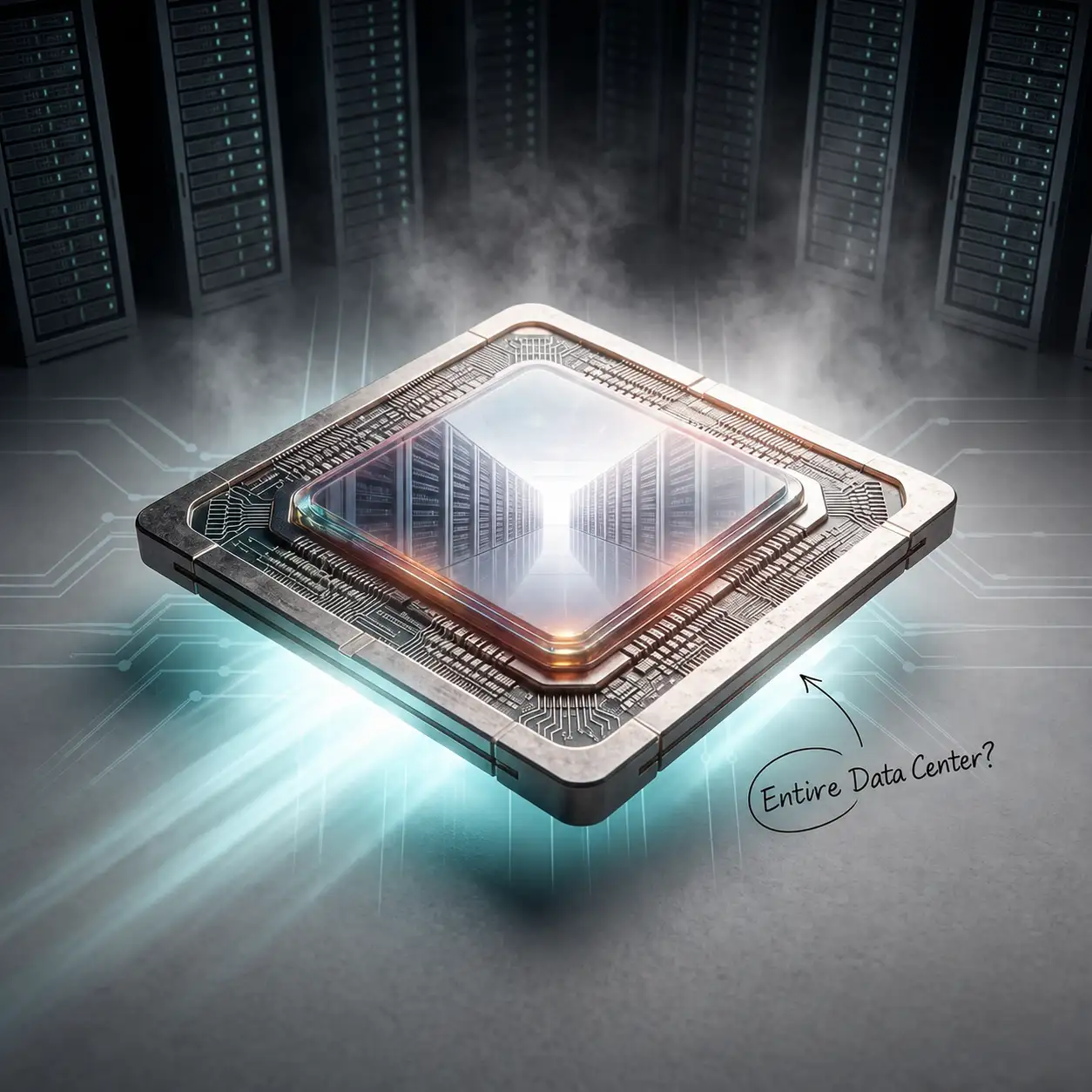
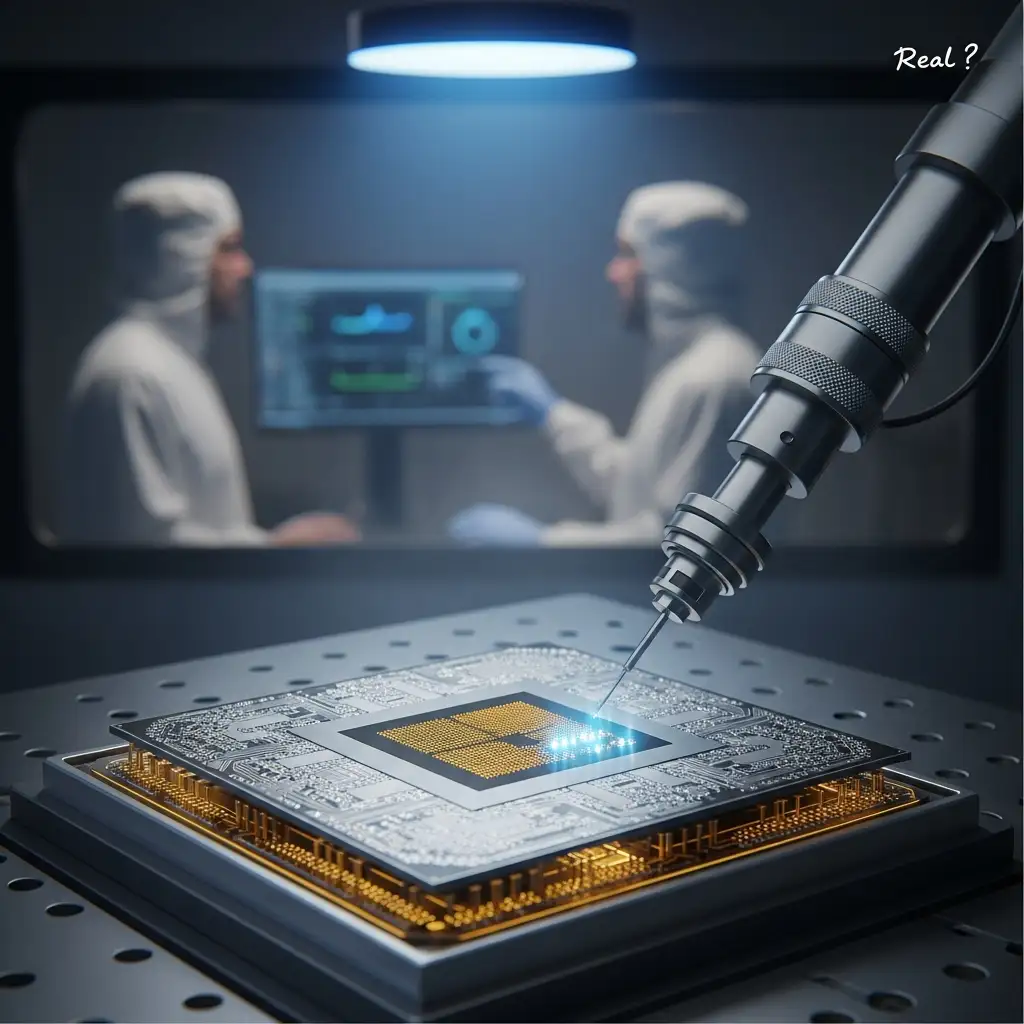
A developer in Austin runs a 70 billion parameter model on a desk at 2 a.m., fine-tuning it, watching the output stream in, and never once touching a cloud server to do it. The box doing the work is smaller than a stack of hardcover books. Nvidia is not calling it a computer. It is calling it a home AI data center, and the distinction is doing a lot of work.
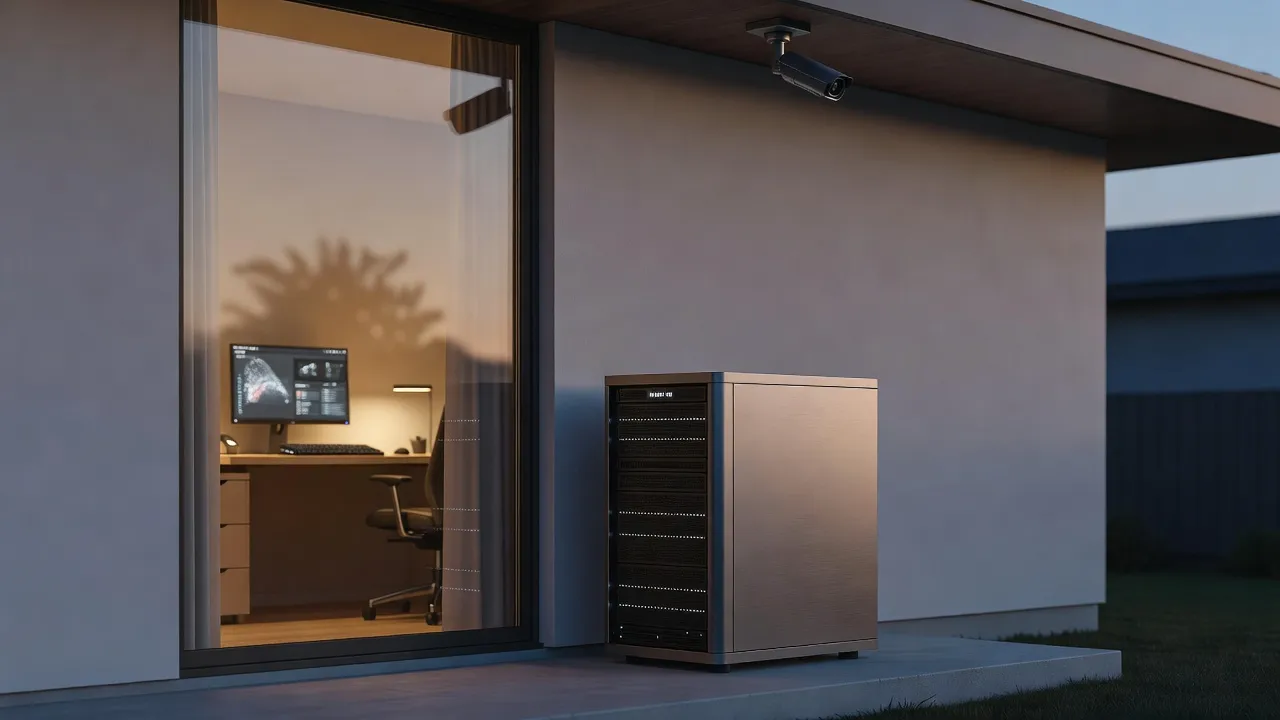
AI Generated Illustration
For most of the last decade, powerful AI meant renting time on someone else's machine. You typed a prompt, it traveled to a warehouse full of GPUs somewhere you'll never see, and an answer came back a second or two later. That round trip has quietly shaped how people think about artificial intelligence: as something that happens elsewhere. Nvidia's new push wants to break that habit, and it says something about where the company thinks the next phase of the AI hardware market is headed.
What Makes a Home AI Data Center Different From a Normal PC
A gaming PC is built to render frames. A home AI data center is built to move enormous amounts of data between memory and processor without choking, which is a completely different engineering problem. Nvidia's entry in this category, the DGX Spark, pairs a Grace CPU and a Blackwell GPU on the same package, sharing 128 gigabytes of memory instead of splitting it into separate CPU and GPU pools the way a normal desktop does. In practical terms, that means the machine can hold a genuinely large model in memory at once instead of constantly shuffling pieces of it back and forth, the same bottleneck that chokes consumer GPUs the moment a model gets too big for their limited video memory.
Nvidia calls it a supercomputer rather than a powerful computer because it can run several AI models side by side, fine-tune a model on your own data, and keep an AI agent running continuously in the background, the kind of workload that used to require a rack in a server room. A chatbot handling customer questions, a vision model watching security footage, and a coding assistant can all run on the same unit at once, each drawing from that shared memory pool rather than fighting over a single GPU's limited capacity.
The bigger story is not how much silicon Nvidia crammed into a box the size of a paperback novel. It's where that silicon now lives, and that relocation is the part worth paying attention to.
Why Local AI Could Reshape Privacy, Speed, and Everyday Computing
Every time you send a prompt to a cloud AI service, that data leaves your device, travels across a network, gets processed somewhere else, and comes back. Running the model locally skips that trip entirely, which cuts response times and keeps sensitive material, medical notes, legal drafts, unreleased code, off someone else's servers. For anyone handling confidential work, that is not a minor convenience. It is the difference between a tool you can actually use for sensitive projects and one you have to work around.
The practical use cases are already showing up: coding assistants that keep working on a plane with no Wi-Fi, video editors running local generative tools without waiting on a queue, robotics researchers testing perception models in real time, and small teams running their own internal knowledge assistant without sending proprietary documents through a third party's API. None of this requires a data center contract or a six-figure IT budget.
There's a decent chance the AI assistant of the next few years lives beside your router instead of inside a data center you'll never see the inside of. That's a strange sentence to write in 2026, and it's an even stranger one to actually believe until you've watched a model that size run without an internet connection.
Why Nvidia Is Pushing AI Beyond Enterprise Data Centers
Nvidia's data center business is still the engine of the company, but the demand curve for AI compute has started outrunning what centralized facilities can supply. New hyperscale sites take years to permit, connect to the grid, and build, and in the meantime the appetite for inference, running trained models rather than training new ones, keeps climbing. Spreading some of that workload closer to where people actually use it is one way to relieve the pressure without waiting on a new substation.
This is part of why Nvidia has been building products for multiple points along that spectrum at once. DGX Spark puts a developer-grade AI machine on an individual desk. Separately, the company has backed a residential energy startup's plan to install small, liquid-cooled compute nodes on the exterior of houses, tapping electrical capacity that homes already have but rarely use in full, to support cloud inference workloads at the edge of the network rather than in a distant warehouse. The two efforts solve different problems, one is about who runs the AI, the other is about where the electricity to run it comes from, but they point in the same direction: AI infrastructure spreading outward from a small number of massive sites toward a much larger number of small ones.
Developers, researchers, and small studios who need serious AI capability without maintaining server racks or paying by the token are the natural audience for the desktop version of this shift. That is a market Nvidia has not fully served before, and it is growing fast enough to justify building an entirely new hardware category around it.
The Performance Questions That Still Need Answers
Nvidia has published headline numbers, roughly a petaflop of AI compute and support for models up to 200 billion parameters, but real-world performance under sustained, everyday use is a different question than a spec sheet answer. Memory bandwidth, not raw compute, tends to be the limiting factor for local inference, and early hands-on testing has flagged it as a genuine constraint compared to larger workstation GPUs.
Whether this becomes a mainstream household appliance or stays a tool for developers and labs depends on exactly these details: how it handles a full workday of continuous use, how loud the cooling gets, and how the price compares once options and networking add-ons are factored in. A machine that costs roughly four thousand dollars is not an impulse purchase, and the audience willing to pay that for local AI is narrower than the marketing language suggests.
The honest answer is that nobody outside early access programs has run this hardware long enough, hard enough, to know where its ceiling actually is.
Challenges That Could Slow the Home AI Data Center Vision
Cost is the most obvious hurdle. A four-thousand-dollar desktop machine is a serious purchase for an individual, and running it continuously adds a real, if modest, line item to a home electricity bill. Set against that is cloud AI, where you pay only for what you use and someone else handles maintenance, driver updates, and hardware failures.
There's also a genuine question about whether cloud compute simply stays cheaper for most people most of the time. Renting GPU time by the hour scales down to nothing when you're not using it. A machine on your desk keeps depreciating whether you touch it or not, and if a part fails, there's no support team a phone call away the way there is with a managed cloud account. For casual users, the math likely still favors the cloud. For developers running models constantly, the local math starts to look better within a year or so.
None of this means one model wins outright. Cloud and local AI are more likely to settle into a division of labor, cloud for training and burst capacity, local for privacy-sensitive and always-on work, than for one to fully replace the other. Adoption of any new computing category has always hinged as much on price and convenience as on what the hardware can technically do.
What This Could Mean for the Future of AI Hardware
If desktop AI supercomputers catch on the way Nvidia is betting they will, the ripple effects reach further than one product line. Universities could run serious AI research without cloud budgets eating into grant money. Small robotics teams could train and test perception models on-site instead of shipping data back and forth. Independent creators could run generative tools without a subscription meter running in the background.
The deeper shift here isn't really about one box on one desk. It's about AI infrastructure starting to look less like a handful of hyperscale campuses and more like a wide, uneven mesh of compute sitting everywhere from server rooms to garages to a corner of somebody's home office.
The real competition in AI hardware may no longer be about who builds the fastest chip. It may be about who decides where AI is allowed to live, inside a handful of massive, climate-controlled campuses, or scattered across millions of ordinary desks and driveways, each one a small, functioning piece of the same intelligence.