A model can be flawless on paper and still sit useless in a data center if there isn't enough silicon to run it at scale. That gap, between what AI can theoretically do and what hardware can actually deliver, is quietly becoming the real story of this decade.
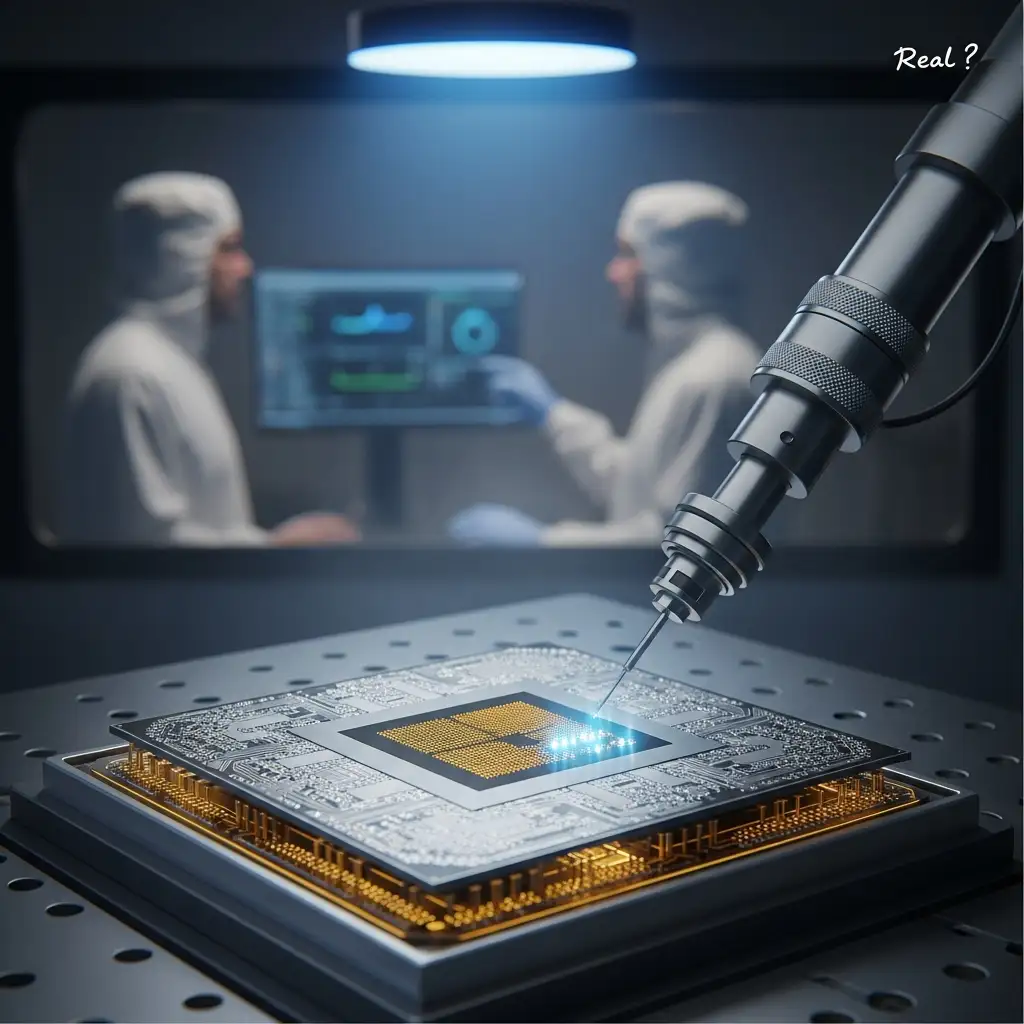
AI Generated Illustration
For years the formula was simple: add more parameters, feed in more data, and watch capability climb. That formula is running out of road. Many researchers now argue that the next leap in AI capability will not come from a bigger model but from the AI chips underneath it, the GPUs, NPUs, and custom accelerators that decide how fast a model can think and how much that thinking costs.
This is a strange position for an industry that spent years selling the idea that scale alone was destiny. If chips, not parameters, set the pace from here, then the companies that win may not be the ones with the cleverest algorithms. They may be the ones who control the factories.
Understanding why requires stepping outside the software conversation entirely and looking at what is actually happening on the silicon.
Why AI chips matter more than ever
A CPU is built to do many different jobs reasonably well, one instruction after another. An AI chip is built to do one kind of math extremely fast: the matrix multiplication that underlies nearly every neural network. GPUs, NPUs, TPUs, and custom accelerators all chase the same goal through slightly different designs, trading flexibility for raw throughput on the operations AI actually needs.
What separates a good AI chip from a mediocre one comes down to a handful of numbers: how many calculations it can do per second, how quickly it can move data between memory and processing cores, how much delay it introduces, and how much electricity it burns doing the job. These tradeoffs shift depending on whether the chip is training a model from scratch or just running a finished one, so no single number tells the whole story, and how much further any of these metrics can realistically improve is still an open question.
What is not in question is the shift in priority. The hardest problem in AI right now is not writing a smarter algorithm. It is finding enough computing power to run the algorithms that already exist.
The real bottleneck is no longer the model
Training a frontier model already consumes computing resources that would have seemed absurd a decade ago, and running that model for millions of users afterward multiplies the demand again. Even a genuinely better algorithm can be stuck on a shelf if there isn't enough hardware to deploy it at any meaningful scale.
This is not new in computing history. Hard drives went from impractical to ubiquitous because storage hardware improved, not because file systems got cleverer. Smartphones became cameras, GPS units, and game consoles because chips got small and efficient enough to make that possible. Software has always been a hostage to hardware, even when the software gets all the attention.
The next AI breakthrough may arrive inside a chip before it appears inside a chatbot.
That reframes where the industry's attention should be pointed, and it explains why every major player is suddenly acting like a chip company.
The global race to build better AI hardware
Tech giants and chipmakers are pouring money into custom processors built specifically for their own AI workloads, not because it's trendy, but because off-the-shelf GPUs are expensive and don't perfectly fit every use case. Designing your own silicon means tuning the chip to your exact models, which can cut costs and squeeze out efficiency that a general-purpose chip simply can't match.
Faster, cheaper chips matter because inference, the actual running of a trained model, happens billions of times a day across every product that touches AI. Shave the cost of each of those calculations and you can afford to put AI into more devices, more services, and more places it currently can't reach, from data centers down to the phone in someone's pocket.
This competition has stopped being a corporate rivalry and started looking like an industrial one, tangled up with manufacturing capacity, fragile supply chains, and governments that increasingly treat chip production as a matter of national security.
Why faster chips could change everyday AI
Better hardware translates into things people actually notice: quicker replies from an assistant, a phone that doesn't die by 3pm while running on-device AI, and AI services cheap enough that companies stop rationing how much of them you get.
It also opens doors that stay shut today. Real-time robotics, autonomous vehicles that need to react in milliseconds, and live multilingual translation all demand more computing power than current hardware can comfortably supply at scale. According to researchers tracking compute trends in AI, the gap between what models want and what chips can deliver has been one of the main forces shaping which AI products actually ship versus which stay stuck in demos.
None of that means hardware is a cure-all, though.
The limits, risks, and unanswered questions
Chips don't get faster for free. Each generation runs hotter, costs more to manufacture, and pushes against the physical limits of how small a transistor can get before electrons start misbehaving. Fabrication plants now cost tens of billions of dollars to build, and the supply chains feeding them run through a small number of countries, which makes the entire AI industry hostage to a handful of factories on a handful of coastlines.
Hardware also can't fix what hardware didn't break. A faster chip running a poorly trained model just produces bad answers more quickly. Data quality, model architecture, and software efficiency still matter as much as they ever did, and no amount of silicon compensates for a flawed approach underneath it.
What remains genuinely unclear is whether today's chip designs are even the right foundation to keep building on. Photonic chips, neuromorphic processors, and other approaches that don't look anything like a conventional GPU are still early, unproven, and could just as easily fade as become the next standard.
What the next decade of AI could look like
The more honest framing isn't models versus chips. It's models and chips, increasingly designed together so that a new architecture and the silicon meant to run it are built with each other in mind from day one, rather than software trying to retrofit itself onto whatever hardware happens to exist.
If that co-design approach takes hold, the next major AI advance might not announce itself through a flashy new chatbot release at all. It might show up first as a quiet line in a chip company's earnings call, long before anyone outside the industry notices that the ground has shifted underneath them.