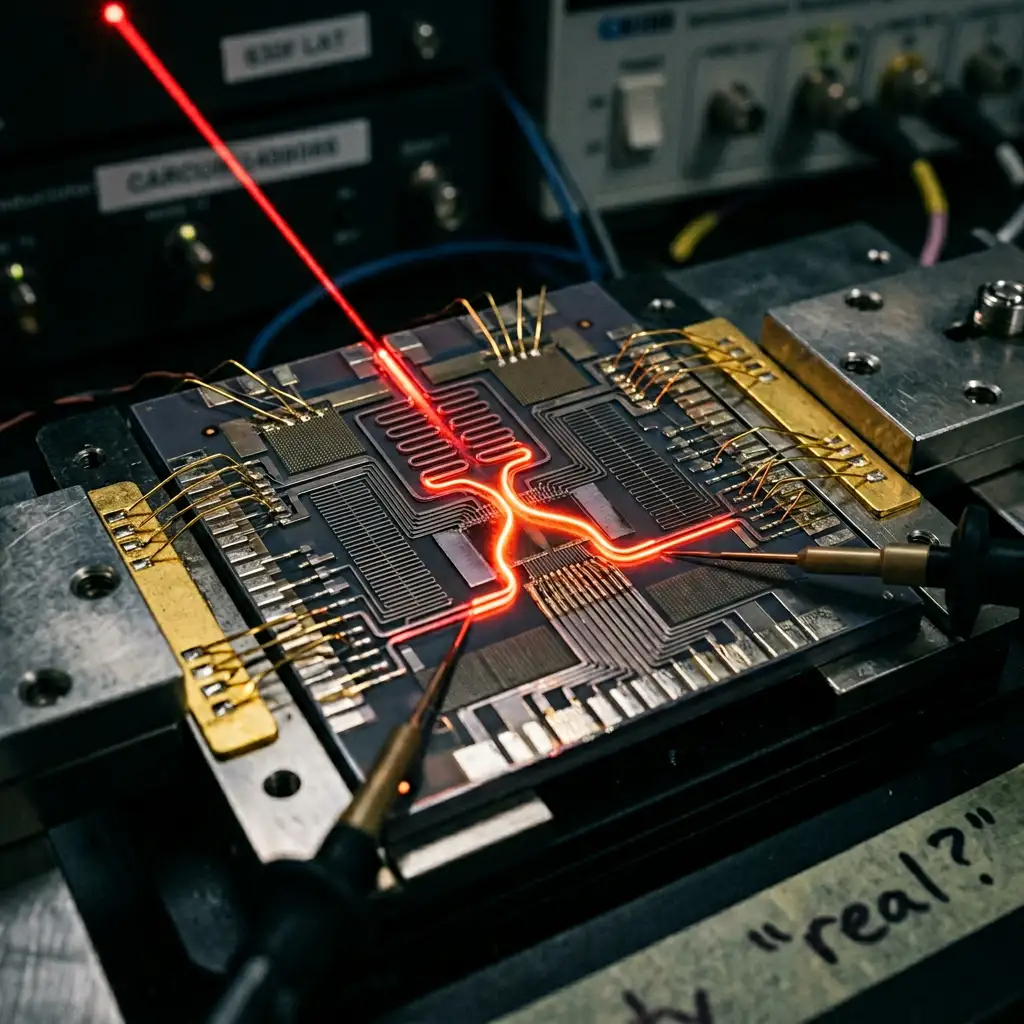
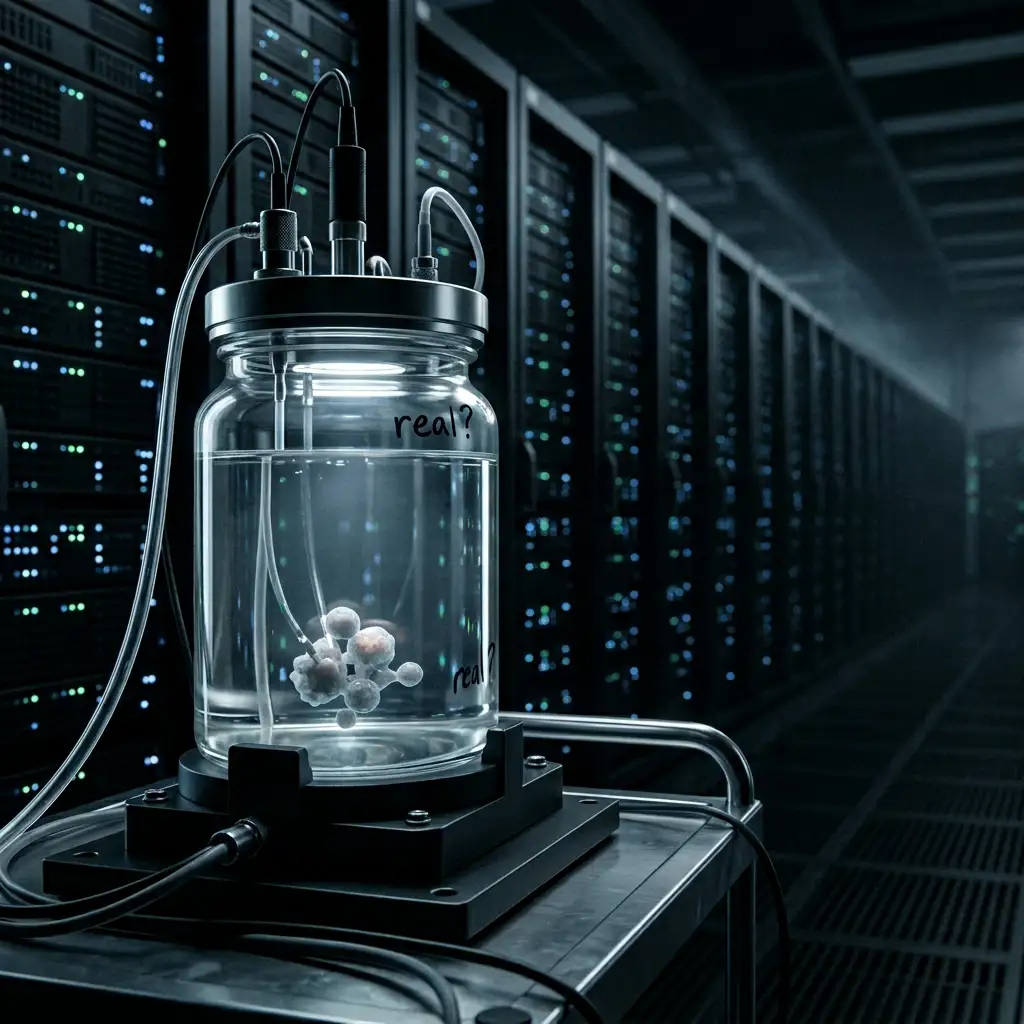
In a temperature-controlled lab in Vevey, Switzerland, a cluster of human neurons sits suspended in a microfluidic chamber at exactly 37 degrees Celsius. They are alive. They are computing. And they are doing it on roughly the power required to run a small LED bulb. Meanwhile, a few kilometers away, a conventional AI data center hums and churns through enough electricity to power several city blocks just to process a day's worth of search queries. The contrast is not symbolic. It is a problem that the tech industry is finally starting to take seriously.
Key Insights You Should Never Miss
-
Massive Energy Efficiency GainsBiological computing systems can execute complex pattern recognition tasks using up to one billion times less energy than conventional silicon processors, offering a highly viable solution to the growing AI energy crisis.
-
Wetware Processing and DopamineStartups are using living human neuron clusters connected via Multi-Electrode Arrays, actively reinforcing correct computational outputs through light-triggered dopamine release in real time to effectively train the biological network.
-
Biological Hardware LimitationsOrganoids currently have a strict hundred-day lifespan and store minimal data, requiring complex microfluidic life-support systems to survive while simultaneously raising unprecedented bioethical and security concerns for technology developers.
The biocomputing AI energy crisis is not some distant, abstract concern anymore. AI infrastructure now accounts for a fast-growing slice of global electricity consumption, and the numbers are getting uncomfortable. Training a single large language model can consume thousands of megawatt-hours. Daily AI inference workloads across major cloud providers drain grids at a scale that has utilities and governments genuinely worried. The question quietly circulating among researchers is whether silicon, the material that built the modern computing world, has hit a wall it cannot climb over.
Silicon's Terawatt Wall and the Twenty-Watt Human Benchmark
There is a physical ceiling coming for conventional processors. Moore's Law, the reliable doubling of transistor density roughly every two years, is running out of atomic real estate. Transistors are already approaching the size of individual molecules. Squeezing more performance out of silicon now requires more power, more cooling, and more infrastructure, not smarter engineering alone. Some hyperscale data centers are already exploring dedicated nuclear reactors to manage load. That is not efficiency. That is desperation dressed up as ambition.
The uncomfortable benchmark sitting in the middle of this crisis is the human brain. It executes computations at roughly the equivalent of an exaflop-scale supercomputer while consuming around twenty watts of continuous power. No cooling towers. No liquid nitrogen. Just glucose, oxygen, and about three pounds of biological tissue that took evolution a few hundred million years to optimize. The gap between what biology accomplishes and what silicon demands is the gap that the emerging field of organoid intelligence is trying to close.
Enter the Neuroplatform and Wetware Processing
FinalSpark, based in Switzerland, and Cortical Labs, based in Australia, are among the startups that have moved biological computing from academic theory into something closer to a working product. Their platforms sit in a category researchers call 'wetware': systems that blend physical hardware, software, and living biological tissue into one functional architecture.
The biological building blocks are clusters of neurons grown from human skin stem cells. Scientists reprogram the cells to mature into three-dimensional organoids, roughly half a millimeter thick, each containing tens of thousands of active neurons. Cortical Labs made an early demonstration of what these clusters can do when they connected a cell culture to the video game Pong and the organoid learned to play it in five minutes. That was not a trick. The neurons responded to electrical feedback and reorganized their firing patterns to keep the paddle in play.
FinalSpark has since commercialized this into a remote-access Neuroplatform. Academic researchers around the world can now rent computing time on living biological processors housed in Switzerland, the same way developers rent cloud compute from AWS. This is no longer a mouse-brain experiment in a graduate lab. It is a commercial infrastructure product, built on human neurons, available by subscription.
Bridging Multi-Electrode Arrays with Light-Triggered Dopamine
The hardware connecting digital systems to living tissue is called a Multi-Electrode Array, or MEA. The organoid sits inside it, and the MEA does two things at once: it injects precise electrical pulses into the cell cluster to deliver information, and it records the resulting voltage spikes that come back out. Think of it as a two-way radio, where one side speaks electricity and the other side speaks biology, and both have to be translated in real time.
Converting those biological signals into usable digital data requires high-frequency analog-to-digital sampling. Software reads the timing, amplitude, and pattern of each spike and interprets what the neural network has computed. The cells are not running code in any traditional sense. They are reorganizing their synaptic weights based on input, which is, at a mechanical level, exactly what deep learning does in silicon, just executed through living tissue instead of arithmetic operations on transistors.
The method for reinforcing correct behavior is where this gets genuinely strange. Researchers use a technique called 'dopamine uncaging.' Molecules containing dopamine are bound inside light-sensitive chemical cages and introduced to the organoid. When the neurons produce a correct output, researchers shine a specific light frequency at the cluster. The cages break open, dopamine floods the local environment, and the successful neural pathways get chemically reinforced. The cells are being rewarded, in a biochemical sense, for thinking correctly.
In Simple Terms - Dopamine Uncaging
Instead of writing traditional software code, scientists reward living brain cells for correct answers by shining light on them. This releases dopamine and strengthens the right biological connections, much like training a pet with treats.
A Million-Fold Efficiency Leap for Modern Data Centers
The energy efficiency comparison between biological co-processors and conventional GPUs is where the field makes its most striking claim. Researchers at the Johns Hopkins Organoid Intelligence consortium have cited figures suggesting that biological computing systems can execute complex pattern recognition tasks using between one million and one billion times less energy than equivalent silicon processors. Even if the real-world number lands at the conservative end of that range, it still represents a meaningful shift in what AI infrastructure could look like.
For data center operators, the implications are direct. The largest share of operating costs in a modern AI facility goes to electricity and cooling. If even a portion of the repetitive neural network training workload migrates to biological co-processors, the thermal and power load drops substantially. Sustainable AI deployment, which currently reads more like a PR aspiration than a technical reality, might become an actual engineering option. Lab-grown brain cells as an AI energy solution is not where anyone expected this industry to land, but here we are.
The One-Hundred-Day Expiration Date and Biological Malware
None of this comes without serious, unresolved problems.
Silicon wafers have operational lifespans measured in decades. A biological organoid has roughly one hundred days before cellular aging makes it unreliable. That means biocomputing infrastructure is not maintained, it is replaced, continuously, with fresh cultured tissue. The logistics of running a data center with a rotating biological substrate are genuinely hard to picture at scale, and no one has solved them yet.
The information density gap is also severe. A single organoid currently stores approximately one bit of actionable data. The human brain holds petabytes. Closing that gap requires networking thousands of organoids together in coordinated arrays, which demands microfluidic life-support systems, vascular analogs to carry nutrients deep into tissue, and interface hardware that does not yet exist commercially. The field is not close to replacing GPU clusters. It is closer to proving that the concept survives contact with engineering reality.
There is also a category of system failure that has no precedent in conventional IT. In a silicon data center, a crash is caused by corrupted code or failed hardware. In a biological computing facility, the equivalent threat is an airborne virus entering a cleanroom and infecting the neural cultures. Biocomputing does not need an IT security team. It needs a virology protocol.
Think of It Like This - Biological Malware
Unlike a computer virus that corrupts digital files, a biological server crash happens if a real airborne virus infects the living tissue. This means future data centers will need strict medical-grade cleanrooms instead of just traditional IT security.
Academic Alliances and the Organoid Intelligence Frontier
Major research institutions are not sitting this out. International working groups focused on organoid intelligence are establishing standard hardware interfaces, microfluidic automation protocols, and shared research frameworks. The goal is interoperability, so that biological processors built in one lab can be networked with organoids grown in another.
Pharmaceutical companies see a different value in the same technology. Organoids grown from patients with Alzheimer's disease carry the biological signature of the condition at the cellular level. Researchers can upload computational tasks to these cultures while simultaneously testing how experimental compounds affect synaptic firing. It turns a drug screening process that currently takes years of animal testing into something faster, cheaper, and more biologically relevant to human disease.
Venture capital has noticed. Investment is flowing not just into organoid startups but into the interface layer: the analog-to-digital translation hardware, the microfluidic life-support engineering, and the software stacks that will eventually make biological and silicon processors work as a unified system. That is the tell. When infrastructure investors start hedging against silicon dominance, the probability of disruption goes up regardless of whether the timeline is clear.
The next stage of development involves scaling organoid masses from tens of thousands of neurons to millions. To do that without the inner cells dying from oxygen deprivation, researchers are designing artificial vascular systems, microfluidic channels that pump nutrient-carrying fluids through the tissue the way blood feeds a living brain. It is one of the harder unsolved problems in the field, and the solution will likely determine how fast commercial scaling actually happens.
At some point on that scaling curve, a question appears that the engineering literature cannot answer. At what threshold of neural density and processing complexity does a commercially operated biocomputing cluster begin to experience something? The honest answer is that nobody knows, and the frameworks for answering it barely exist yet. Bioethicists are pushing for regulatory standards covering stem cell donor consent, limits on electrical stimulation intensity, and protocols for what decommissioning a biological server actually means from a moral standpoint. These conversations are happening now, while the technology is still primitive, which is either encouragingly cautious or optimistically early, depending on who you ask.
The Unresolved Friction Between Immortal Machines and Living Flesh
The most likely near-term future for AI infrastructure is not a replacement of silicon by biology. It is a hybrid, where biological co-processors handle specific high-repetition, low-power tasks while conventional GPUs manage raw throughput. That kind of division of labor is not elegant. It is practical, and practicality is what the AI energy crisis actually demands.
The deeper irony in all of this is harder to shake. Decades of computing history point toward one goal: building machines that can think like humans. The processing architectures, the training paradigms, the terminology itself all borrow from neuroscience. And now, at the moment when that ambition runs into a hard physical constraint, the answer being seriously considered is to stop simulating biological neural networks and start using actual ones.
Whether the server farms of the future run on silicon, neurons, or something in between, the question of what we are comfortable growing, operating, and eventually switching off is not going to stay academic for long.