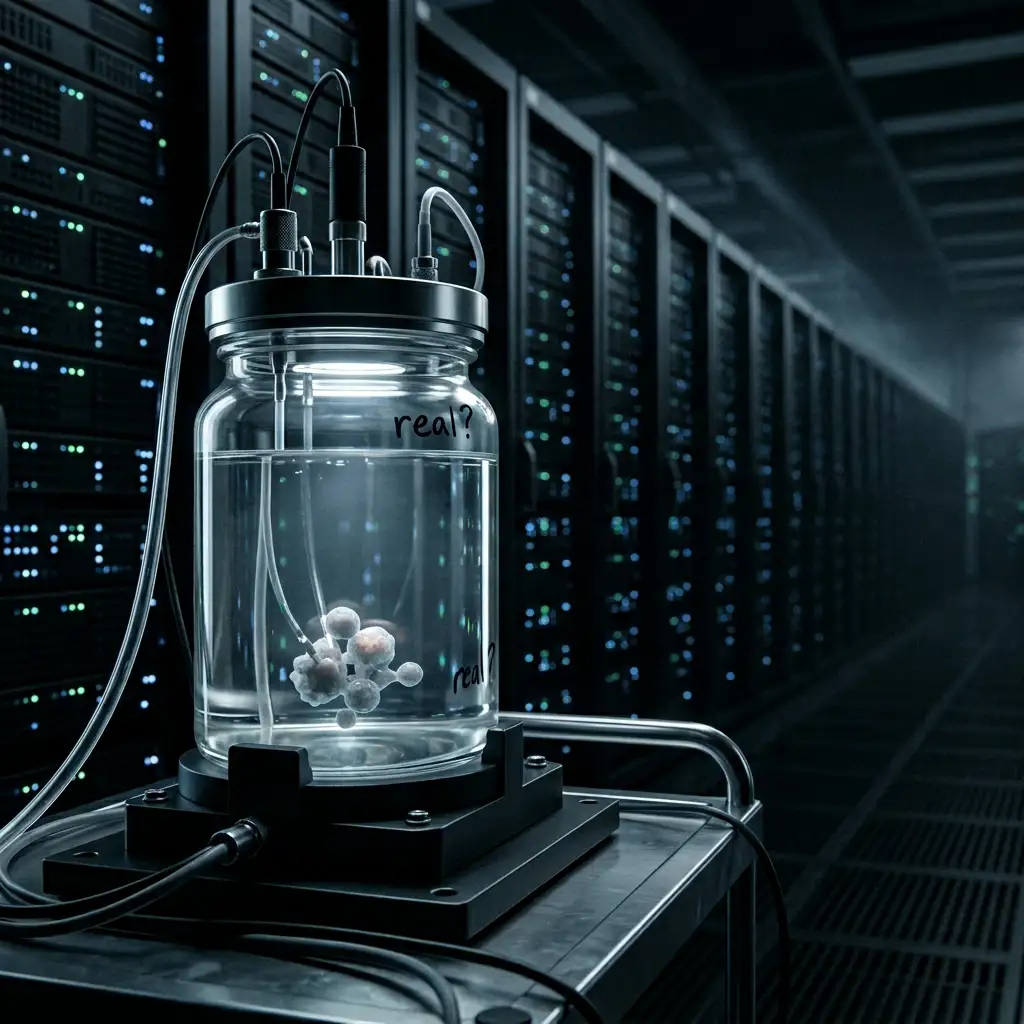
A single data center campus in Virginia now pulls more electricity than some mid-sized cities. Utility engineers who once planned decades ahead using slow, predictable growth curves are suddenly fielding requests for hundreds of megawatts from a single customer, sometimes with only a few years of notice. That customer is almost always building AI infrastructure.
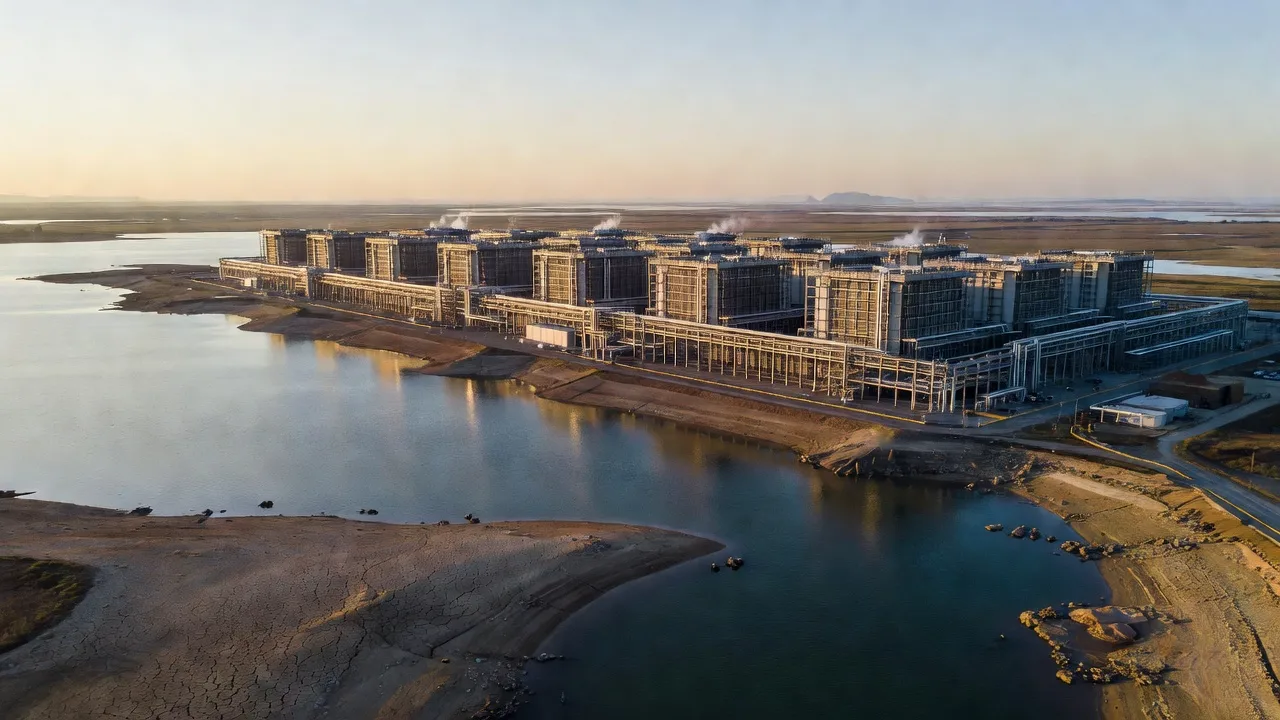
AI Generated Illustration
AI energy consumption has moved from a footnote in tech coverage to a central question in energy planning. Larger foundation models, multi-step reasoning systems, and AI agents that run continuously in the background all need far more computing power than the chatbots of just a few years ago. This is not only a story about chips and code anymore. It is a story about power plants, transmission lines, and the water running through cooling towers.
Traditional cloud computing scales with predictable business demand. AI is different. Training a large model consumes enormous amounts of electricity in concentrated bursts, but that is only the beginning. Once a model launches, inference, the process of actually answering user requests, runs around the clock. Millions of people asking questions, generating images, or running AI agents means the electricity bill never really stops. A model that took weeks to train might run inference for years, and the cumulative draw from constant use can eventually dwarf what training required in the first place.
Electricity gets most of the attention, but it is only half the problem. Keeping the hardware from overheating has become almost as urgent an engineering challenge as powering it, and that hidden cooling problem is where the real strain on infrastructure begins.
Why AI Data Centers Consume So Much Power and Water
A single AI server is not comparable to the servers that ran email and websites a decade ago. Modern AI systems pack rows of GPUs, high-bandwidth memory, and dense networking gear into the same rack space, running at near full capacity for hours or days at a stretch. Think of it less like a office computer idling most of the day and more like an engine held at redline. That density is what makes AI training clusters some of the most power-hungry machines ever built.
All that concentrated computing generates heat that has to go somewhere. Data centers rely on chilled water loops, evaporative cooling towers, and increasingly direct liquid cooling, where coolant runs through plates attached directly to the chips. Evaporative systems in particular can consume staggering amounts of water, and the newest AI facilities being built in hot, dry regions can strain local water supplies the same way a large agricultural operation might.
Here is the part that is easy to miss: a single AI response might use only a tiny sliver of energy, a fraction of what it takes to boil a cup of water. But multiply that by billions of queries a day, running on hardware that also needs constant cooling, and the aggregate footprint becomes something utilities cannot ignore. That accumulation is exactly why power companies have started treating AI data center demand as its own category of planning problem.
How AI Is Reshaping Power Grids and Infrastructure
Utilities in Texas, Virginia, and several other regions have revised their long-term demand forecasts upward largely because of AI data center growth. Requests for new grid connections that used to trickle in over years are now arriving in clusters, forcing utilities to build new generation capacity and upgrade transmission lines faster than their normal planning cycles allow.
Some of that new capacity is coming from renewable sources paired with battery storage, since solar and wind can be built relatively quickly. But intermittent power does not match the constant, unforgiving load of an AI data center, so companies are also turning to natural gas plants and, in a notable shift, nuclear power. Several major tech firms have signed deals to restart or fund nuclear facilities specifically to guarantee steady electricity for AI operations.
What that really signals is that AI has stopped being purely a software story. It is now a factor in decisions about national grid capacity, energy independence, and where new power plants get built. Solving the compute problem increasingly means solving an engineering problem first, which is where chip and hardware design come in.
The Engineering Race to Build More Efficient AI
Chipmakers have shifted much of their design effort toward performance per watt rather than raw speed alone. Newer AI accelerators pack more transistors into smaller spaces, use advanced chip packaging that stacks components closer together, and rely on memory architectures built specifically to move data with less wasted energy. In simple terms, engineers are trying to get more thinking done for every unit of electricity spent, the same way automakers chase better fuel economy without sacrificing horsepower.
The efficiency push goes beyond the processor itself. Liquid cooling reduces the energy spent just keeping systems from overheating. Optical networking moves data between chips using light instead of electrical signals, cutting losses over long connections. Smarter scheduling software can shift non-urgent workloads to times when electricity is cheaper or renewable supply is higher, squeezing out waste that has nothing to do with the chip design at all.
Performance per watt has become one of the industry's most closely watched benchmarks, discussed in chip announcements the way clock speed once dominated headlines. Whether these gains can keep pace with how fast AI models are growing in size and complexity remains an open question, and that tension sits at the center of the industry's biggest unresolved debate.
Can Efficiency Keep Up With AI's Growing Appetite
This is where things get genuinely uncertain. Even as individual chips become dramatically more efficient, total energy consumption keeps climbing, because the number of AI systems being deployed is growing faster than efficiency gains can offset. Economists have a name for this pattern: the Jevons paradox, where making something cheaper to use tends to increase total consumption rather than reduce it. Cheaper, more efficient AI compute does not necessarily mean less electricity used overall. It often means more people running more models more often.
What remains unclear is how far this can scale before it runs into a hard wall. Regional electricity availability is not unlimited, water rights in drought-prone areas are already contested, and public utility commissions are starting to ask whether residential ratepayers should help fund infrastructure built primarily for corporate AI demand. Critics point out that if AI adoption keeps compounding at its current pace, no reasonable rate of hardware efficiency improvement can fully offset it, and that argument deserves to be taken seriously rather than waved away with optimism about future chips.
The honest answer is that nobody knows yet whether efficiency gains and infrastructure buildout can outrun demand, or whether AI growth itself will eventually have to slow down because the power and water are not there to support it.
Why AI Energy Consumption Could Shape the Next Decade of Technology
AI energy consumption now touches semiconductor design, data center architecture, national power generation strategy, water management, and industrial policy all at once. What used to be a narrow engineering concern inside a handful of tech companies is now a topic for utility regulators, state legislators, and international climate negotiators.
The next real breakthroughs may not come from a bigger model at all. They are more likely to come from smarter algorithms that need less compute to reach the same result, next-generation chip architectures, alternative cooling methods that use far less water, and power systems designed from the start with AI's unusual load patterns in mind.
The future of artificial intelligence will not be decided only by how clever the models become. It will also be decided by whether the electricity, cooling systems, and water supplies needed to run them can actually be delivered at the scale AI companies are promising, and whether the rest of us are willing to pay for it.