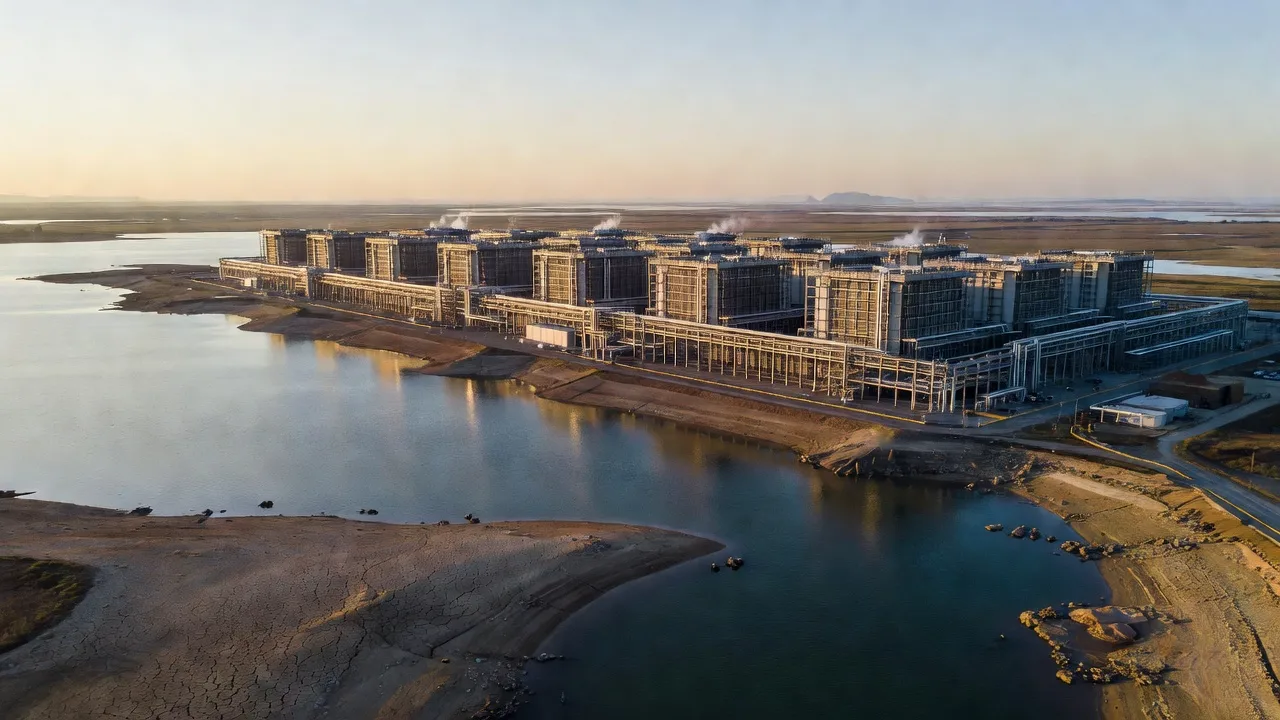
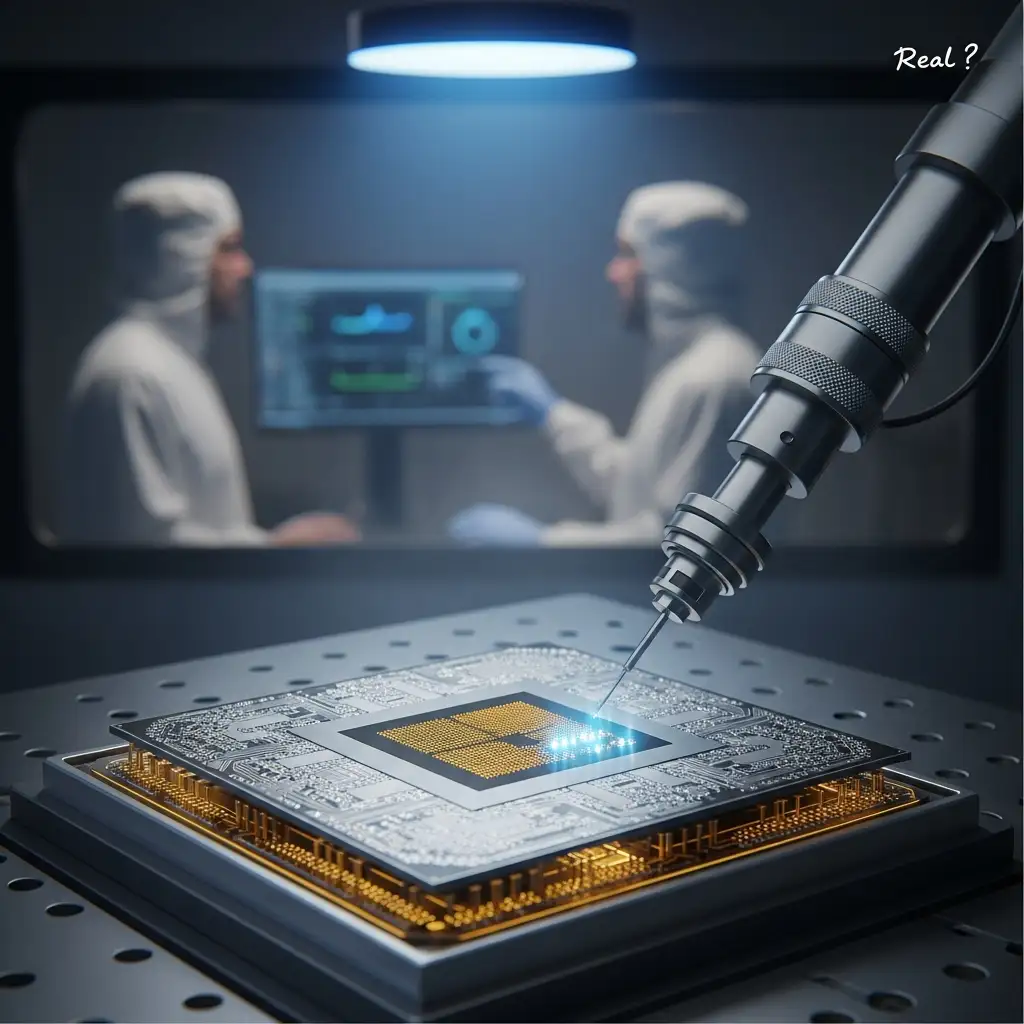
At this moment, in an industrial area near Shenzhen, water is being used to wash and polish a line for producing memory chips of a factory whose official ownership by Huawei is not known. Documents provided to the local water department show that the equipment is still being used. Huawei However does not refer to it at all in their public communications.
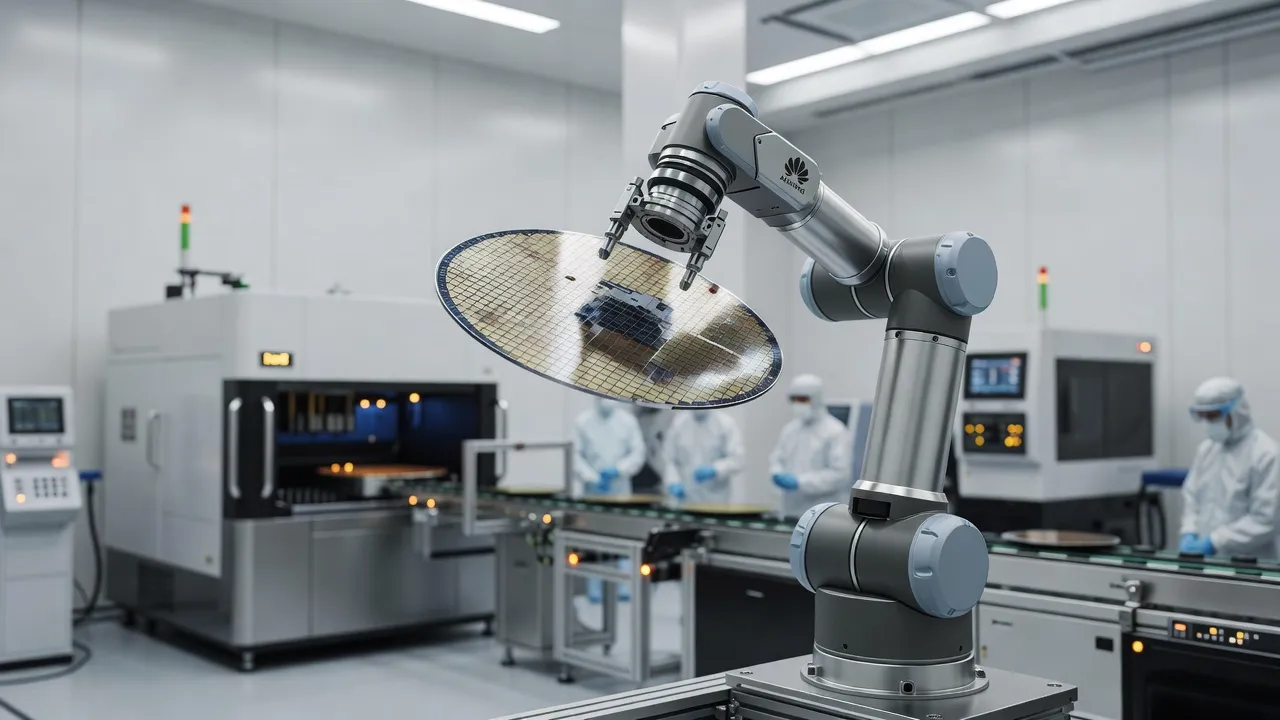
AI Generated Illustration
The discrepancy between what is recorded and what is denied is the true story behind the recent reports of Huawei's DRAM factory. For years, the DRAM chips that you find in your phone, laptop or computer have largely been supplied by three companies: Samsung, SK hynix, and Micron. Based on increasing number of circumstantial evidences, Huawei is aiming to become a fourth provider, even for its own use.
On whether or not this can happen at a scale that will impact the global market is the tougher question, and that explains why this matter has become the talk of the chip industry very swiftly last month.
Inside Huawei's Plan to Build a New DRAM Supply Chain
Semiconductor analysts, many drawn by just one well-followed Twitter/X account, The company that has stirred up rumors is Shenzhen-based Swaysure (formerly Shenzhen Yiweixu Technology) established in 2022 as a memory manufacturer having reported associations with Huawei and being backed by Shenzhen's government.
From public sources, they got the story of Huawei's 12 inch wafer fabricating plant for 28 nm DRAM with a monthly capacity of 140,000 after several years and public records finally revealed the physical production line.
DRAM manufacturing takes precision in measuring lithography in nanometers, process yields that need only single-digit progress over years, and a specialized supply chain equipment western export controls have made it difficult for Chinese companies to acquire. Huawei is allegedly hiring experienced memory experts from TSMC and Elpida, a Japanese DRAM firm that has gone bust, which hints that the Huawei DRAM chip-making project is taken seriously instead of just a side experiment.
What is often overlooked in the DRAM manufacturing business is Truth is a DRAM plant is not just a building with a lot of expensive equipment. It is the endeavor of building an entirely new industrial ecosystem virtually from scratch, mainly without foreign technologies, similar to the way Samsung, SK hynix, and Micron did by assembling and refining their respective supply chains over a period of thirty years. Rather than a new plant opening, this is more like the reestablishment of an entire supply chain.
Why DRAM Is the Battleground of the AI Hardware Era
DRAM had historically been a product of little consideration; it was the type of commodity nobody thought about until more of it was required by the laptop. This is where AI came to the rescue. The training and running of large models necessitate massive amounts of high-bandwidth memory. Also, data center operators are now the same as phone makers and PC builders in their fight over the very limited wafer supply.
That head-on clash has been a main reason behind the present world-wide RAM shortage, The availability of memory is crucial in almost every aspect of modern computing. So, when there is a change in the supply of DRAM, the effect propagates to odd places. For instance, a GPU cluster needs memory to deliver data to processors at a sufficient pace to occupy the processors.
A budget smartphone only needs memory to run itself without glitches. The scarcity or high price of memory can bring various situations such as laptop manufacturers increasing prices, cloud providers paying more to increase their capacity, and smartphone-makers reducing their product specifications stealthily to keep their profit margins. The major factors affecting how competitive or useful a DRAM chip is, and in fact whether it will be a gain or a problem for its manufacturer at all. Manufacturing a factory which can produce chips is not the same as having one which can make products that others will want to buy.
Can Huawei Really Break the DRAM Monopoly?
Samsung, SK hynix, and Micron's combined share in the memory market is over 95% and none of the three has just been lucky. They have been perfecting process nodes for decades with their own proprietary tooling relationships and even survived the brutal boom-and-bust cycles, where companies weaker than them like Elpida itself became bankrupt.
And not only that, their success is not merely about having the best technology. It is also about having strong financial muscle that was achieved from going through many financial downturns that destroyed many rivals. Huawei's problem is not in showing it can make a DRAM chip through experiments; there are plenty of companies capable of that.
The real issue is whether they can achieve the same low defect rate, high throughput, and product consistency on tens of millions of chips per month like the Big Three while using an older 2nm process. This is where the main challenge lies. In DRAM market wars, a winning position is not obtained simply by proving that a chip can operate; rather, it is about producing the chip in large quantities reliably and at a cost that wouldn't require a major loss on each unit sold. Huawei, as well as any outsiders covering the project, have not demonstrated yet their capability to pass this test.
Could Huawei's DRAM Push Change RAM Prices Worldwide?
It is easy to think that a larger DRAM supply results in RAM that is more affordable, Mostly if Huawei's factory produces significant amounts of DRAM. In that case, the availability of DRAM would be boosted in a market where it is much needed. The main causes of the global RAM shortage at the moment are AI data center demand taking away wafers that were meant to be for consumer electronics. Any new source of production chips would reduce that imbalance to some extent, at least theoretically.
But the situation is really a complicated one. Most analysts following this story anticipate that this new plant will first be used to meet the needs of the Chinese market and Huawei's Ascend AI chips in particular. Huawei is currently unable to obtain high - bandwidth memory from Samsung or SK hynix due to export restrictions.
That means, it is quite likely that the facility may even exist only as a measure to solve Huawei's supply problem and definitely not to flood the open market with cheap DDR5. The ability to influence prices also depends on whether the demand for AI servers grows and on the reaction of the three leading competitors in the market. None of these issues will be settled by the time a sun rises twice. Still, a legitimate new DRAM supplier shakes the market's spirit. Buying becomes different when a monopoly transforms into an almost monopoly, alone that can be pushing the price trend changes even before a single extra chip reaches a foreign buyer.
The Hidden Risks Behind China's Memory Ambition
There is no shortage of uncertainties that have piled up against this project. In essence, the situation for Chinese semiconductor manufacturers for the most sophisticated lithography tools is still the same - due to the export controls, they can't have an uninterrupted access to such tools, so it is hard to imagine how a 28nm design starting point will be sufficiently scaled up in response to much more demanding AI silicon specifications.
The moment you get your fab to a point of operation is only part of the journey. That is when you really get to the hard part, which is getting enough yield to be profitable and has been a reason many other, very successful companies that had all the funding went down. The part that disappears in the storyline which presents this as a simple story between David and Goliath is Really a successful DRAM venture involves much more than just money.
It also calls for research team members with considerable expertise in the field, long-term supplier relationships that have been established, and finally, the process optimization that is only the result of the many failures encountered in operating a semiconductor fab. Money is used to buy machines. Money can only give memory of technology to an extent.
That means, the big picture gradually changes from the question of the ability of Huawei to construct a DRAM facility - now the odds are getting more in favor of the success - to the question whether such a company will be capable of operating a factory that can not only get going but endure the first big business setback as well.
What Huawei's DRAM Experiment Means for the Future of Chips
Regardless of the outcome of this particular project, the fact remains that China's efforts toward semiconductor self-reliance are getting faster and more intense. After logic chips and AI accelerators, China's semiconductor push has moved on to include DRAM among other technologies. CXMT, currently the biggest DRAM producer in China, is reported to have been producing about 265,000 wafers a month and moving toward 350 000 thereby closing to Micron's level which means that Huawei's project, if true, would only speed up the same trend. Huawei is just a big player who contributes a great deal to the development.
For memory chips, China might become the fourth major supplier after Korea, USA, and Japan as they have been in the field of memory technologies. But But, the memory projects in the past which were supported by the government may not have gone any better in the hands of the private sector due to factors such as yields and access to tools etc. Also, a more limited success is possible where the memories will be sufficient for use in Huawei's own products without affecting consumer price levels on a global scale. So, the competition in the memory chip market tends to be quite fierce.
In any of these eventualities, the fundamental change is more important to consider than the details of the factory in Shenzhen. The next stage of the race for the AI hardware will only be partly decided by who makes the fastest chip. In fact, the major factor will be whoever gets the supply of memory necessary for that chip so that it can perform to its fullest capability.