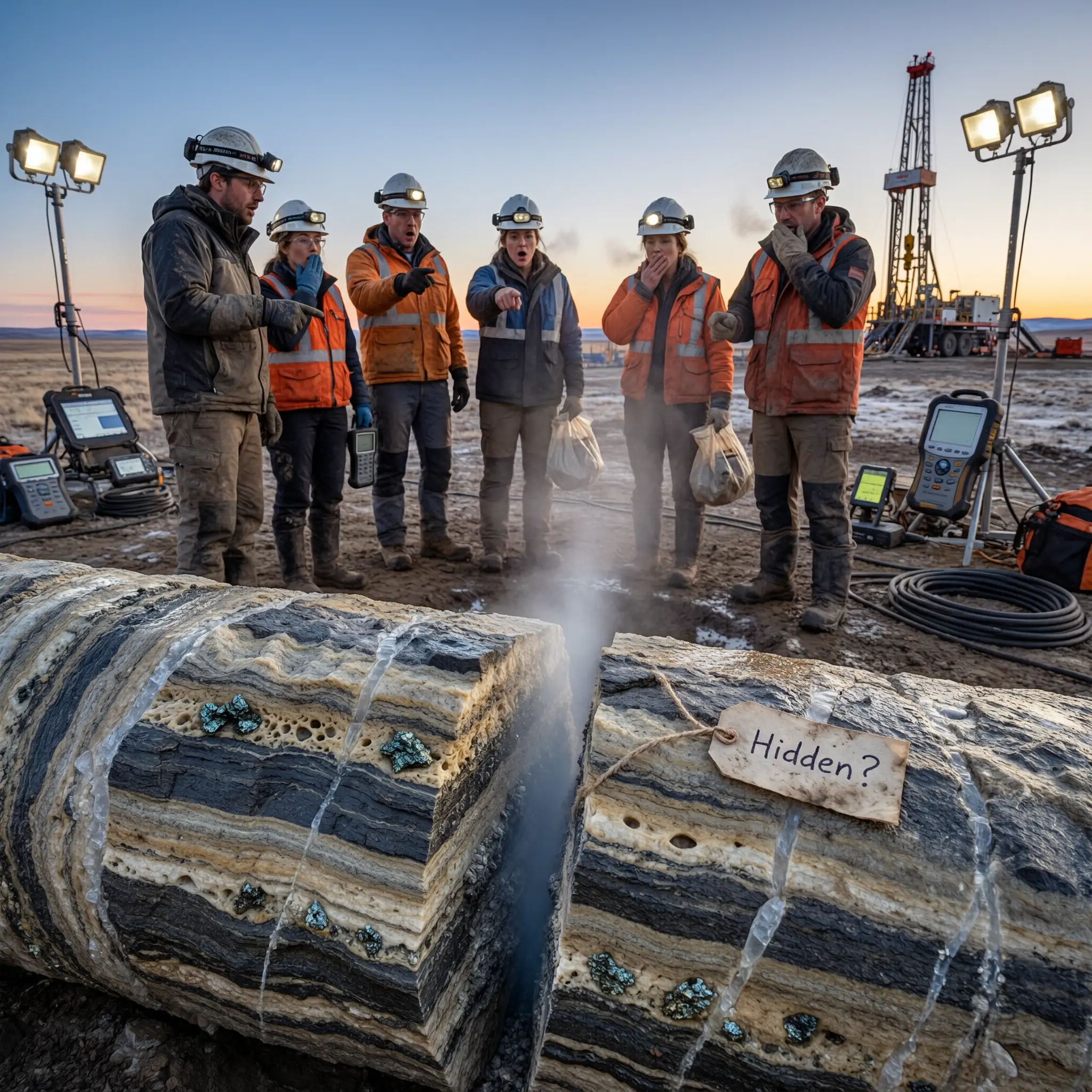
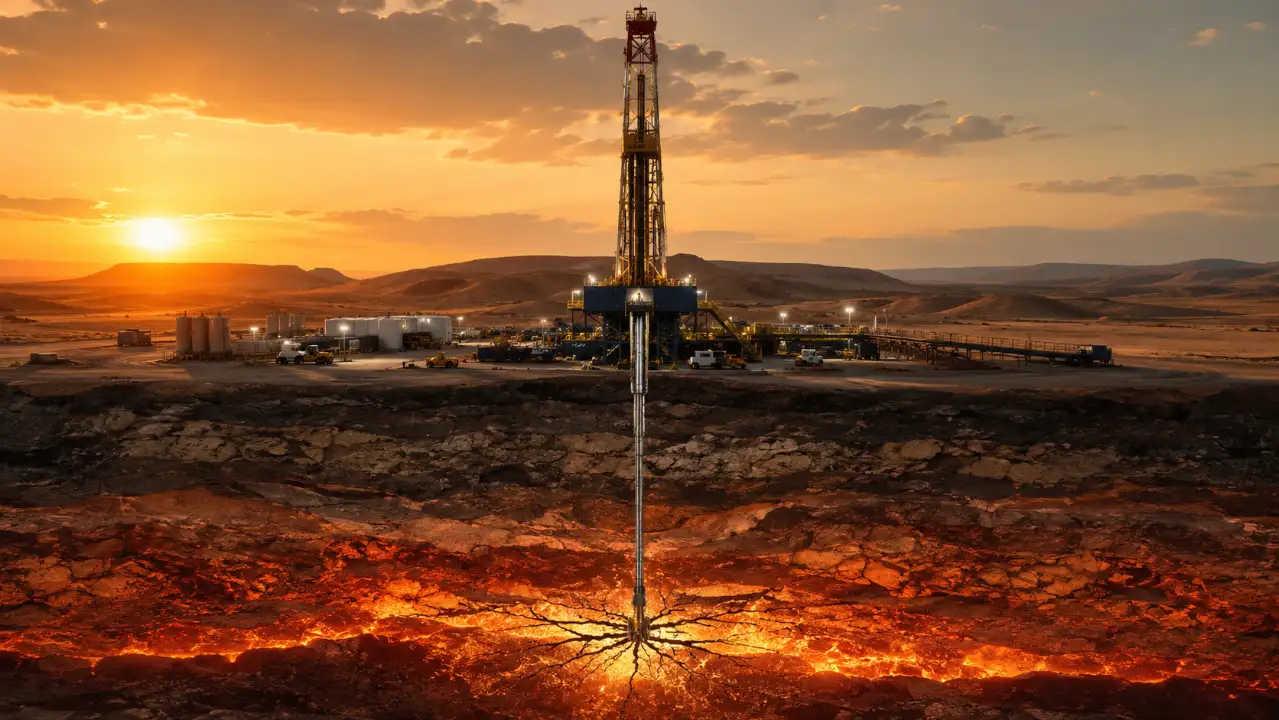
In 1987, well drillers near the village of Bourakebougou in Mali hit a pocket of gas that shot flame out of the borehole the moment someone got close with a cigarette. Spooked, the crew capped it and walked away. That well sat sealed for over two decades until someone finally tested what was actually coming out of the ground. It was almost pure hydrogen. Today it runs a small generator that has kept the village lit for years, fed by gas nobody made, refined, or shipped in.
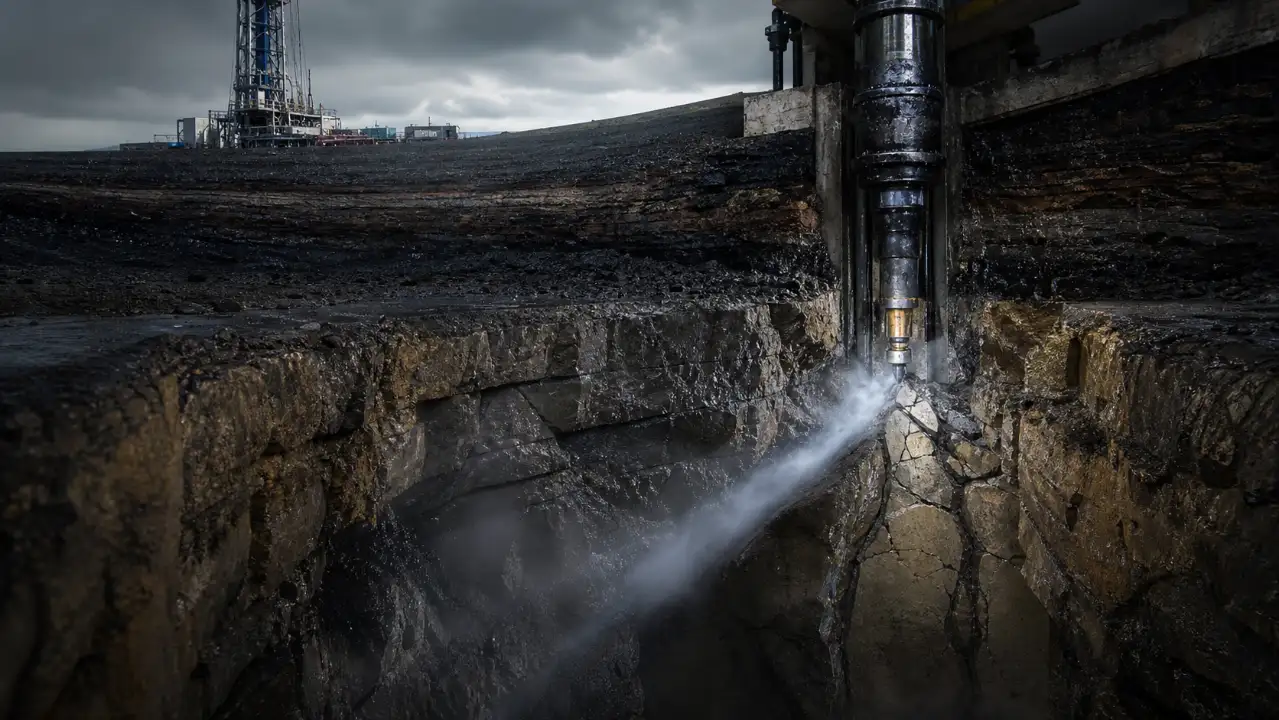
AI Generated Illustration
That accident points to something researchers are now taking seriously on a global scale: natural hydrogen, sometimes called white hydrogen or geologic hydrogen, forming inside the planet and pooling underground the same way oil and natural gas do. No electrolyzer, no massive solar or wind farm feeding a chemical plant. Just rock, water, heat, and time. If even a modest share of what appears to be down there can be reached, it would upend how the world thinks about producing a carbon-free fuel.
The interesting question was never really whether hydrogen exists underground. Geologists have known about seeps and gassy wells for a century. The real question is whether enough of it sits somewhere shallow enough, concentrated enough, and cheap enough to pull out and sell.
How Does Earth Make Hydrogen Without Electrolysis?
The main process is called serpentinization, and it is really just chemistry doing what chemistry does when you leave iron-rich rock sitting in water for a long time. Deep underground, water seeps into rock formations loaded with iron-bearing minerals like olivine. The iron reacts with the water, and one of the byproducts is hydrogen gas. Think of it as a slow-motion version of rusting, except instead of just leaving behind rust, the reaction also kicks loose hydrogen atoms that split off and drift upward as gas.
There is a second, quieter source too. Radioactive elements in certain rock layers can split water molecules apart through radiolysis, adding a smaller but steady trickle of hydrogen over geological time. Neither process needs sunlight, wind, or a power grid. It just needs the right rock chemistry and enough time, which the Earth has in abundance.
Once formed, the hydrogen does not stay put. It is an extremely small, light molecule, so it migrates through cracks and fractures in the crust, sometimes escaping to the surface as a seep, sometimes getting trapped beneath a layer of impermeable rock the way natural gas collects under a caprock. Some of those traps may have been holding hydrogen for millions of years, quietly building pressure underground while the rest of the world burned coal and oil to make the same molecule industrially. That is the setup that has explorers drilling test wells across multiple continents right now.
Why Natural Hydrogen Could Change the Clean-Energy Equation
Making hydrogen the conventional way is expensive because it takes energy to make energy. Electrolysis splits water into hydrogen and oxygen using an electric current, and if that electricity comes from solar or wind, the resulting green hydrogen still carries the full cost of building and running that power supply before a single molecule is produced. Most hydrogen made today is not even that clean. It comes from natural gas through a process that releases carbon dioxide, which defeats a lot of the point.
Geologic hydrogen skips that entire manufacturing step. If a usable reservoir exists, extracting it looks a lot more like conventional gas drilling than industrial chemistry. Instead of spending energy to manufacture hydrogen, the underground system may have already made it for you, over millions of years, for free. That single shift, from building a fuel to simply finding one, is what has pulled serious investment into an idea that sounded fringe a decade ago.
It would not replace electrolysis outright, and nobody serious is claiming it will. But even a partial supply of naturally sourced hydrogen could lower costs across the board, reduce how much renewable electricity has to be diverted into fuel production, and reshape what infrastructure the hydrogen industry actually needs to build. That is a very different story than the one the industry has been telling for the last ten years, and it explains why exploration companies are now treating hydrogen the way wildcatters once treated oil.
The Trillion-Ton Number Is Not the Same as Usable Fuel
Estimates for how much natural hydrogen exists underground globally run into the trillions of tons, numbers large enough to dwarf current annual energy demand many times over. Those figures get repeated constantly, and for good reason, they sound extraordinary. But a resource estimate is not a reserve, and the gap between the two is where most of the real story lives.
Total resource means everything geologists believe is physically present in the crust, reachable or not. Recoverable reserve means the fraction that can actually be drilled, brought to the surface, and sold at a price someone will pay. Oil and gas went through this exact distinction decades ago, and hydrogen exploration is only now catching up to it. A trillion tons trapped several kilometers down in dispersed, low-concentration pockets does nothing for the grid if no well can produce it fast enough or cheap enough to matter.
What actually determines whether this becomes a real industry has almost nothing to do with the headline number. It comes down to boring metrics: how much a single well can produce per day, how long that production holds up before declining, what it costs to drill and process, and how much energy the whole operation consumes relative to what it delivers. Reservoir depth, gas concentration, and how easily hydrogen leaks back out of its trap all factor into whether a discovery becomes a functioning gas field or just an interesting data point on a map.
The Biggest Opportunity Comes With Geological Unknowns
If natural hydrogen can be produced reliably, the demand side is not really in question. Power generation, industrial heat for manufacturing, and ammonia production for fertilizer all already use hydrogen at scale, and all three would benefit from a cheaper, lower-carbon supply. Chemical manufacturers are watching closely too, since hydrogen is a feedstock for far more than fuel. Transport applications are further out, but not off the table if costs come down enough.
The unresolved questions sit on the supply side, and they are not small. Hydrogen pulled from underground rarely arrives pure. It often shows up mixed with methane, nitrogen, or other gases, which means separation costs eat into whatever advantage the free formation process offered. There is also a real possibility that early wells overperform in initial tests and then decline faster than models predicted, a pattern the shale gas industry knows well from its own early days. Hydrogen's tiny molecular size makes it prone to leaking through seals and embrittling metal infrastructure that was built for natural gas, which is not a minor engineering footnote, it is a core reason pipelines and wellheads may need to be redesigned rather than repurposed.
What remains unclear is whether extraction at meaningful scale can stay genuinely low-carbon once you account for drilling, processing, and transport. Finding hydrogen underground is a geological discovery. Proving it can be pulled out at a low enough cost, over and over, across dozens or hundreds of wells is an engineering problem, and engineering problems do not get solved by resource estimates.
What Happens Next in the Search for Earth's Hidden Hydrogen?
Exploration is moving the way any new resource hunt does, through better maps first and better drilling second. Geochemical surveys are getting more precise at spotting the surface signatures of hydrogen seepage, including circular depressions in soil that some researchers link to gas escaping from below. Combine that with improved models of which rock formations are likely to generate and trap hydrogen, and exploration companies can narrow down where to drill instead of guessing across entire basins.
The next real milestone will not be another giant resource estimate. Those have mostly done their job, they got attention and funding flowing. What the industry actually needs now is a string of wells that produce hydrogen consistently over months and years, with honest numbers published on what it cost and how much energy it took to bring that gas up. One promising well proves a formation works. Twenty boring, steady, well-documented wells prove an industry works.
If even a modest fraction of what sits underground turns out to be recoverable, it means the planet has been quietly generating a usable fuel source the entire time nobody was looking for it there. Whether that turns into a meaningful piece of the energy transition or stays a scattering of curiosities like the well in Mali depends entirely on what the drill bit finds next, not on how big the number in the headline gets.