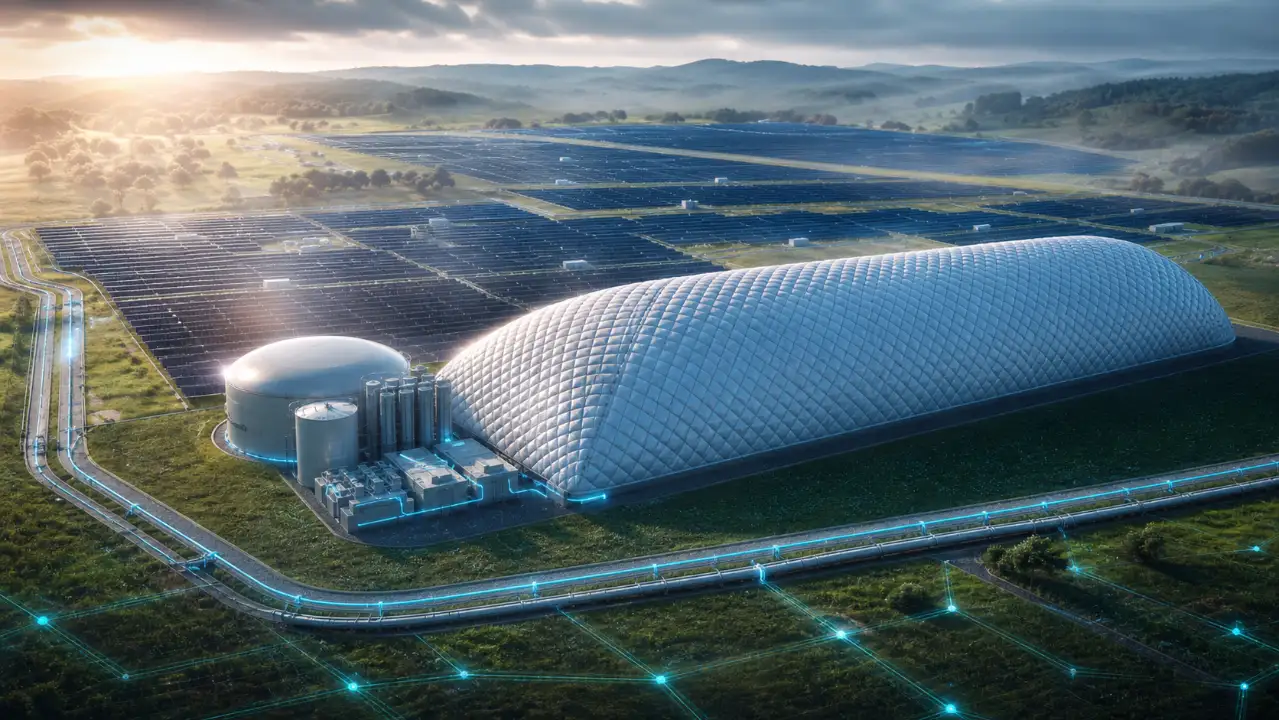
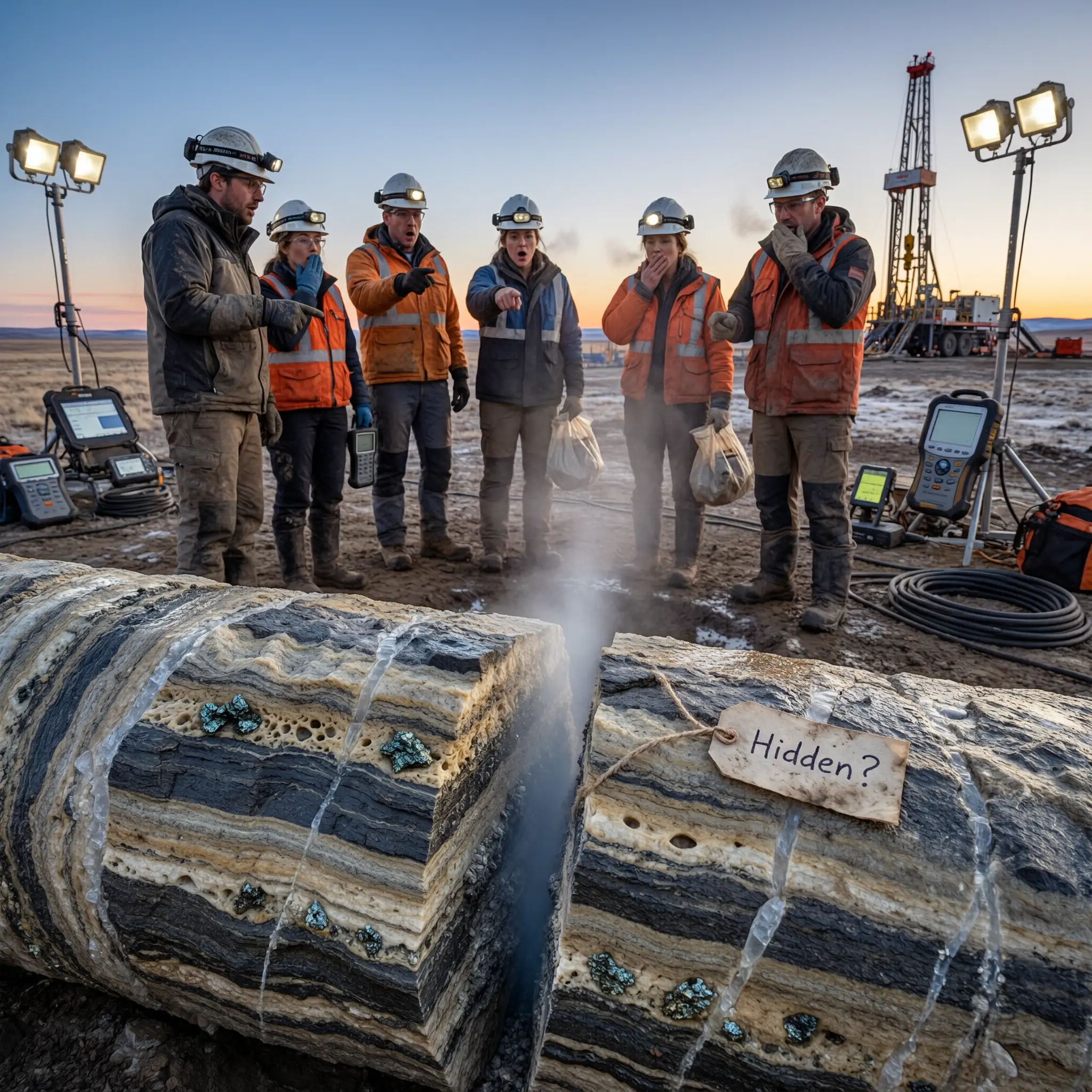
Two miles under the Utah desert, in country better known for cattle ranches than computing power, an oil-field drill bit is chewing through rock hot enough to blister skin on contact. It isn't looking for crude. It's chasing heat that could keep a data center running after the sun sets and the wind dies down.
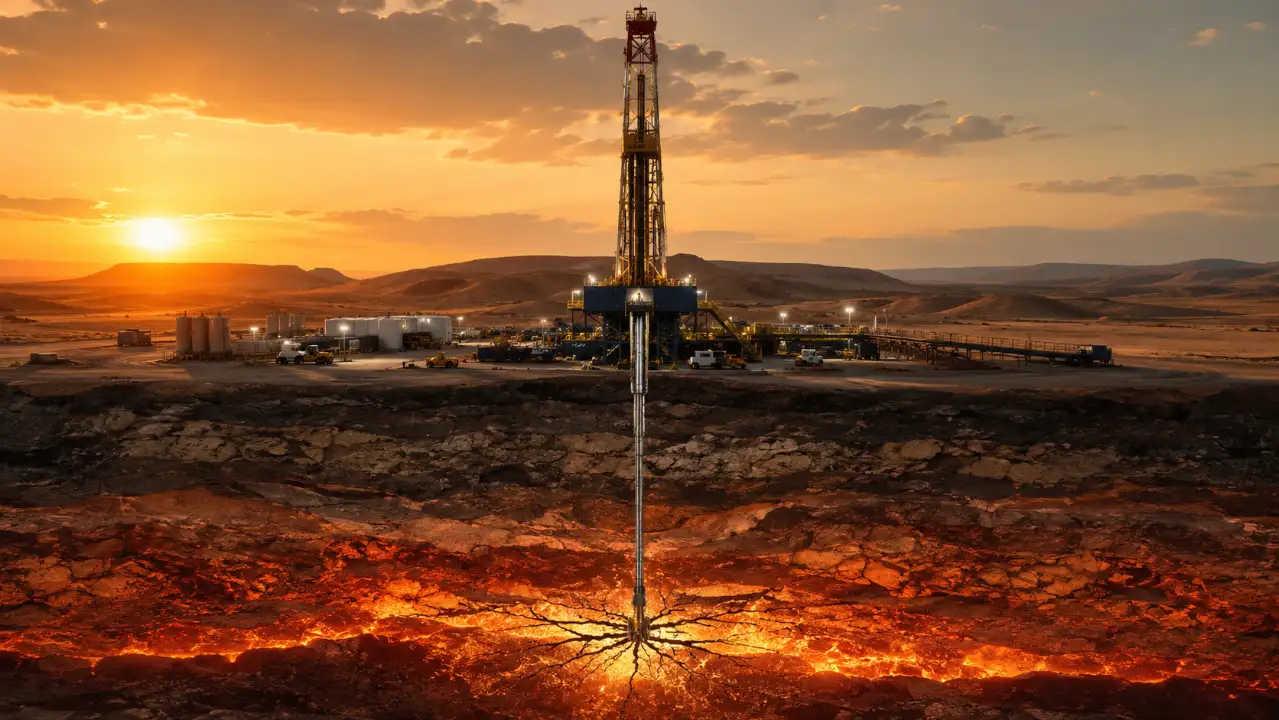
AI Generated Illustration
That's the quiet bet behind a deal Google struck with geothermal developer Fervo Energy in March 2026: a framework covering up to 3 gigawatts of enhanced geothermal energy, with 1 gigawatt moving forward in the first two years. Nothing about that number is a promise yet. It's a runway, and how far Fervo travels down it depends on what's happening thousands of feet underground right now.
AI data centers don't run on wind and sun schedules. They run around the clock, and the industry calls that demand firm power, meaning it can't drop off when a cloud rolls in or the breeze stops. Solar disappears at night. Wind is unreliable. Next-generation geothermal power looks unusually attractive by comparison: heat that never stops flowing, under land Fervo already knows how to drill.
Fervo Is Turning Hot Rock Into an Underground Power Plant
Traditional geothermal power only works where nature already put hot water close to the surface, mostly places like Iceland or pockets of the Pacific Ring of Fire. Enhanced geothermal systems skip that requirement. Engineers drill a well thousands of feet down, turn the bit sideways to run horizontally through hot rock for miles, then pump water through it to crack open a network of fractures. Cold water goes in, picks up heat, and comes back up as steam that spins a turbine. In plain terms, it's a bit like carving a hot spring where none existed, using the same horizontal drilling techniques that unlocked shale oil and gas.
How hot the rock needs to be used to set a hard limit on where this worked. Fervo pushed past that limit this year at a new site called Project Blanford, in Millard County, Utah, where an appraisal well confirmed temperatures above 555 degrees Fahrenheit at roughly 11,200 feet, drilled in under 11 days. That's over 150 degrees hotter than the rock already generating power at Cape Station. Hotter rock means more energy per gallon circulated, and that margin is what turns a science project into a power plant.
The Drilling Numbers Reveal What Has Changed
In July, Fervo announced it had drilled a well called Sawtooth 7, at Cape Station, to a measured depth of 19,448 feet, including a 7,500-foot horizontal lateral, through rock running 460 degrees Fahrenheit. It took 21 days from spud to total depth. For a well that long, that hot, and that complex, 21 days is fast. It's also the exact same number of days Fervo's previous fastest well took, despite Sawtooth 7 running roughly 8,000 feet deeper with a lateral 70 percent longer.
The company says its drilling rate has improved 143 percent since the first well it drilled at Cape Station. Fervo's original commercial well, at Project Red in Nevada, took 70 days to reach 11,220 feet back in 2022. Sawtooth 7 covered nearly double that depth in less than a third of the time. Drilling speed sounds like an engineering footnote, but on a project like this it's close to the whole ballgame. Every extra day on a rig is a day of crew wages piling onto a well that hasn't produced a single watt yet.
That kind of gain doesn't happen by accident. It happens by drilling the same well design nine times in a row and getting faster each time, the same learning curve that turned shale drilling from a niche technique into the backbone of American oil production. The question now is whether that curve keeps bending, or whether Fervo has already picked the easy gains and the next round gets harder to find.
The Real Test Is Cost, Not Underground Heat
Temperature records and drilling speed make good headlines, but neither pays the electric bill. What actually determines whether enhanced geothermal energy becomes a mainstream part of the grid is narrower: power output per well, drilling and completion cost, how long a reservoir keeps performing once water starts circulating, and whether output holds steady for the 20 or 30 years a power purchase agreement typically runs.
Fervo has published some of that math. It expects Cape Station's second phase to deliver power around 5,500 dollars per installed kilowatt, with a longer-term goal of 3,000 dollars per kilowatt as it drills more wells and gets better at it. Neither figure has been tested at the scale Google is now asking for. Nothing in the public record yet spells out a final cost per kilowatt-hour for the 3 gigawatts covered under the Google framework, and until that number exists, the economics of this buildout stay an open question rather than a settled one.
Here's the line worth sitting with: the breakthrough was never about finding heat. Heat has been sitting under Utah for a very long time. The breakthrough, if it turns out to be one, is learning to reach that heat and use it cheaply enough that a utility, or a hyperscaler like Google, would rather buy it than build something else.
What Could Still Stop Geothermal at Scale
Enhanced geothermal systems still carry real, unresolved risks, and they don't disappear just because a well hits its numbers. Cracking open rock with high-pressure water can reactivate small faults nearby, producing induced seismicity, tremors caused by human activity rather than tectonic shifts. Regulators and developers have built screening tools to catch this early, but the risk doesn't go to zero. It just gets managed.
Water is another constraint people don't talk about enough. EGS needs a steady supply to circulate through the underground fracture network, and in the arid American West, where most of this drilling happens, water rights are already a sensitive subject. Add the cost of drilling three to four miles through rock hot enough to damage standard equipment, and the list of things that have to go right gets long.
Then there's a quieter problem: one good site doesn't prove the model. Project Blanford's 555-degree rock sits in a sedimentary formation, easier and cheaper to drill than the granite under Cape Station. That's genuinely useful, since it widens the map of places EGS might work. But it also means every new site needs its own appraisal, temperature confirmation, and fracture testing before anyone knows whether the economics hold up. What worked in Beaver County doesn't automatically transfer to the next county over, let alone the next state.
Google's Bet Could Test a New Energy Model
The 3-gigawatt figure attached to Google's deal with Fervo is worth reading carefully. It's a development framework running through 2033, not a signed commitment to build a 3-gigawatt power plant. Only 1 gigawatt is slated to move in the first two years, and Google holds the right of first refusal on new Fervo capacity through March 2028, a sign both companies are still feeling out how far this goes before either locks in more.
What makes the framework interesting anyway is the pattern underneath it. Cape Station's first phase, roughly 100 megawatts, is set to deliver 24/7 carbon-free electricity to the grid by the end of 2026. Its second phase, 400 megawatts, follows in 2028. Add Project Blanford and whatever comes next, and Fervo is trying to prove something bigger than any single well: that a geothermal power plant can be built like a factory line, repeatable enough that a company like Google can plan its data center growth around it the way it plans around a chip supply contract.
Oil and gas drilling took a century to get cheap and fast. Fervo is trying to borrow that learning curve and compress it into a handful of years, betting that an industry built on pulling carbon out of the ground can spend its expertise pulling heat out of it instead. Whether that bet pays off at the scale Google is asking for is still open, answered one well, and one gigawatt, at a time.