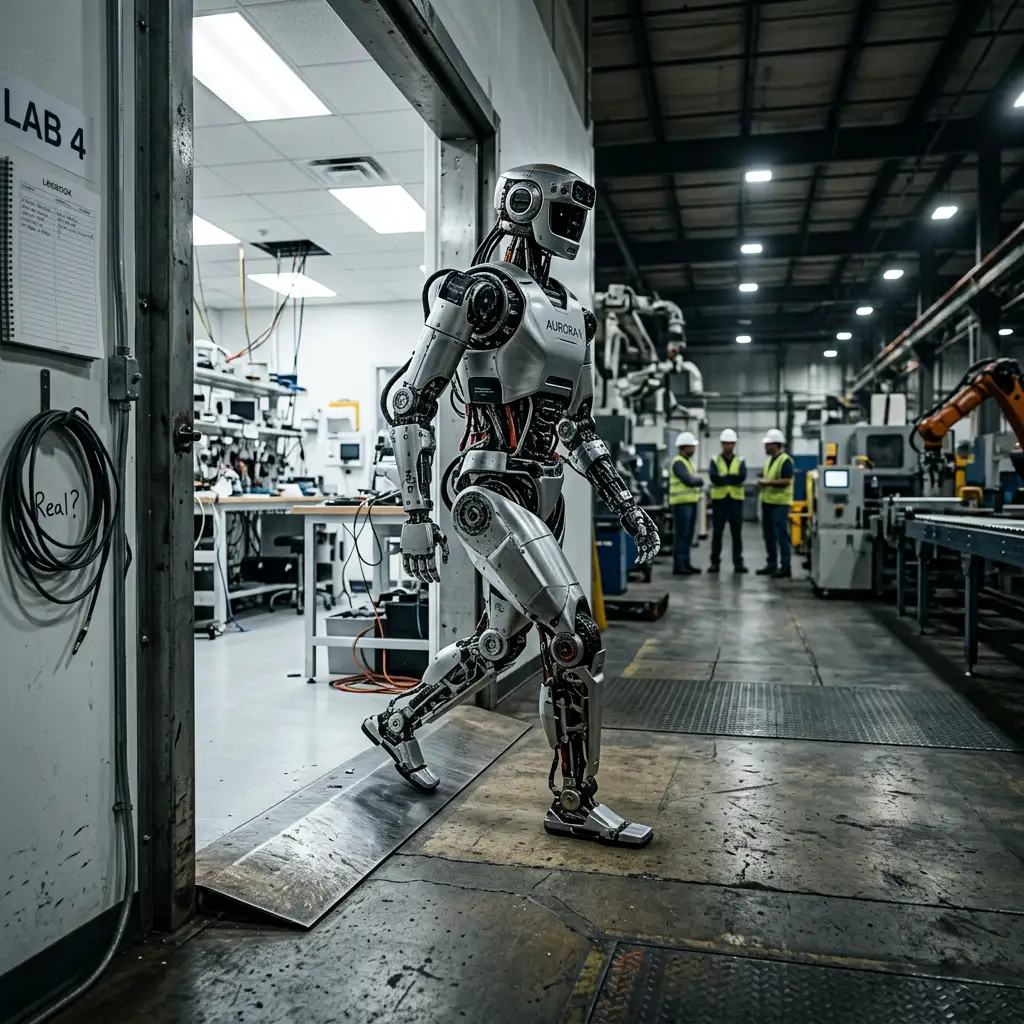
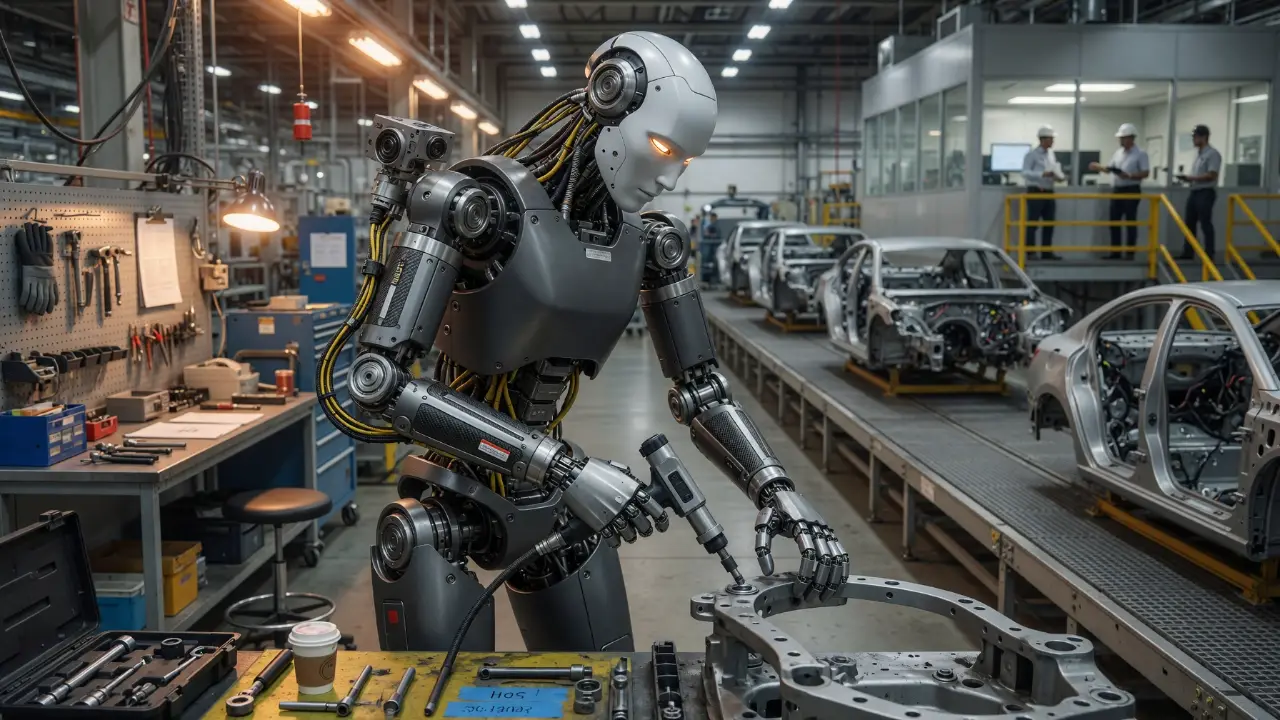
A Tesla factory floor full of humanoid robots, building products that get sold for money that, according to the man who owns the factory, might stop mattering within about ten years. That is the scene Elon Musk described in July 2026, sitting across from The Economist's editor-in-chief Zanny Minton Beddoes at the company's Texas Gigafactory.
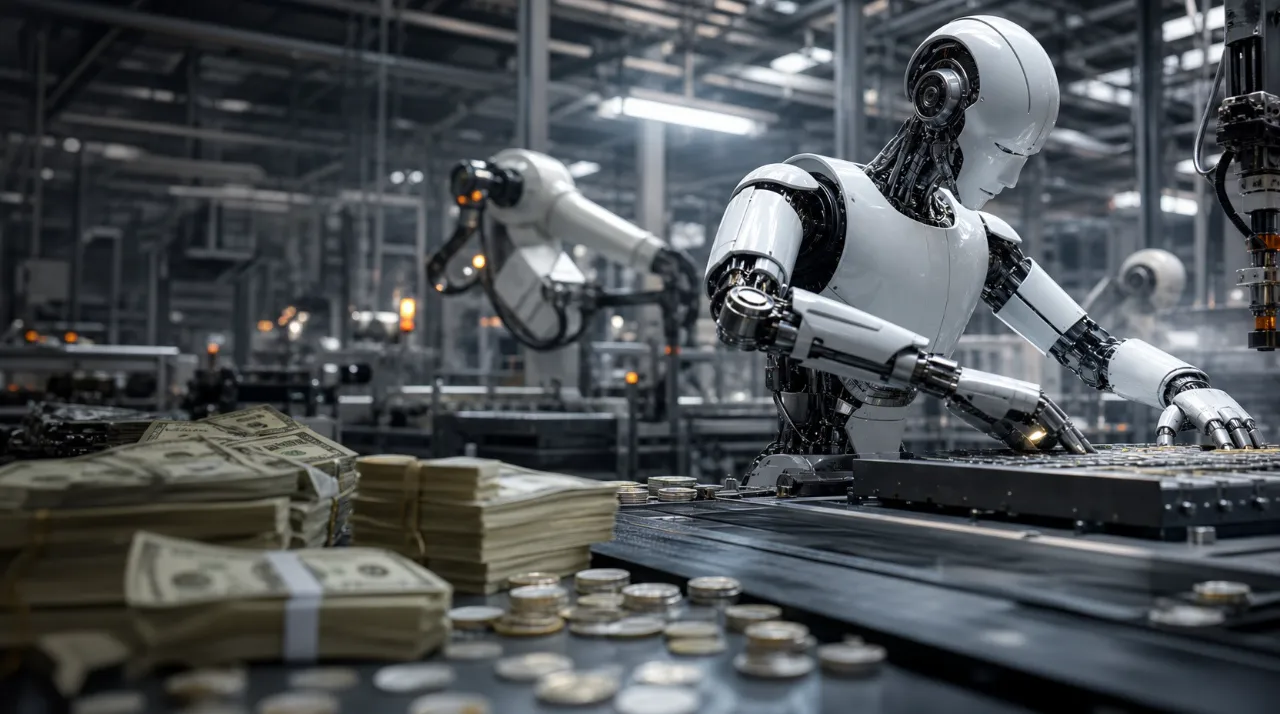
AI Generated Illustration
His claim was direct: by 2036, money as we currently understand it could lose most of its relevance. The Elon Musk money prediction that came out of that conversation is one of the stranger things a trillion-dollar founder has said out loud, mostly because his own fortune is priced in the very currency he is describing as fading.
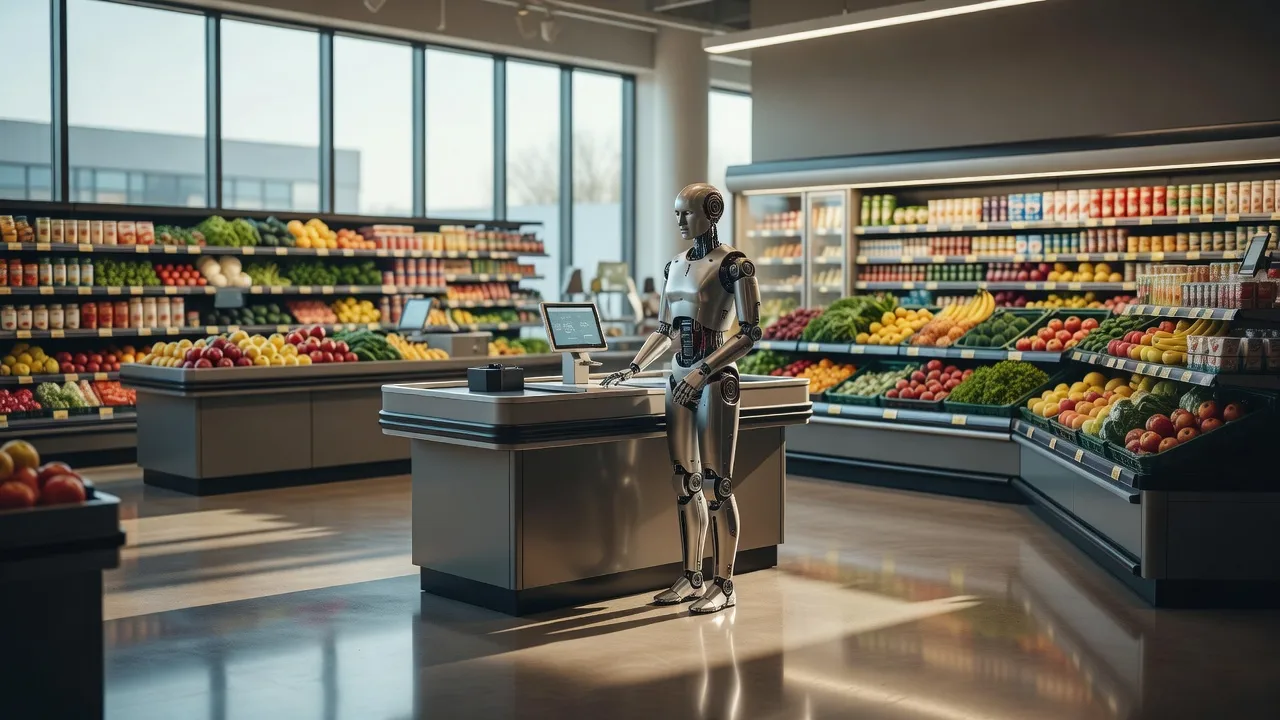
His logic starts from something almost childishly simple. Musk describes wanting money mainly for food, housing, transport, and entertainment. If robots and AI can produce enough of all four that scarcity mostly disappears, he asks, what exactly would money still be for. It is the kind of question that sounds naive until you realize nobody has a clean answer for it. Today's economy runs on the assumption that things stay scarce enough to need prices. Musk is betting that assumption quietly breaks.
What makes this worth taking seriously is not just that Musk thinks AI will get smarter. It is the specific claim tucked inside the headline: that raw intelligence, multiplied by robotic labor, could loosen the link between work and income that has held for most of recorded economic history. That is a bigger claim than it first sounds, and it is worth pulling apart piece by piece.
Why Elon Musk Thinks AI Could Create an Economy of Abundance
Musk's argument rests on two things happening at once. First, he expects AI systems to exceed the combined intelligence of every human on the planet within roughly five years, putting that milestone around 2031. Second, he expects humanoid robots like Tesla's Optimus to act as what he calls the physical extension of that intelligence, turning digital capability into actual goods on shelves. Think of AI as the brain and robots as the hands, doing the standing in line and factory shifts that intelligence alone cannot touch. He has also predicted deflation rather than inflation along the way, arguing that if governments create money slower than robots and AI expand the supply of goods and services, prices should fall instead of climb. Economists call this a post-scarcity economy, though Musk just calls it abundance.
This is not pure speculation on his part. Manufacturing lines already run with heavy robotic assistance, warehouses use automated picking systems, and software has quietly eaten large chunks of accounting, drafting, and customer service work. Agriculture and healthcare are catching up more slowly, but the direction is consistent. Musk's 2036 date assumes this creeping automation compounds fast enough to cover most of the economy within a decade, not just the easy parts of it.
The part almost nobody can verify is the pace. AI capability has jumped in bursts that surprised even the people building it, but scaling a lab breakthrough into millions of working robots across thousands of industries is a different kind of hard problem. Nobody, including Musk, has a reliable way to measure how fast that scaling actually happens.
The Untold Question: If Machines Earn Everything, Who Gets Paid?
Here is the piece most coverage of Musk's comments skipped past. Wages are not just income, they are the main way purchasing power gets spread through a market economy. If AI and robots handle most production, and companies need far fewer people to run that production, the paycheck that currently connects a person's labor to their ability to buy things starts to disappear for a lot of people at once, long before any abundance shows up to soften the blow.
Musk's own answer leans on governments simply issuing payments once production outpaces demand, something closer to a check from the Treasury than a paycheck from an employer, not far off from what people already call universal basic income. Economists are split on whether that solves the underlying problem or just relabels it, since deciding who gets how much, and who controls the robots doing the producing, remains a political fight rather than a technical one.
A future where machines create nearly everything could make the biggest challenge not producing wealth, but deciding who owns it.
Could AI Taxes Pay People Even Without Traditional Jobs?
One idea that keeps surfacing in these discussions, including in the pushback Musk received during the interview, is some version of a tax on automated productivity, sometimes called a robot tax. The concept is not new policy. It remains a debated proposal rather than anything close to law in the United States or most other countries.
Supporters argue that if AI systems generate huge productivity gains without hiring the humans those gains used to require, taxing that output could fund the kind of direct payments Musk floated. Critics counter that taxing automation could just push companies to build or deploy their AI systems somewhere with friendlier rules, which would blunt the very revenue the tax is supposed to raise.
Either way, the debate points at something Musk's vision leans on without fully spelling out. Distributing abundance evenly is not automatic just because abundance exists. Someone still has to build the plumbing that moves value from the robots' owners to everyone else.
Why Giving Away His Fortune Fits Musk's Long-Term Vision
During the same stretch of public conversation, economist Daron Acemoglu pressed Musk on whether he would commit to giving away a meaningful share of his fortune, tying the challenge to that same 2036 horizon. Musk has said before that he intends to give away most of his wealth over time, and Forbes currently puts his net worth somewhere around 707 billion dollars after recent pullbacks in Tesla and SpaceX shares. He did not commit to Acemoglu's specific deadline or spell out numbers.
It is worth separating two different things here. Musk giving away billions is philanthropy, a personal choice about what to do with wealth he already holds. It is not the same as the systemic shift he is describing, where money itself becomes less central to how people get what they need. One is a decision. The other would be a restructuring of how an entire economy works. Musk's comments blur the two together in a way that makes for a good headline but a messier argument underneath it.
None of this is unprecedented territory, technically speaking. Every major wave of automation in the last two centuries has forced some version of this same argument about who benefits and who gets left behind.
What History Suggests About AI, Work, and Economic Change
The steam engine, the assembly line, and the personal computer all displaced specific jobs while creating different ones nobody could have named in advance. A textile weaver in 1800 had no way to picture a data analyst job in 2020. Even so, old roles faded out, new categories opened, and total employment kept climbing over the long run. That history is the strongest card skeptics of Musk's prediction are holding.
What is different this time, and what makes economists genuinely uneasy, is that earlier automation mostly replaced physical or repetitive tasks. Modern AI increasingly handles judgment calls and analysis, and paired with robots, physical dexterity too. It is automation working both ends of the job market at once, rather than climbing gradually up from the factory floor the way earlier machines did.
The honest answer to whether this time is different is that nobody actually knows yet, and that includes the people building the systems. There is no reliable benchmark for the moment AI productivity consistently beats human labor across most sectors, which is exactly why a specific date like 2036 is closer to an educated guess than a forecast anyone should bank on.
Could 2036 Mark the Beginning of a New Economic Era?
Strip away the specific date and the Elon Musk money prediction splits into two separate claims worth judging on their own. The technical claim, that AI and robotics could eventually produce far more than current demand requires, has real momentum behind it. The social claim, that this abundance gets distributed in a way that leaves most people better off rather than locked out, has essentially no evidence either way yet.
The things worth watching over the next several years are not dramatic AI breakthroughs alone. Watch how fast humanoid robots actually get cheaper to build and deploy at scale. Watch whether any government seriously pilots direct payments funded by automated output, instead of just discussing it. And watch whether productivity gains at automated companies start showing up in workers' paychecks or just in shareholder returns, because right now it is overwhelmingly the latter.
Maybe the real question is not whether money disappears by 2036. It is whether the decade between now and then quietly redraws who gets to decide what wealth, work, and ownership even mean once machines can build almost anything a person could want.