A robotic arm can tighten the same bolt thousands of times a day with perfect precision. But ask it to walk across a room, pick up a fallen box, and place it on a shelf, and it has nothing to offer. It was never designed to move. That gap between manipulating objects and navigating the physical world is exactly what Google hopes to close with Gemini Robotics 2.
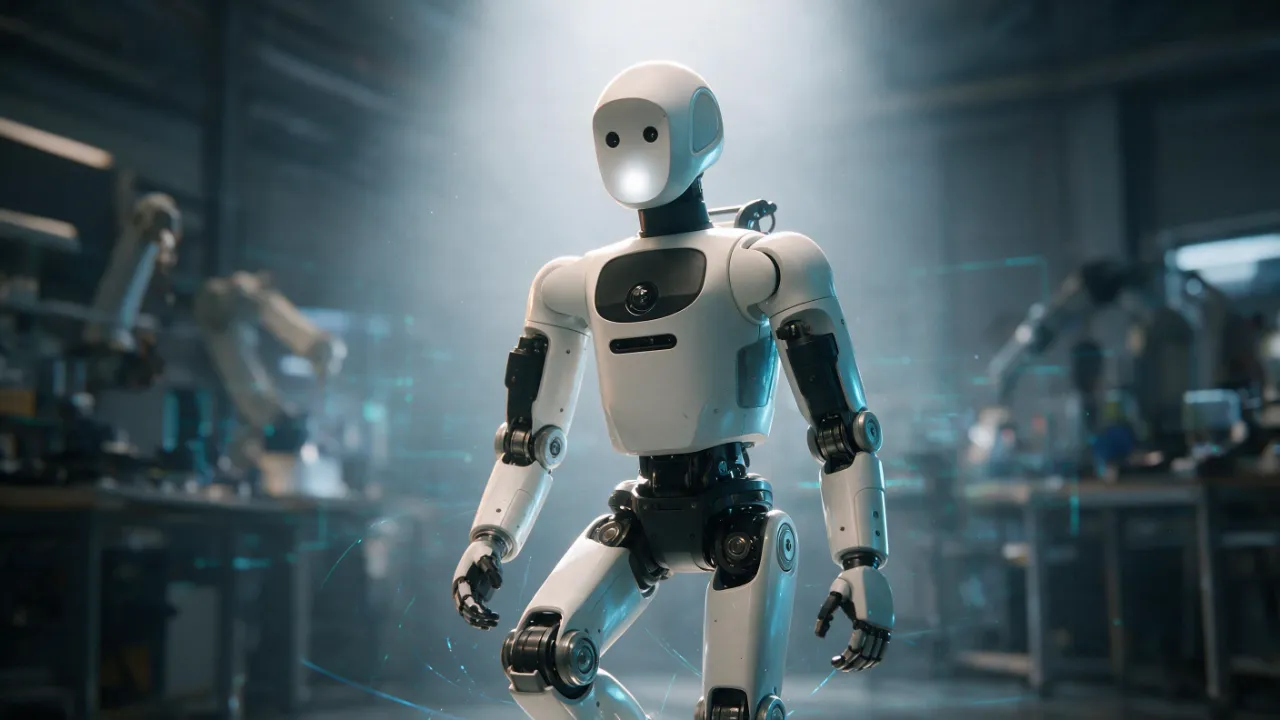
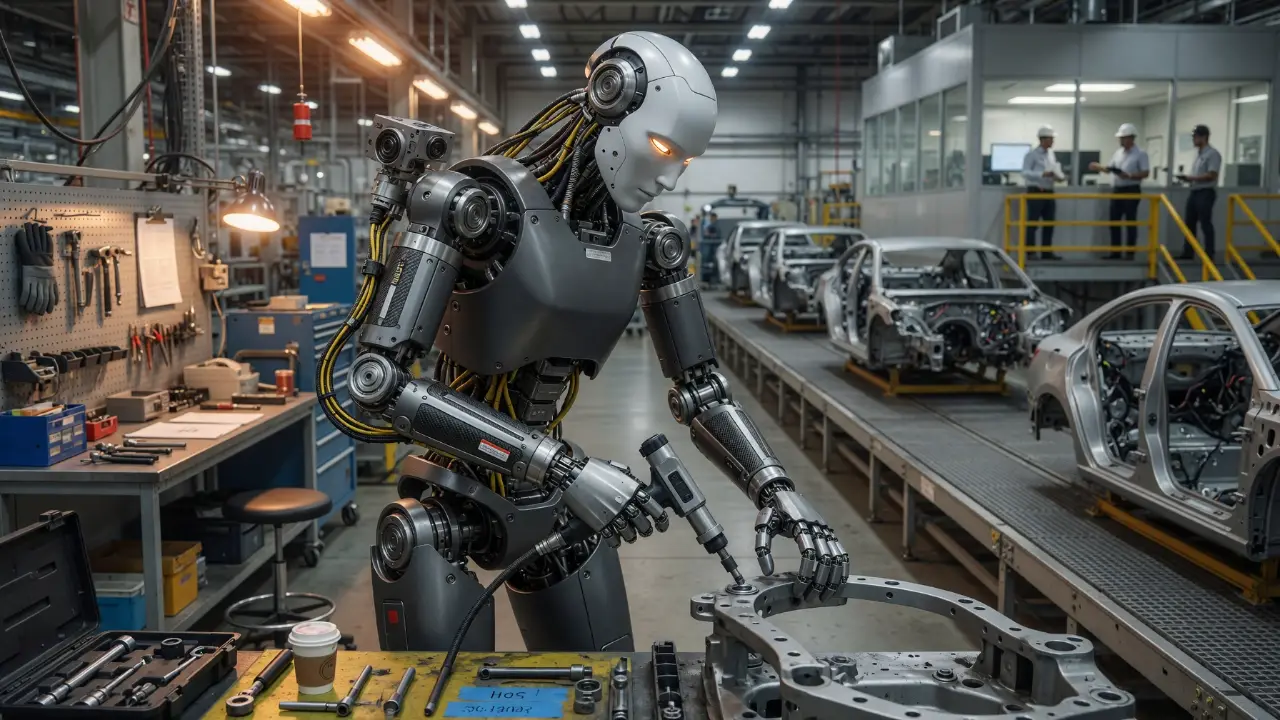
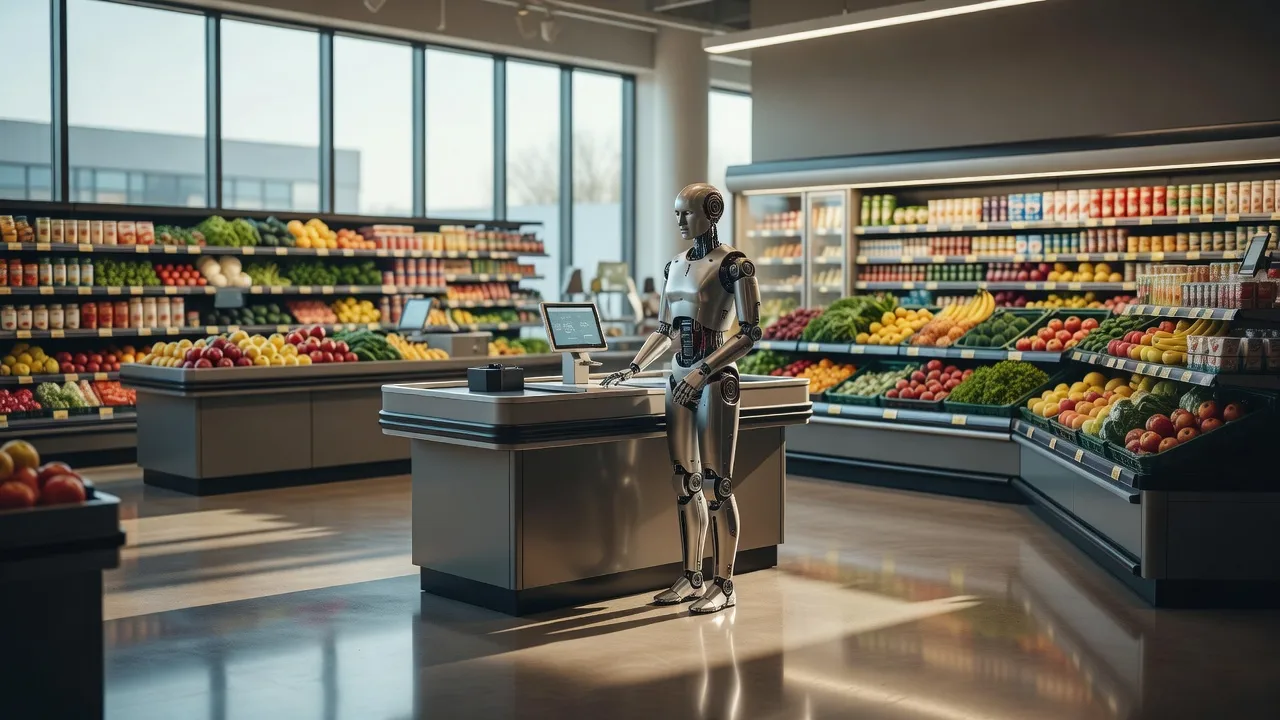
AI Generated Illustration
Google DeepMind's new robotics AI lets humanoid robots control their entire bodies instead of just their arms and hands. Earlier versions focused mainly on object manipulation. Gemini Robotics 2 is designed to walk, crouch, balance, and complete tasks from start to finish, using a single AI model that can work across different humanoid robot platforms.
The challenge is that real-world robotics requires far more than intelligence alone. A robot must stay balanced while moving, adjust its grip when conditions change, and coordinate every part of its body in real time without losing stability. If Gemini Robotics 2 can reliably handle those challenges, it could significantly expand the range of practical jobs that humanoid robots can perform in factories, warehouses, and eventually everyday environments.
How Gemini Robotics 2 Thinks Before Every Move
Gemini Robotics 2 is built on Google's broader multimodal AI work, pushed into physical space. Instead of treating perception, reasoning, planning, and movement as separate systems handing off to each other, the model runs them together, continuously, while the robot is in motion.
In practice, that means the system reads a camera feed, takes in a spoken or typed instruction, works out a sequence of safe actions, and then keeps revising that plan as the environment changes around it. Think of it less like a robot following a fixed script and more like a driver adjusting a route in real time because traffic shifted. The plan is never really finished until the task is.
What Google has not done is publish standardized numbers for how well any of this works outside its own demonstrations. There is no public task completion rate, no measure of how fast the model reacts under pressure, no figure for how much power it burns doing any of it. Those numbers are exactly what will decide whether Gemini Robotics 2 is a genuine leap in autonomous robots or a strong demo reel, and right now outside researchers simply do not have them.
Beyond Hands and Arms Changes What Robots Can Actually Do
Whole-body coordination sounds like an engineering footnote until you consider what it actually unlocks. A robot that can walk, crouch, reach, carry an object across a room, turn around an obstacle, and recover its footing after a stumble is no longer tied to one fixed spot beside a workstation. It can go find the object instead of waiting for it to appear.
That shift matters most where the job itself moves: warehouses where inventory shifts by the hour, factory floors with irregular layouts, laboratories handling delicate samples, and eventually hospitals or service settings where a task might involve fetching something from three rooms away. Fixed robotic arms were never going to solve those environments, no matter how precise their grip became.
There is a quieter insight here too. For years the assumption in robotics was that better hardware, stronger motors, sturdier joints, would be what unlocked new capability. Gemini Robotics 2 leans the other way. A robot that plans each step efficiently and recovers from small errors can do things that used to require custom-built, purpose-engineered machines. Software caught up to what hardware alone could not solve.
Why Multi Robot Teamwork Could Reshape Automation
Google is also positioning Gemini Robotics 2 around teamwork between machines, not just single-robot competence. The idea is that multiple robots running the same reasoning model can understand a shared goal and coordinate toward it, rather than each one working in isolation and occasionally getting in each other's way.
Picture two robots lifting something too heavy for one machine alone, or a pair splitting inventory work so one sorts while the other moves boxes to a staging area. That kind of division of labor currently requires careful pre-programming or a human coordinating in the middle. A shared reasoning layer would let the robots work it out between themselves, adjusting on the fly if one of them hits a delay.
Scale that idea across an entire warehouse or factory floor and the picture changes from a collection of separate machines to something closer to a workforce that reorganizes itself as conditions shift. Today's industrial automation is largely fixed: conveyor belts and arms doing the same motion regardless of what changed upstream. Coordinated humanoid robots, in theory, do not have that constraint.
Running Without the Cloud Could Be a Turning Point
Alongside the main model, Google introduced Gemini Robotics On-Device 2, a version built to run locally on the robot itself rather than depending on a constant connection to a data center. That distinction matters more than it might seem at first glance.
A robot that needs the cloud to think is only as reliable as its internet connection. Send a command, wait for a distant server to process it, wait again for the response to travel back, and you have added delay into a process where delay can mean a dropped object or a missed step. Manufacturing plants and remote facilities often have exactly the kind of spotty connectivity where that gap becomes a real problem rather than a theoretical one.
Local processing shrinks that gap to something closer to instant. That is not just a convenience. Robots working around people frequently have a fraction of a second to react when something in the physical world shifts unexpectedly, whether that is a person stepping into a path or an object slipping from a shelf. A model that has to phone home before it can respond is not fast enough for that kind of moment.
Is This Really a Step Toward Physical AGI?
Researchers inside and outside Google have started describing advanced robotics as the next real test for AI, arguably harder than language. A model that only has to generate text can be wrong without immediate physical consequences. A model steering a humanoid through a crowded room does not get that luxury, and DeepMind itself has framed this work as a step toward what it calls physical AGI, a robot capable of doing anything a human body can do.
That framing deserves a dose of realism. The tasks Gemini Robotics 2 has demonstrated, tying a trash bag, unscrewing a light bulb, walking to a shelf and placing an object on it, were built through a mix of teleoperation, video examples, and simulation training specific to those exact tasks. That is a long way from a robot walking into an unfamiliar kitchen and figuring out where anything belongs on its own.
The honest open question is how much of this transfers. Careful demonstrations, run in controlled spaces with known objects and rehearsed instructions, are one thing. An unpredictable warehouse floor with damaged inventory, unexpected obstacles, and tired human coworkers is another. Nobody, including Google, has publicly shown that gap has been closed, and closing it is a much harder problem than anything shown in a launch video.
What This Means for the Future of Robots and Human Work
If whole-body robot intelligence keeps improving at this pace, the industries most likely to feel it first are the ones already leaning on repetitive physical labor: manufacturing, logistics, healthcare support, construction, and lab work. That same shift tends to create new technical roles even as it displaces old ones, since someone still has to train, maintain, and supervise a fleet of increasingly capable machines.
None of that happens by simply shipping a better model. Deployment costs remain high, safety certification for robots working near people is still being worked out, and public trust in machines that walk and make decisions on their own is not something a demo video builds by itself. Regulation has not caught up to any of it yet.
Google is not doing this in a vacuum. Nvidia and OpenAI are both building their own software for physically capable robots, and the race increasingly looks less like a contest over who builds the smartest chatbot and more like a contest over who builds a machine that can be trusted to move through a room full of people without anyone flinching. Whichever company gets there first will have solved something far harder than conversation.